
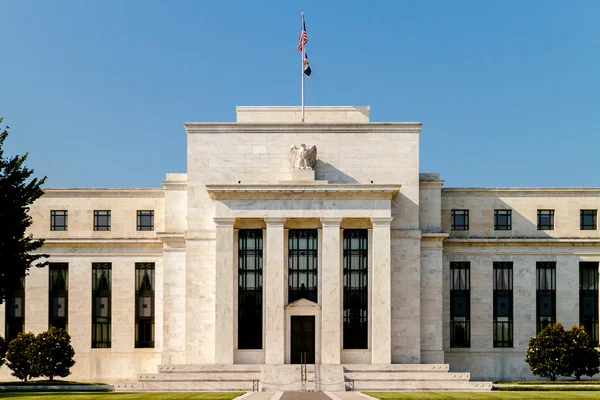
After a not-so-stellar initial press conference in July (FOMC HogWarsh), Fed Chair Warsh spoke clearly last week regarding the Fed's latest interest rate decision...
"Today’s policy action will support a timelier return to the Committee’s 2 percent goal. This Committee will deliver price stability." Also, "The plain fact is that inflation is too high and has been for too long."
In explaining the Committee's (FOMC) reasoning for increasing the Fed Funds target rate by 1⁄4 percentage point to 3 3⁄4 - 4 percent, Warsh said:
"Credit flows have been robust, particularly for businesses. And as I said at the policy symposium in Jackson Hole, I would be hard-pressed to describe broad financial conditions as restrictive. This view was widely shared by the Committee. So we removed a dose of accommodation."
The decision to raise rates was expected; however, the 12-0 unanimous vote was not. Chair Warsh seemed to add a degree of certainty as to what we might expect in the future...
"We must be confident that underlying inflation is moving to our objective, clearly and at sufficient speed. Today, the FOMC decided that this standard has not been satisfied. The committee’s unanimous vote shows our resolve to achieve price stability on a timelier basis. We aim to ensure that credit and financial conditions are consistent over time with our mandate, that relative price changes in some sectors of the economy do not broaden, that inflation compensation in market prices stays low, and that inflation expectations remain well-anchored.
Below are my responses to Fed Chair Warsh's statements.
FED'S 2% INFLATION TARGET
A formal, precise inflation target rate of 2% was adopted at the FOMC meeting on January 24, 2012. In my article The Fed's 2% Inflation Target Is Pointless, I said...
"...if an inflation target is justified, why 2%? Why not a lower number? Or any other number? In truth, it probably doesn't make any difference. From the Fed's perspective, it gives them a license to openly discharge their firearms in the public square. If they miss, they can just reload and fire again. Should they happen to hit the target, they can either maintain their current posture or tweak it accordingly so as not to overshoot in the future.
But they will never "hit" their target. Especially this one. Why not? Because it is a moving target, comprised of moving parts. And it is the result of the Fed's own previous actions."
There is only one cause of inflation: government. The term government also includes central banks, especially the US Federal Reserve Bank. What most people refer to as 'inflation' or its causes is neither. They are the effects of inflation. The "increase in the general level of prices for goods and services" is the result of the inflation that was previously created.
Inflation has always "been too high and... for too long." Absolutely true. Since its inception in 1913, the Federal Reserve has inflated away more than 99% of the U.S. dollar's purchasing power via fractional reserve/no reserve banking.
WE REMOVED A DOSE OF ACCOMMODATION
Both Treasury Secretary Bessent and Fed Chair Warsh have specifically stated their commitment to "ample reserves and liquidity" in the financial system.
While acknowledging that broad financial conditions are not restrictive, yet admitting the need for "removing a dose of accommodation ", the action is like spiking the punch and raising the cost after the fact, while encouraging all to continue imbibing.
CONCLUSION
Price stability is an elusive goal. The Fed will remain forever reactive to the effects of its own errant policies and the unpredictable and volatile effects of inflation, which it has been creating for more than a century.
Paraphrasing Warsh's earlier reference to inflation (too high for too long), the Federal Reserve's reaction to circumstances beyond its control is historically too much, too late; or too little, too soon. (also see Bessent On Bonds; Warsh On Inflation)
Comments
Log in or sign up to join the conversation.