
"It was the best of times, it was the worst of times...in short, the period was ...like the present period". So said Charles Dickens in the opening paragraph of his A Tale of Two Cities. Dicken's writings about London and Paris proved historically right regarding the French Revolution. Since he was born in the same city as I was, although slightly before my time! - I may prove to be right, too. London is now due/overdue for a revolution, given the dire state of the country its politicians have driven the country down to and I think people power is rising from under to rebuild things. I doubt they will use the guillotine to chop off heads but are rising in other ways, taking leadership into their own hands and building new innovative businesses. Outsiders are helping that despite "experts" having long advised investors to get out of both and into other markets - including the EU and EMs - making NYSE and London investors jittery in recent times, to which Britain's leaving the EU added uncertainty for London. A national mood of despondency prevails due primarily to political "leaders" being devoid of purpose fore several decades.
Yet during those "worst of times" last year and despite those "leaders" London's main index - the FTSE100 - went up 17.6% in 2025. That beat the NYSE composite index that went up 15.7%, Paris' CAC 40 up 3.2% and Frankfurt's DAX up 13.4%. Britain's GDP gained 1.0%, France 0.7% and Germany struggled to stay out of recession, gaining a mere 0.2%.
In another vein, in December 2025, Japan's Mori Memorial Foundation again ranked London number one on its Global Power City Index. London has held that spot since 2012. Last year, New York slipped from 2nd to 3rd place.
In the title, I refer to London and New York as T'Winners. That is word play for twins and two winners, as I believe they will continue past norms as twin market leaders - taking investors back to a winning future. I will focus on London today as part one of a two part story that will cover New York on another day.
It is not commonly known that London has retained top global financial centre position for the past six years. Most would consider New York number one, but it is in fact number two. "Emerging market" Hong Kong is number three. Among other things, London is home to the world's main metal exchange - the LME.
Interestingly, some New York financial leaders are helping London's continued dynamic as are many from Hong Kong and elsewhere. The above mentioned LME is owned by Hong Kong company HKEX.
Such investments will also have a positive effect on the UK economy generally via the multiplier effect, thus helping reverse decades of economic suppression caused by central government incompetence. That political incompetence shows no sign whatsoever of changing, but investments are bypassing it.

Photo of Canary Wharf, London from Galliard Homes.
Canary Wharf - owned by Canadian company Brookfield Properties and Qatar Investment Authority - has added to London's strength by becoming one of the world's premier financial and commercial districts, serving as London's second-largest financial hub after the City of London. It hosts major global financial institutions, including Barclays, HSBC, Citigroup, and J.P. Morgan, employing over 120,000 people and dominating in banking, fintech, and legal services. Together with the City of London, it makes London overall one of the world's top two financial centres, alongside New York. It is Europe's leading hub, holding premier status in international finance due to its deep pools of talent, regulatory environment, role in foreign exchange, banking and insurance.
The following points add to my views that that position is again strengthening ...
Major U.S. banks have significantly ramped up their investments in London and the broader UK
This investment drive, often called the "golden corridor" of finance, includes major infrastructure projects, job creation, and the expansion of digital banking services. That drive includes the following ...
- HSBC, the Hong Kong and Shanghai Bank, moved its headquarters from Hong Kong to Canary Wharf (its office tower can be seen in the above photo) plans to use $4bn it has available to become the global number one corporate and institutional bank according to that Financial Times linked article. It has not explicitly stated it wants to overtake JPMorgan Chase but that could happen. Today JPMorgan has a $4tn balance sheet compared with HSBC's $3.2tn.
- JPMorgan Chase recently announced plans for a massive 3 million sq ft tower in Canary Wharf. This £3 billion project will serve as its new UK headquarters, accommodating 12,000 employees and contributing an estimated £9.9 billion to the UK economy over six years.
- Citigroup (Citi) is investing £1.1 billion in its UK operations. This includes a major refurbishment of its Canary Wharf headquarters and continued expansion in Belfast, which is now a major technology hub for the bank.
- Goldman Sachs: While expanding in London, it is also doubling its workforce in Birmingham to over 1,000 staff. It remains a dominant player in London’s M&A advisory and investment banking sectors.
- Bank of America, as part of the broader investment pledge, is focusing on expanding its UK footprint and recently launched a new operations facility in Belfast to support its global business.
- Wells Fargo has been actively expanding its influence in the European Debt Capital Markets (DCM) from its London hub. It previously made headlines by purchasing its own office block in the City of London.
- Nuveen of the US is buying Schroders, the UK assets manager founded in 1804 during the Napoleonic wars. The combined company will have assets under management of around $2.5 trillion.
- Elliott Management, the US activist investor, has taken a stake in the London Stock Exchange Group (LSEG.L) - owner of the LSE, the London stock exchange - and they will, hopefully, speed up actions to make it easier for foreign companies to list in London. Britain's Financial Conduct Authority will help. It is aiming to reverse a drastic under-reporting of market liquidity that has driven some companies to list in New York instead of London
Hong Kong buyers are currently the most prominent foreign investors in the London property market
- Hong Kong-based Link REIT entered the UK market by purchasing The Cabot in London's Canary Wharf for approximately £380 million (around US$487 million). The 17-story office building is Morgan Stanley's European headquarters.
Other important happenings include the following...
- The Financial Times reported that US tycoons with a combined net worth of more than $130bn have bought apartments at the Peninsula in London, an exclusive residential development situated inside a luxury hotel. Blackstone boss Stephen Schwarzman, Citadel hedge fund founder Ken Griffin and WhatsApp founder Jan Koum have all bought homes at the Belgravia site, according to Land Registry records and people familiar with the matter.
- The Financial Times - the world's number one business newspaper - is head quartered in London but owned by the Japanese Nikkei Inc.
- US philanthropists have been moving hundreds of millions of dollars in charitable funds to UK structures as precautionary action against President Donald Trump’s attacks on non-profit groups.
- UK corporate debt is now down to 58% of GDP compared with 90% at the 2008 financial crisis peak according to a report in the Financial Times that included the following three points .
- The UK banking sector has outperformed the US Magnificent Seven giants over the past two years.
- The area around King's Cross railway station, once an industrial no-go area and a symbol of Britain's decay, has been transformed into a vibrant mixed use district by a £3 bn regeneration programme that has become considered as one of the world's successful. An upgrade to the rail system northwards is now underway that will make it even more successful and help reduce the long term north/south wealth divide.
- Foreign buyers committed $142 billion on takeovers of British companies in 2025, up 74% from 2024 according to LSE Group. Some of those were by private equity takeovers of listed companies which is one reason the London SE lost some core constituents and not for negative reasons claimed by some. when those deal feed into the balance of payments numbers it is probable that will add several percentage points to GDP growth.
- Household debt is at 73% of GDP compared to 100% in 2010.
The UK's innovative university, business and financial sectors show signs of piercing through the decades long government suppression...
- HSBC's reports, in partnership with Dealroom (Dealroom), highlight a strong rebound in UK venture capital (VC) in 2025, with Q3 seeing $9 billion raised, the second-highest Q3 ever, signalling momentum for its best year since 2022. The UK leads Europe in VC, driven by growth across all stages, especially AI, Fintech, and Health, with large "megarounds" returning (like Revolut's $2B raise) and strong early-stage (Series A) activity. Key findings include the UK's leading position in Europe, significant early-stage growth, and the central role of AI and health tech.
- BlackRocks CEO, Larry Fink, said it was investing in UK assets citing the "country's strong attributes".
- LSE Group and ICBC (Industrial and Commercial Bank of China Limited) recently announced the signing of a Memorandum of Understanding (MoU) to strengthen long‑term strategic cooperation across global financial markets, data and analytics, cross-border RMB, sustainable finance, and financial innovation. The agreement reinforces the long‑standing partnership between two of the world’s leading financial institutions and creates a framework for expanding collaboration in capital markets, trading, clearing, data, RMB business and emerging technologies. That leaves New York behind due to political fights with China.
- Synthesia a London based start up has raised funding of $4bn, as it seeks to challenge global rivals building interactive, realistic digital avatars of people.
- DeepMind was founded in London in 2010 and became part of Google in 2014.
- Kromek (KRMKF) or KMK on the LSE will be a leader in the coming new nuclear age with its radiation detection and evaluation equipment. They received a £25mn investment from the government's recently formed British Business Bank. That bank formation could be a catalyst for further investment that could jump-start growth and may be a sign that politicians are finally waking up but I will not place too much hope on that given the long term history of such things lasting just a short time.
- Cambridge Quantum Computing - a spin out from the University of Cambridge merged with Honeywell Quantum Solutions and became one of the world's leading quantum computing groups.
- Arm Holdings (ARM) was another spin out from that university and it today a leader in the computer technology world with sales of over $4 billion. Arm's HQ remains in Cambridge, UK, but it went to the NYSE for its main listing but more are now staying at home.
More generally the Oxford-Cambridge Arc growth corridor will generate over £78 billion by 2035 for the UK economy in addition to the more than £100 billion today. Cambridge has the world's highest concentration of patents and academic entrepreneurs per capita and an unequalled record in converting innovation into economic growth. Money has been long missing especially for middle stage funding and very importantly the lack of access to experienced tech business leaders from outside as board non-execs to guide start-ups through the developments stages to the world leadership position Arm has reached. If those gaps can be filled the London SE will enjoy a surge in IPOs and the UK economy will start to fly.
As it is the ..
UK economy is not doing as badly as portrayed
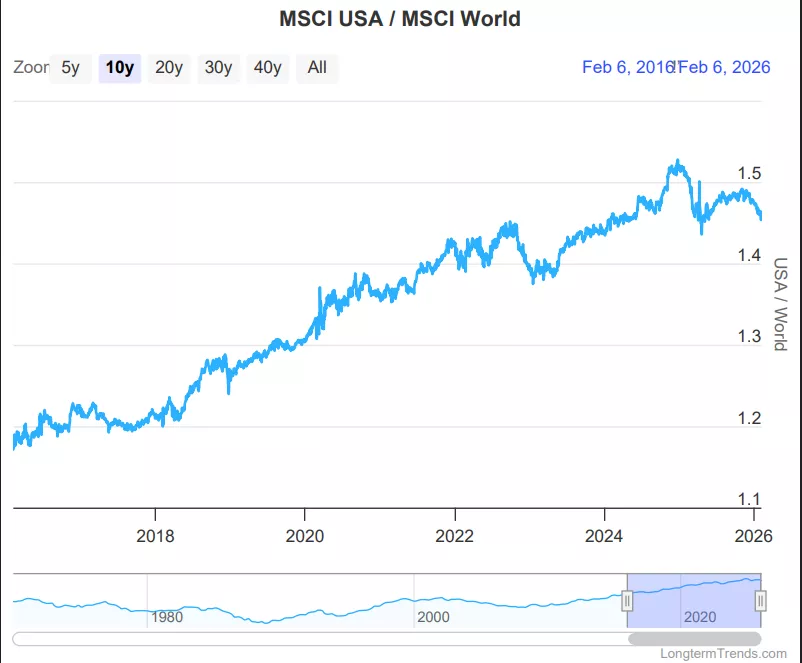
Britain bashing has almost become a national sport yet the FTSE is close to record highs, inflation and interest are coming down and the UK is one of the fastest growing advanced economies! It was second to the US last year and I expect it to remain in that place this year. Few will beat the US as I will show in part two following this article in coming days.
It is also worth remembering the importance of Britain's long history of creativity. London remains the world number one in culture and the performing arts. I mentioned Charles Dickens in my opening words above. Others have included Shakespeare and...
Maybe that creativity was also fundamental to other innovations that include...
- The World Wide Web invented by Berner-Lee
- TV by Logie Baird
- the Telephone by Bell, a Sotsman living in the US
- Penicillin by Fleming
- Electric motors by Faraday
- Steel by Bessemer
- Steam engines by Newcomen and Watt
- The steam train by Stephenson
- The free market economy by Adam Smith
- The US constitution was written by James Wilson - a Scot
Today some of the culture creativity is important in other ways with reports by Visit Britain showing that tourism is worth £147bn annually - 5% of GDP - and supports one in every 15 jobs with 175,00o new jobs expected to be added by 2030.
More By This Author:
London And New York - Leading Investors Back To The Future
Invest In U.S. Exceptionalism
Follow The Money - Invest In The U.S.

Comments
Log in or sign up to join the conversation.