

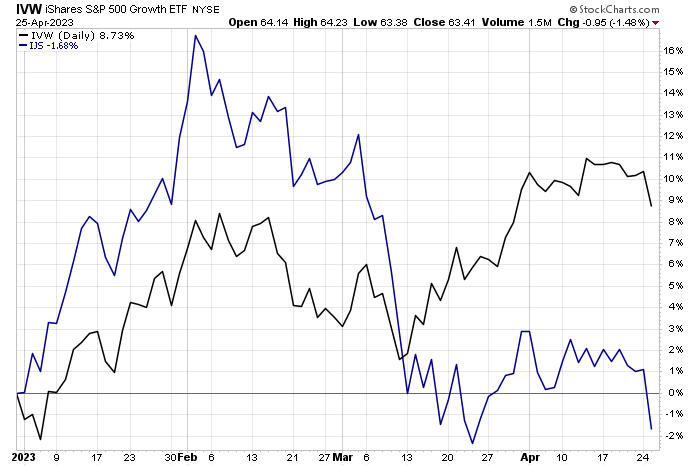
Big-cap growth is back. After taking a back seat to various flavors of small-cap and value factors earlier in 2023, the large-company growth risk factor is again leading the horse race, based on year-to-date returns for a set of ETF proxies through yesterday’s close (Apr. 25).
A month ago it looked like the long-running domination of big-cap growth was faltering, inspiring a new round of forecasts that small-cap and value stocks would lead. But the tide has turned, again, and iShares S&P 500 Growth ETF (IVW) is the top performer so far this year. After stumbling earlier in 2023 while small-cap-value stocks surged (IJS), big-cap growth has rebounded and is currently the top factor performer for 2023 with an 8.7% return. Meanwhile, small-cap value (IJS) has again fallen on hard times after a strong start to the year.
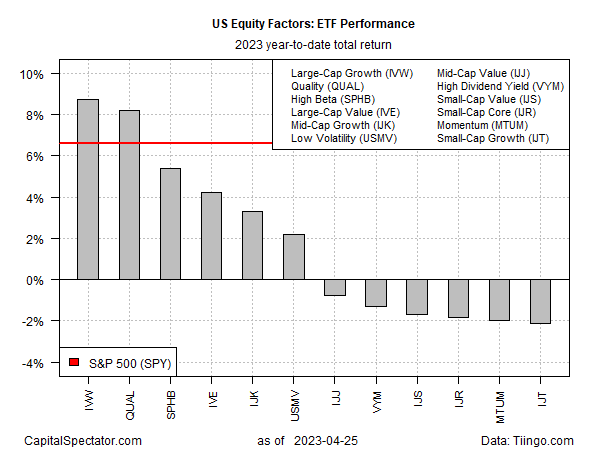
A close second to big-cap growth is iShares MSCI USA Quality Factor ETF (QUAL) for year-to-date factor results. The fund, which targets companies with positive fundamentals, such as high return on equity and stable year-over-year earnings growth, is up 8.2%, just fractionally behind IVW.
Half of the factor opportunity set is in the red so far in 2022. The small-cap and momentum factors are suffering the most. Small-cap growth (IJT) is currently posting the biggest loss via a 2.1% decline so far this year.
The broad US stock market, based on SPDR S&P 500 (SPY) is up a solid 6.6% year to date.
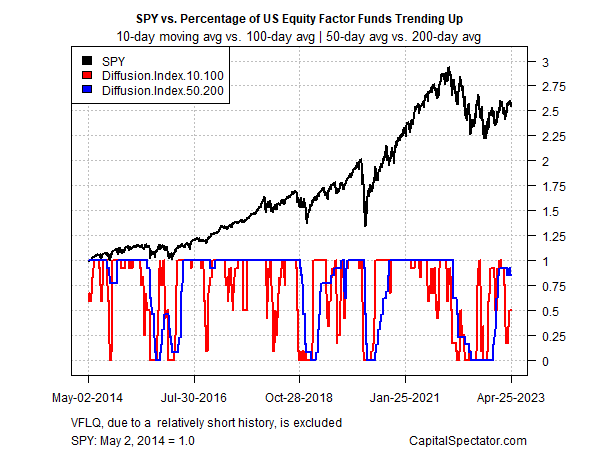
The recent upside momentum for factor funds has turned mixed lately, based on a set of moving averages that aggregate trend behavior for all the factor funds listed above. After a bullish recovery in short- and medium-term momentum, the short-term trend has fallen sharply, which suggests the market has turned cautious on the near-term outlook.
More By This Author:
Moderate Growth Expected For Thursday’s US Q1 GDP ReportUS REITs Rebound, But Bearish Trend Still Weighs On Sector
US Recession Appears Imminent, But That’s Been True For Months


Comments
Log in or sign up to join the conversation.