

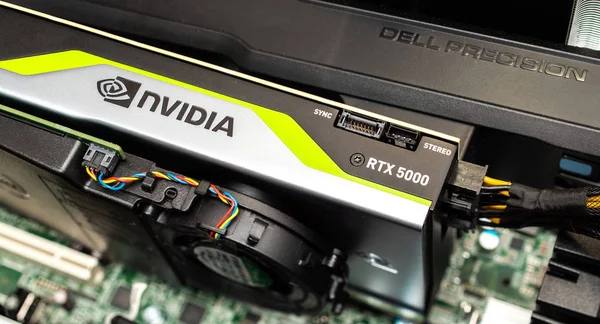
Nvidia helps fund the customers who then buy its chips, and books what they spend as demand. That loop now sits at the heart of a $5.4 trillion company, the most valuable on Earth, and a growing crowd of serious investors thinks it's the crack that gives the whole AI boom away. The stock just posted 117% revenue growth and barely moved. So here's the question the market keeps circling: is Nvidia funding its own boom?
The quarter that should have been a fireworks show
Take the results on their own and they read like fiction. On 26 August Nvidia reported $89 billion of revenue in a single quarter, up 18% in three months and up 117% on the year. The data centre business is more than 90% of that, and it's still gathering pace.
And the guidance was the real shock. Management pointed to $108 billion for the current quarter, at gross margins near 74%. Companies this size aren't supposed to grow this fast, and almost none of them earn margins like that while they do it.
Then comes Vera Rubin, the chip platform that hit full production this year. Nvidia calls it the fastest product ramp in its history, and finance chief Colette Kress told analysts it should be roughly 20% of data centre revenue this quarter. That's around $20 billion, from something that was shipping next to nothing in the spring.
And Jensen Huang went further still. He told analysts that next year's ceiling is how many chips the factories can physically build, because Nvidia can already sell everything it makes. When the largest company on the planet says its only real limit is its own supply, you see why the bulls won't budge.
Figure | Latest |
Q2 FY2027 revenue | $89 billion (+117% year on year) |
Next-quarter guidance | $108 billion |
Guided gross margin | around 74% |
Market value | around $5.4 trillion |
Trailing price to earnings | about 29 |
Buyback authorisation added | $150 billion |
Quarterly dividend | $0.25 per share |
The board also poured more petrol on the fire, adding $150 billion to the buyback and lifting total capacity to $235 billion, then paid its usual token dividend on 1 October. This is a business drowning in cash. On paper, this should have been a fireworks show. The market watched it fizzle.
So why did the stock just sit there?
The all-time closing high was $235.20, back on 14 May. Since then the stock has gone quiet, drifting through the low $220s into late September, boxed inside a 52-week range of $164 to $237.
This isn't a valuation tantrum. At about 29 times trailing earnings, and nearer 24 times next year's, Nvidia is expensive without being absurd.
The unease is coming from somewhere else entirely.
It's about where all that glorious revenue is actually coming from.
The circular-money problem
Follow the money.
The charge is simple, and it's serious. A chunk of Nvidia's demand may be demand it's quietly paying for itself.
Over the past year the company has invested in, lent to, or backed the borrowing of a long line of its own customers. It's also in talks to guarantee OpenAI's leases and bankroll its chip orders, with numbers floating around in the hundreds of billions. The deals that made people sit up:
• Up to $100 billion pledged to OpenAI in September 2025 to build data centres.
• A partnership with South Korea's SK Group reported north of $500 billion.
• Two cheques into CoreWeave big enough to make NVIDIA its second-largest shareholder.
• $5 billion into Ilya Sutskever's Safe Superintelligence, and $1 billion into Naver.
• Around $50 billion earmarked for a Texas data centre with the Bitcoin miner Hut 8.
Put it together and you get what the market now calls circular financing. It's the single biggest reason a record quarter moved the stock precisely nowhere.
Circular financing. When a supplier funds its own customers so they can buy its products, the same money can loop back as revenue. The chipmaker invests in an AI lab, the lab spends that funding on the chipmaker's hardware, and a cloud provider books it all as future backlog. None of it is illegal. The worry is that it can make demand look larger and more durable than it really is, because the buyer only exists as a buyer thanks to the seller's cash. |
The worry isn't theoretical. It rhymes with the last days of the dot-com boom, when Cisco sat at the top of a tangle of vendor financing that unwound in a hurry. When the Nasdaq cracked in March 2000 it lost 77%, and it didn't see that level again for 15 years.
And the bears have a face now, and it's a familiar one. Michael Burry, the man from The Big Short, is short Nvidia, Palantir, Tesla, Micron and Caterpillar going into the back half of 2026, waving a Bank for International Settlements report on hidden leverage in AI-linked deals. Morgan Stanley's Lisa Shalett says these firms are getting dangerously interwoven, and reaches for the same Cisco ghost.
Let me be straight about what I can't prove. The headline size of these deals and the ink actually on paper are often worlds apart. That $600 billion of Nvidia-OpenAI financing everyone quoted in July had shrunk to a $105 billion guarantee by August. So when someone throws a trillion-dollar figure at the AI money loop, treat it as a headline and go looking for the contract underneath.
The real committed total is genuinely hard to establish.
This is the crack in the story, and it's a wide one.
The bull case hasn't gone anywhere
But the sceptics haven't won yet. The loudest bull in the room, Wedbush's Dan Ives, keeps insisting we're at 1996 in the cycle, years before any 1999-style peak, and points out that only a thin single-digit slice of companies have truly put AI to work. If he's right, the demand still coming makes today's build-out look like a warm-up.
There's a harder point buried under the noise, and it's the bulls' best one. NVIDIA's revenue is real cash, already banked, at a 74% margin. That's the opposite of the dot-com poster children that sold a dream and collected almost nothing. Whatever you think of the plumbing, that $89 billion cleared.
Vendor financing is also nothing new. Plenty of industries fund their buyers, and it isn't proof of a con by itself. The build-out, too, is bricks and steel, with gigawatts of power and real concrete going into the ground.
A quick detour. Nvidia spent its first twenty years selling graphics cards to gamers, and half the people who own it now would be surprised to hear the company ever made anything you'd plug into a PC. But back to the point.
Bull and bear, on one page
Cut through the shouting and the whole fight fits in a single table.
| The bulls | The bears |
The revenue | $89 billion, real and banked, 74% margin | Propped up by Nvidia's own funding of buyers |
The valuation | 24 times forward earnings for roughly 70% growth ahead | $5.4 trillion leaves no room for a stumble |
The deals | Ordinary vendor financing, and legal | A closed loop that hides the true demand |
The analogy | 1996, early in the cycle | 1999, with Cisco at the top |
The tell | Sold out, not short of buyers | Rising credit-default spreads, Burry short |
Taking a position without betting the house
If all this leaves you curious but nervous, the old discipline still holds. Keep any position small enough that being wrong won't hurt much. A stock this fought-over is not one to anchor a portfolio to, whichever camp you find more convincing.
If you're building a position from scratch, it's worth knowing about eToro Free Nvidia Shares, a welcome offer that pays new clients in stock rather than cash. The shares are worth $40 to $500, scaled to your first deposit, and Nvidia is one of six names you can choose from. The tiers start at a $500 deposit for $40 in shares and top out at $500 in shares once you put in $10,000, and the first deposit has to stay in the account for 90 days.
Whether you can actually get it depends on where you live, and eToro can pull or rewrite the offer whenever it likes. Worth checking before you bank on it.
Where we land
Our read is that both sides are partly right, which is exactly why the stock is stuck. Nvidia is a genuinely great business selling the one thing every AI company is desperate for. It's also propping up the very customers who then hand the money back, and both of those can be true on the same day.
What we're left with is a wary sort of interest. The results are real and the growth is real. The danger is that a slice of the demand rests on financial plumbing that hums along beautifully until money gets expensive, and money has been getting expensive. The Fed lifted rates in September, and the 10-year Treasury yield brushed 5%.
I'm not short it. I'm not backing up the truck either. Most honest investors are somewhere in that uncomfortable middle right now, and anyone who swears they know how this ends is guessing.
Comments
Log in or sign up to join the conversation.