

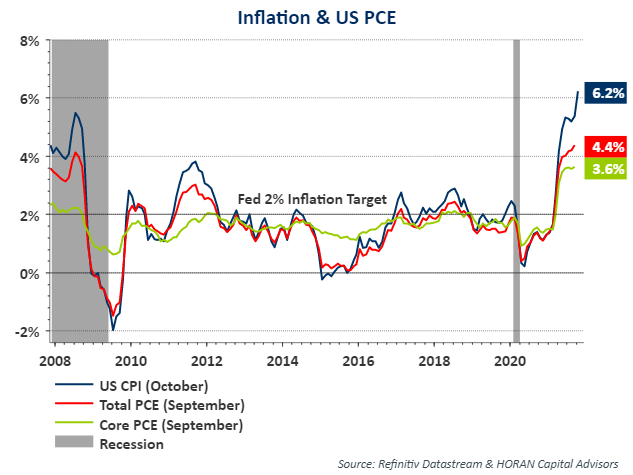
This past week saw inflation reported at a very hot level, up .9% month-over-month and 6.2% year-over-year. If this monthly rate is annualized, the Consumer Price Index (CPI) is up over 10%.
An alternative measure of inflation is personal consumption expenditures (PCE), which reflects the prices of goods and services purchased by consumers, and it is up 4.4% year-over-year. The PCE Index below is a month behind the reported CPI and Core PCE excludes food and energy, but all the measures are above the Fed's 2% inflation target.
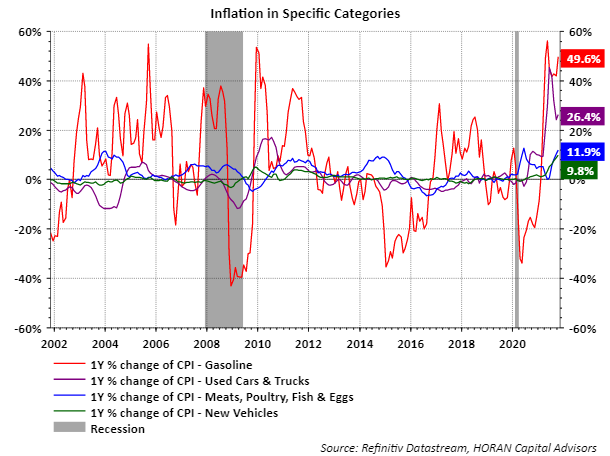
Several categories of inflation have seen outsized increases and have a direct impact on consumers. On a year-over-year basis, gasoline prices are up 49.6%, used car & trucks are up 26.4%, meat prices are up 11.9%, and new vehicles are up 9.8%.
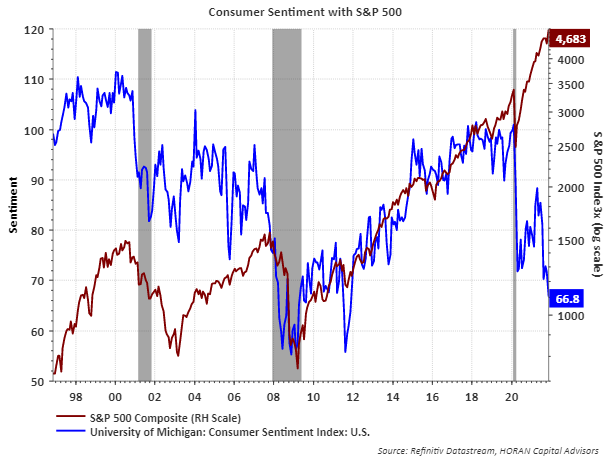
The jump in inflation is resulting in weaker consumer sentiment. The University of Michigan Consumer Sentiment Survey this week declined to its lowest level in ten years. Cited in the report was escalating inflation and a "growing belief among consumers that no effective policies have yet been developed to reduce the damage from surging inflation." The report noted that half of all families anticipated reduced real income in the coming year.
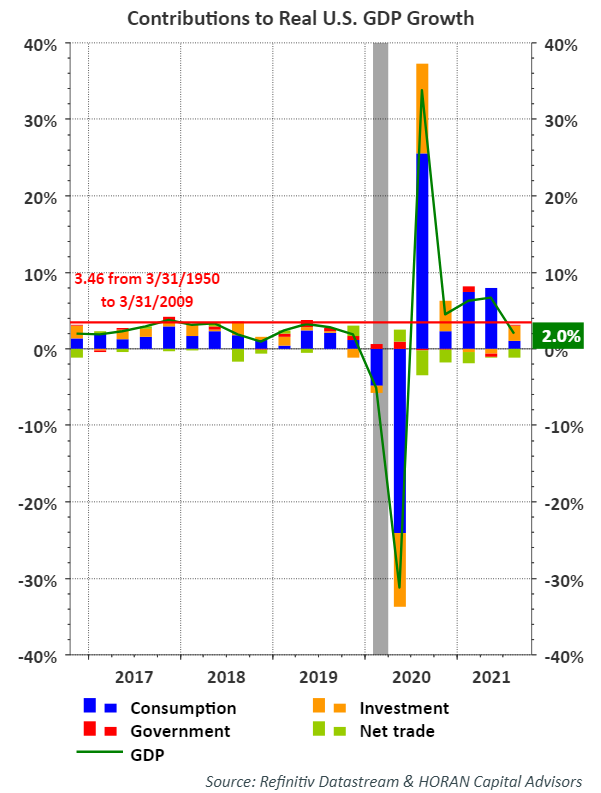
Several of the previously noted categories seeing inflationary spikes, such as gasoline and food categories, mat become a headwind for overall consumer spending as it harms sentiment. With consumer spending accounting for 70% of economic growth, lower GDP growth in the future could become a reality. The first reading on third quarter GDP of 2% may be a sign of subpar growth ahead.
Comments
Log in or sign up to join the conversation.