

Asian shares are trading on a positive note today. The Nikkei 225 is up 0.9% while the Hang Seng is up 2%.
Back home, India share markets opened the day on a positive note. Both, the NSE and the BSE, are trading at their lifetime highs.
The BSE Sensex is trading up by 307 points (up 0.8%) while the NSE Nifty is trading up by 88 points (up 0.8%). The BSE Mid Cap index is trading up by 0.6%, while the BSE Small Cap index has opened the day up by 0.5%.
Sectoral indices have opened the day on a positive note with banking stocks and metal stocks witnessing maximum buying interest.
The rupee is trading at 69.79 to the US$.
In the news from the aviation sector, Jet Airways share price will be in focus today as the board of the company will be considering cost reduction initiatives and turnaround plan along with June quarter results today.
Jet Airways share price opened the day up by 0.2% on the BSE.
In the news from global financial markets, US stock futures hit a record high today after US Federal Reserve Chairman Jerome Powell said that a gradual approach to raising rates remains appropriate to protect the US economy and job growth.
In his closely watched speech at the Fed's annual retreat at Jackson Hole, Powell expressed confidence in the economy and said he does not see inflation getting out of hand. He said that the central bank is focused squarely on not stepping in to halt economic momentum but also wants to be a bulwark against runaway growth. On Friday, Powell said that he expects a slow but steady rate of interest rate increases to continue.
Powell said the current conditions warrant the gradual approach to raising interest rates.
He said that the economy is strong, inflation is near the 2% objective, and most people who want a job are finding one. He also expressed that the Fed carefully monitoring incoming data, and it is setting policy to do what monetary policy can do to support continued growth, a strong labor market, and inflation near 2%.
Note that with the US economy chugging along for many months, the Fed is now gradually easing off the stimulus it provides to the economy by raising interest rates to more normal levels.
Federal Reserve Rate Hike in the Past 3 Years
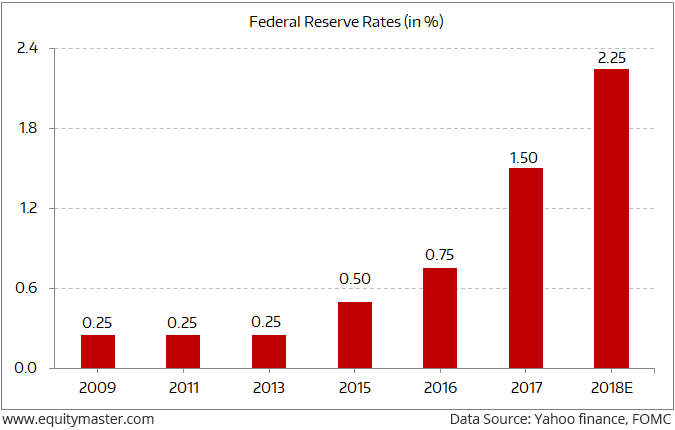
How does a US interest rate hike affect Indian investors?
The instant effect is foreign money moving out of India's vaults. This means a slight correction in the share market in India, albeit temporarily.
While this might provide a good buying opportunity in long-term stocks, the main thing to look forward would be capex and earnings trends.
In the end, Indian investors are better off staying informed about the corporate earnings revival than Fed rate hikes.
It is also worthwhile to note that the Indian stock market has done relatively well during the last period of rate hikes by the US Fed.
Take 2003-2006 for example...
Between 2003 and 2006, the US Fed rate moved from 1% to 5.25%.
Despite this, the Sensex rose from 3,500 levels to more than 10,000 during the same period. This increase was supported by strong earnings growth.
So, in the long term, rate hikes (triggered by economic growth) have proved good for the Indian markets. In fact, earnings growth is at the heart of Tanushree's prediction of Sensex 100,000.
In the news from commodity markets, crude oil is witnessing selling pressure today on concerns that a US-China trade war will hurt global economic growth.
However, looming US sanctions against Iran's oil sector kept crude oil prices from falling further.
Note that crude oil prices rebounded from their lowest level in more than two months in mid-August as renewed US sanctions on Iranian oil sales threatened to limit supplies.
Still, a trade standoff between the US and China that could weaken energy demand continues to weigh on crude prices after negotiations in Washington last week failed to progress.
Speaking of crude oil, oil prices have climbed steadily this year, helped by rising demand. However, rising crude oil prices doesn't bode well for the Indian economy, as it not only affects fuel prices, but also has many other repercussions on the macroeconomic level.
They can be a big worry for the Modi government as well as it has been a big beneficiary of lower crude oil prices.

Comments
Log in or sign up to join the conversation.