

South Korea’s inflation pressures broadened and firmed in May. With growth holding up and inflation on a higher path, the Bank of Korea is poised to begin a new tightening cycle. We expect the BoK to raise rates by 25bp in July, October, and again in the first half of 2027
Consumer inflation accelerated faster than expected
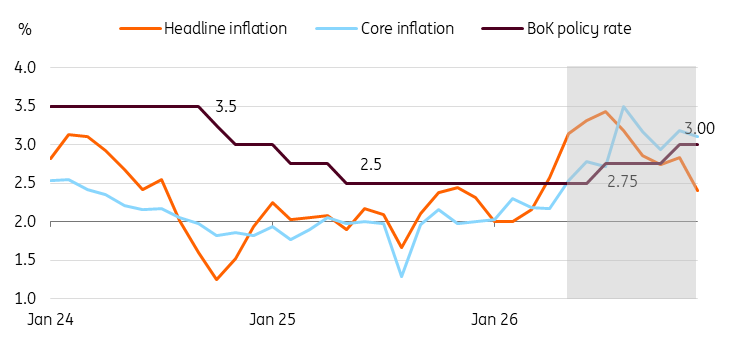
South Korea’s CPI inflation rose 3.1% year-on-year in May (vs 2.6% in April, 2.9% market consensus, 3.0% ING). The main driver was fuel, with gasoline and diesel prices up 23.1% and 33.3%, respectively. The government maintained its gasoline price cap and extended its fuel tax cut. But pressures strengthened and broadened to other items. There were noticeable increases in airfares (30.1%) and IT gadgets (14.3%). Other major items, such as clothing, furnishings, and housing, rose compared to the previous month. Thus, core inflation also accelerated firmly by 2.5% (vs 2.2% in April and market consensus). We expect inflation to accelerate further towards 3.5% in the coming months as energy prices remain elevated and second-round effects intensify.
BoK is set to deliver rate hikes as early as July
With higher inflation and another solid export outcome, the odds of the Bank of Korea hiking rates in July increase. Also, Governor Shin Hyun-Song delivered another hawkish message earlier this week, saying that macro conditions continue to support policy tightening.
We believe that the key question for markets is how quickly and how much the BoK will move. Market pricing implies 100 bp of hikes over the next 12 months, while economists’ forecasts range from two to four hikes.
We expect a total of 75 bp hikes by the first half of 2027. The terminal rate will depend on how strong IT and export growth feed through to the domestic economy. Once the policy rate reaches 3%, the BoK is likely to proceed cautiously with additional tightening as policymakers worry about exacerbating the K-shaped recovery. Governor Shin argued that the domestic economy should benefit from positive spillovers, including improved wealth effects and indirect fiscal support. Meanwhile, the latest BoK outlook expects firm growth and sticky inflation in 2027. This will justify BoK tightening moves with the terminal rate of 3.25%.
Inflation is likely to rise toward 3.5% in coming months, supporting the BoK's rate hikes
Comments
Log in or sign up to join the conversation.