


Yesterday was a big day for inflation data as the BLS released April CPI (Consumer Price Index).
We all knew that spiking energy prices from the Iran War would impact headline CPI, but it was the core CPI reading, which strips out food and energy, that everyone was watching closely.
While economists expected core CPI to increase 0.3% month-over-month, it came in a tick higher than expected at 0.4% (4.6% annualized).
The jump in core CPI sent equity futures lower ahead of the open as interest rates rallied. Market pricing for Fed rate cuts took another hit, and the odds for rate hikes before year-end ticked higher.
When we looked underneath the surface of the core CPI print, the data wasn't quite as scary.
The analysis below was included in our post-market macro note, The Closer, sent to Bespoke All Access subscribers yesterday.
While this was the second-largest monthly leap in core CPI since early 2023, rising 4.6% annualized, that acceleration was entirely due to the vagaries of the rent calculation.
Excluding rent, core CPI rose just 1.6% annualized and still looks similar to the pace it has trended at since 2023.
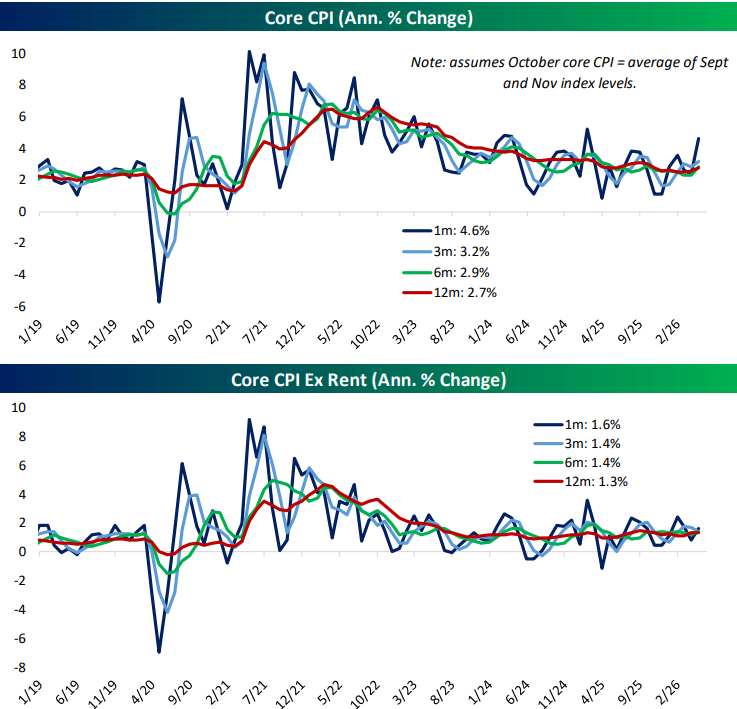
Because households are included in the rent survey on a six-month rotation, that index is still getting caught up from the government shutdown last year.
Households skipped in October were assumed to have no rent inflation for the last six months, which effectively jammed a year of rent increases for that subset into the April CPI report.
The result was a huge spike in rent in yesterday's CPI release, which was a statistical mirage similar to the plunge observed in October. It should reverse in the coming months.


Comments
Log in or sign up to join the conversation.