


Gold (XAUUSD) has moved back above $3,600 after a steep decline pushed prices below $3,430. Stronger equity markets have helped ease immediate pressure. However, persistent US inflation and faster economic growth keep further Federal Reserve rate increases in focus. The latest advance offers some relief, but gold remains below an important area of former support. Its next move will depend on economic data and progress toward $3,850–$4,000.
Gold Rises with Stocks as Inflation Keeps Fed Rate Increases in Focus
Gold is moving toward $3,700 as improving stock markets support demand after two weeks of losses. The metal gained more than 2.5% on Monday as pressure from forced asset sales eased. The Nasdaq Composite rose nearly 7%, while the S&P 500 gained about 4.7%. Gold later reversed part of that advance before strengthening again toward the end of the week. This positive relationship with equities suggests that changes in market liquidity remain important. It does not establish a permanent link between the two markets.
US economic figures released on November 25 complicated the outlook. Annual headline Personal Consumption Expenditures (PCE) inflation rose to 3.8% in October from 3.7% in September. Annual core PCE inflation increased to 3.3% from 3.1%. The Bureau of Economic Analysis (BEA) also revised third quarter US GDP growth to an annualised 4.3% from 3.4%. These figures suggest that inflation pressure persists while economic activity remains firm. That combination could support further Fed tightening. Higher interest rates increase the appeal of income producing assets and can weigh on gold, which pays no interest.
Trade policy adds another source of uncertainty. Reports of possible US tariff increases on China, and the European Union weakened stocks on Tuesday and coincided with renewed gold losses. Higher tariffs could add to inflation pressure, while another equity decline could revive demand for cash. In this environment, gold may remain sensitive to both stocks and the dollar. Upcoming US economic releases could change expectations for Fed policy. Softer figures could support further gains, while stronger inflation or growth readings could limit the advance.
Gold Technical Analysis: $3,850–$4,000 Resistance Remains in Focus
The gold chart below shows price rising from the lower boundary of a descending channel. Gold briefly fell below this boundary toward $3,430 before moving back above $3,600. The price stands near $3,652. This response suggests that downward pressure has eased around the lower channel boundary near $3,500. However, the descending structure remains in place. The latest rise therefore represents an improvement from the recent low, without confirming a lasting change in direction.
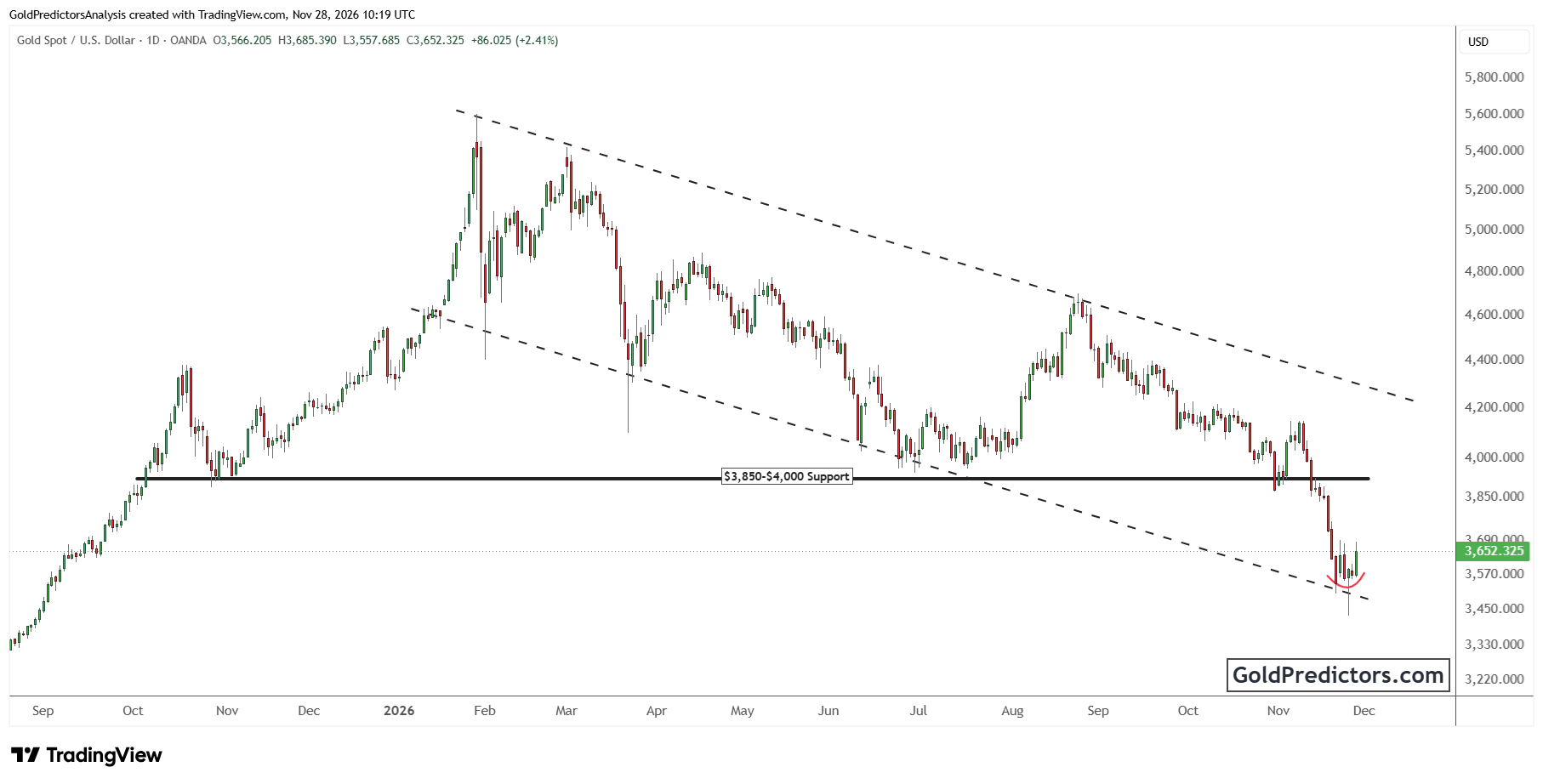
The first upside reference lies around $3,700. A sustained move above this level could bring the $3,850–$4,000 area into focus. This range previously provided support, but the November breakdown means it may now act as resistance. Gold needs to regain this area to improve the technical outlook. Repeated failure below it would leave the market exposed to further declines. If price establishes support above $4,000, the upper channel boundary around $4,200–$4,300 could become relevant.
On the downside, $3,500 remains an immediate support reference near the lower channel boundary. A decline below it could bring the recent low around $3,430 back into focus. A sustained break below that low would weaken the latest stabilization and increase the risk of an extended decline. For now, price remains close to the lower side of the channel, where further consolidation remains possible.
Gold Outlook: Recovery Gains Momentum but Faces Major Resistance
Gold has gained support from stronger equities, but US inflation and growth continue to complicate the outlook. Further progress above $3,700 could open a test of $3,850–$4,000. Continued price strength above $3,500 would support stability. A renewed decline below $3,430 would weaken that view. Economic data and the response at former support will help determine whether gold can extend its advance.



Comments
Log in or sign up to join the conversation.