

German inflation slowed again in June and shows very few signs of any knock-on effects from higher energy prices so far.
Who’s still afraid of inflation? Looking at Germany’s just-released first estimate, German headline inflation dropped in June to 2.3% year-on-year, from 2.6% YoY in May. The European inflation measure, more relevant for the European Central Bank, came in at 2.4% YoY, from 2.7% YoY in May.
What's even more important is that compared with last month, prices dropped by 0.3% – the first time since the summer of 2024 that prices dropped for two months in a row. Both core inflation and services inflation remained unchanged in June, at 2.5% YoY and 3.1% YoY, respectively.
Reintroducing 'transitory'
Looking at the available components, it was not only energy prices that actually dropped compared to May, but also food prices and prices for transportation, leisure, clothing and household goods. As regards year-on-year inflation, it was mainly energy, goods and food price inflation that slowed down in June. In fact, today’s German inflation numbers provide very little evidence of any knock-on or indirect effects from higher energy prices on the rest of the economy.
Looking ahead, as today marks the last day of the government’s tax rebate on fuel, inflation should accelerate again next month, even if global energy prices have come down. Beyond the fiscal stimulus reversal, we still expect some knock-on effects from higher energy prices on transportation costs, food prices and other industrial products over the coming months.
On top of that, the current heatwave in Europe clearly bears an additional inflationary risk. Lower water levels in main waterways could bring new supply chain disruptions, and damaged crops could add to food price inflation.
Looking beyond these knock-on or indirect effects, however, there is still little evidence of any self-reinforcing inflationary spiral. Selling-price expectations in both manufacturing and services have started to come down again, and with the worsening labour market, wage developments remain muted. After last night, the sales of Germany’s national football team merchandise could be another unexpected disinflationary driver in July.
Overall, German headline inflation should still accelerate to around 3.5% YoY (but nowhere near the 2022 inflation numbers) in the second half of the year, before dropping below 2% YoY again in 2027. We know that the ECB doesn’t like the term, but to us this looks pretty ‘transitory’.
How a second rate hike could become a policy mistake
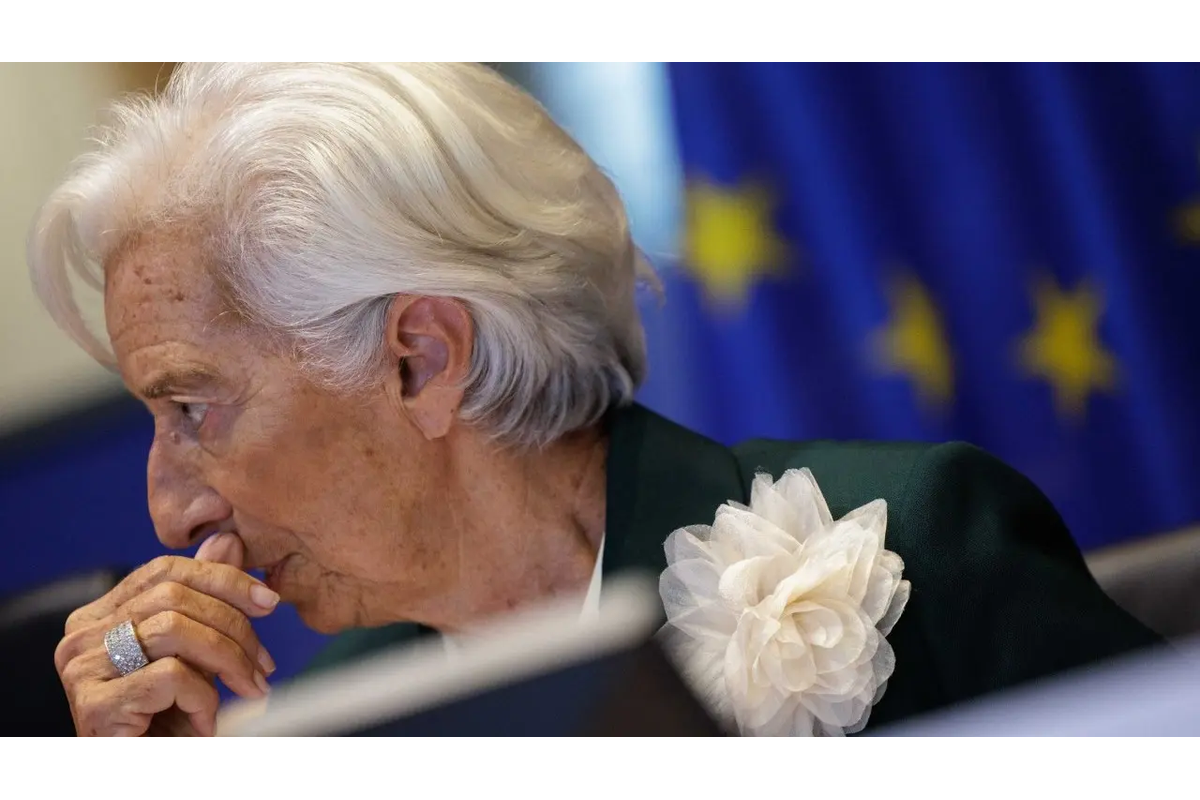
Last night in Sintra, ECB President Christine Lagarde repeated her comments from the last press conference that the June rate hike was not an insurance hike. Instead, according to Lagarde, it was a decision driven by an outlook of higher headline and core inflation – inflation forecasts of above 2% in 2027 and 2028, and forecasts that also had core inflation at 2.7% in early 2027. With the recent drop in energy prices, however, chances have increased that at least the headline inflation forecasts could suddenly show headline inflation below 2% in 2027. Would such a scenario stop the ECB from hiking a second time this summer? Judging from Lagarde’s comments last night and other ECB officials in recent weeks, the answer is no. In fact, the ECB currently looks set to hike again. As long as the core inflation forecasts aren't revised downwards, there appears little in the way to stop the ECB.
Whether a second rate hike is really what the eurozone economy needs – or what an inflation outlook that increasingly lives up to the legendary ‘transitory’ really requires – remains a different story. Today, at least, German inflation data provides very little evidence of any scary indirect or knock-on effects, but could instead give rise to a new debate on the simple option of looking through a temporary energy price shock by doing nothing.
Comments
Log in or sign up to join the conversation.