

Markets are fully expecting a 25bp hike to 4.0% today, and a surprise hold or strong dovish dissent could have a materially negative impact on the dollar. But that’s a small risk, as the FOMC is likely mindful of any adverse Treasury-market implications. Openness to further hikes by Warsh can leave the dollar broadly supported..
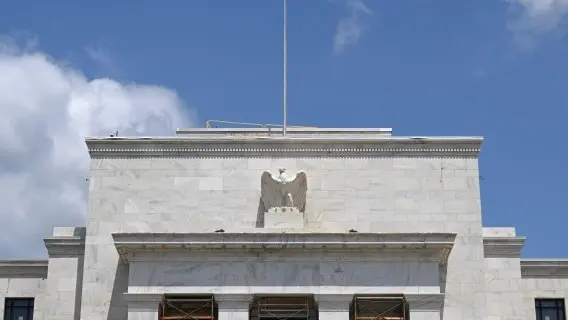
A Federal Reserve hike of 25bp is widely expected today.
USD: Warsh can give dollar a bit more help
We expect the Fed to raise rates by a consensus 25bp to 4.0% today. Markets are pricing in 23bp for today, 52bp by year-end, and 89bp by June. A surprise hold would likely deliver a big blow to the dollar: both through the dovish repricing in front-end rates and a likely selloff in the back end. The Fed is likely well aware of that risk for Treasuries, which should keep the probability of a hold low.
That, in our view, also argues for a hawkish message. A dovish hike may not be enough to convey the monetary policy discipline bond investors currently demand, particularly given the amount of tightening already priced into swaps. Recent bond market headlines may even have helped bring some FOMC members behind a hike, reducing the likelihood of visible dissent, at least for now.
If anything, the new economic projections pose some risk of dovish disappointment. Inflation may be revised slightly lower, while our economists expect the median dot plot at 4.0% in both 2026 and 2027, well below market pricing. Even so, we think Chair Kevin Warsh’s press conference will be the key driver of the market reaction. Any openness to further tightening can support the dollar by reinforcing policy credibility and countering any debasement trade risk premium.
Incidentally, the external picture argues against building sizeable USD shorts at this stage. Brent is aiming for $110/bbl, as Iran-Gulf negotiations are delayed again, and softness in tech stocks is weighing on overall sentiment. These conditions suggest markets are more likely to fade a negative dollar reaction to the Fed today, unless triggered by a significant dovish surprise, rather than a positive one.
Before the Fed, the August US retail sales release is also due. However, with such a major risk event looming, we expect a relatively muted market response.
EUR: 1.150 test can come sooner than later
Today’s Fed announcement can take EUR/USD closer, if not all the way, to our 1.150 target. We are not ready to call an imminent end to the decline given the energy price backdrop, but below 1.150 the risks should become more balanced from a technical/short-term valuation perspective. Short-term rate differentials wouldn’t accommodate big moves lower, and the risks of any political/domestic risk premium build-up appear more concentrated on the US ahead of the midterms than the eurozone (even though the French budget is a concern).
Looking a bit further ahead, our macroeconomists’ calls for no further hikes by both the Fed and ECB imply room for sharp dovish repricing in both the EUR and USD curves. A coordinated move lower in front-end rates can put a floor under EUR/USD, as would likely happen alongside a decline in energy prices. Lower USD funding costs usually have a positive knock-on effect on global sentiment.
Elsewhere, EUR/GBP is trading a tad higher this morning after UK inflation figures printed in line with consensus. Headline CPI accelerated from 2.9% to 3.1% in August, but there is still no evidence of accelerating inflation in core and services. That’s something Bank of England doves can cling to tomorrow, tilting the balance to a more dovish message relative to very hawkish market expectations. We still target a return above 0.860 in EUR/GBP in the coming days.
NZD: Growth slowdown can curb hawkish pricing
New Zealand published second-quarter GDP data overnight. Expectations are for a material growth slowdown to just 0.1% QoQ after a strong first quarter (0.8%). Those figures play a secondary role for the Reserve Bank relative to inflation and jobs, but given the low (quarterly) frequency of key data releases, the market impact can be magnified.
At its September meeting, the RBNZ delivered a dovish surprise, signalling there is only room for another 25bp to 3.0%. That should not be taken as a commitment, and the longer energy prices remain elevated, the higher the chances of upward revisions in policy projections by year-end.
Our call remains for the next and last hike in December, but chances of an October move are increasing, with markets pricing in around 65% probability. Tomorrow's GDP can be an important input for those October expectations.
That said, NZD/USD remains primarily driven by global risk sentiment and US events. We think the decline has a bit further to go on a Fed hike and risk assets' fragility. For the moment, we see 0.570 as a bottom, though, with room to bounce back towards 0.59 as early as year-end on some dovish Fed repricing.
CEE: Energy risks limit the scope for an FX recovery
Today brings the first notable CEE data releases, although global repricing and elevated energy prices are likely to limit the local market impact. Poland’s August core inflation is expected to edge up from 3.1% to 3.2%. Czech August PPI, the last data release before Thursday’s central bank meeting, follows July’s renewed acceleration. Hungary’s July wage growth is also expected to accelerate, from 7.0% to 8.1%.
CEE markets stabilised yesterday after Monday’s sell-off, with pricing settling at around five rate hikes each in Poland and the Czech Republic and just under one rate cut in Hungary. As noted yesterday, wider rate differentials should support FX, as reflected in the stabilisation of CEE currencies. However, gas and oil prices remain elevated, with little relief in sight. Given the region’s high energy-price exposure, a sustained CEE FX rally appears unlikely. We therefore maintain our neutral view.



Comments
Log in or sign up to join the conversation.