

As market volatility remains elevated, traders and investors are now closely monitoring how major indices perform, to have an overall picture of the risk appetite. Europe is in the spotlight, given the recent geopolitical tensions in Ukraine and until an end is in sight, there are more questions than answers regarding where stock markets are headed.
The FTSE 100, or UK100, is the benchmark for the London Stock Exchange and since this is one of the leading financial hubs of the world, there should be increased attention on its performance. With that in mind, let’s explore some key aspects of the index.
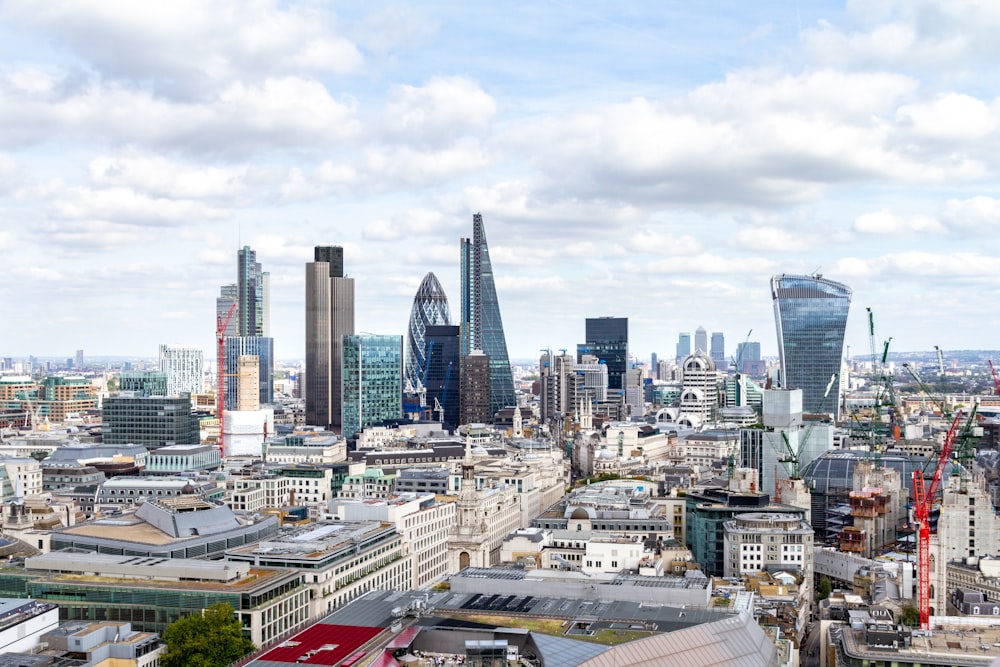
The city of London. Image source: Unsplash
Background on FTSE 100
Launched on January 3rd, 1984, FTSE 100 replaced FT30 as the performance benchmark for stock investors. It represents a cap-weighted index of the largest 100 qualifying UK companies, maintained by the FTSE Group, which is now a wholly-owned subsidiary of the London Stock Exchange.
Just like the S&P 500 or Nasdaq, companies with a large market capitalization weigh significantly on the index price. That’s why stocks of brands like HSBC Holdings, Unilever Group, Diageo, and GlaxoSmithKline are dominant.
According to TRADE.com, one of the leading brokerages offering CFD trading services, FTSE 100 remains a popular index for retail traders, even though there are some attractive alternatives in the UK like the FTSE All-Share Index or the FTSE 350 Index.
Recent performance of the index
Over the past 20 years, FTSE 100 has been relatively sideways, currently trading a little above the 2007 high. After the dot.com bubble, the financial crisis, Brexit, and the COVID-19 pandemic, the index managed to jump from the lows and erase the losses, yet made little to further advance like its European peers, such as DAX40.

London Stock Exchange and FTSE 100. Image Source: Unsplash
Although FTSE 100 is now widely available for trading, including via providers like TRADE.com, it continues to underperform, due to several important factors. Conditions have been aggravated even further after the United Kingdom left the European Union.
Financial institutions started looking at Frankfurt or Paris as a better place for their businesses, while the UK economy overall suffered from shortages in the labor force and difficulties when importing goods. The isolationist policy of the Kingdom is behind the poor performance of the financial market, especially given that the country has been active on the global stage for centuries.
Forecasts for the near term
In terms of the potential near-term direction of the FTSE 100, the war in Ukraine, BoE normalizing monetary policy, and inflation dynamics can influence whether stocks are attractive or not. Current price action developments are not favoring a rapid bounce-back, so there could be more pain ahead before sentiment starts to improve.
If the market continues to sell off below 6,900, there’s scope for further weakness towards the 6,500 area. In the opposite scenario, improvements in the geopolitical landscape, combined with growing optimism that the global economy will not have to undergo a commodities shock, may start to boost FTSE 100 once again.


Comments
Log in or sign up to join the conversation.