


At the end of June, we warned that margin calls—that is, leveraged investments—could lead to a sharper correction. The correction did indeed come. However, it didn’t quite follow our script: Instead of affecting the overall market, it hit AI stocks the hardest. Even reports from South Korea indicated that numerous investors lost everything they had through speculative trading on credit. Still, we stand by our view: Margin debt remains a hot topic...
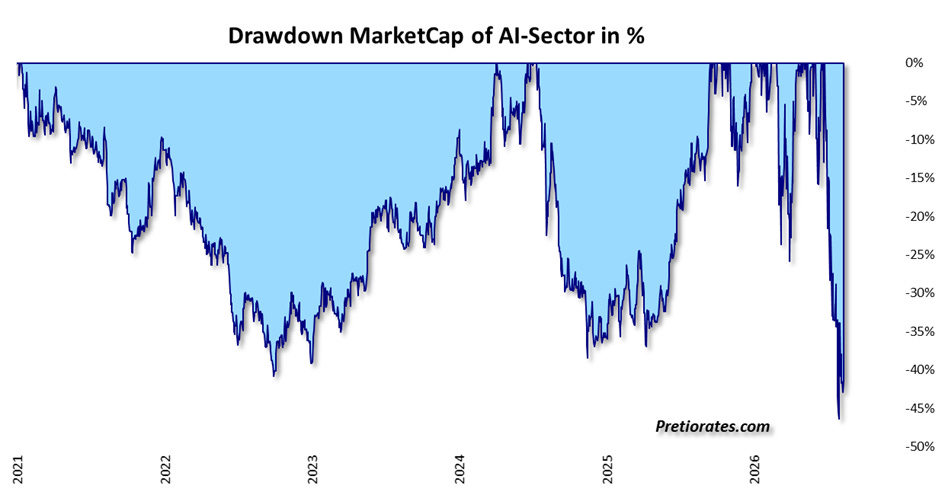
Our own AI Index vividly illustrates just how severe the correction was: In extreme cases, it lost over 45% in less than two months. That’s no longer just a minor dent.
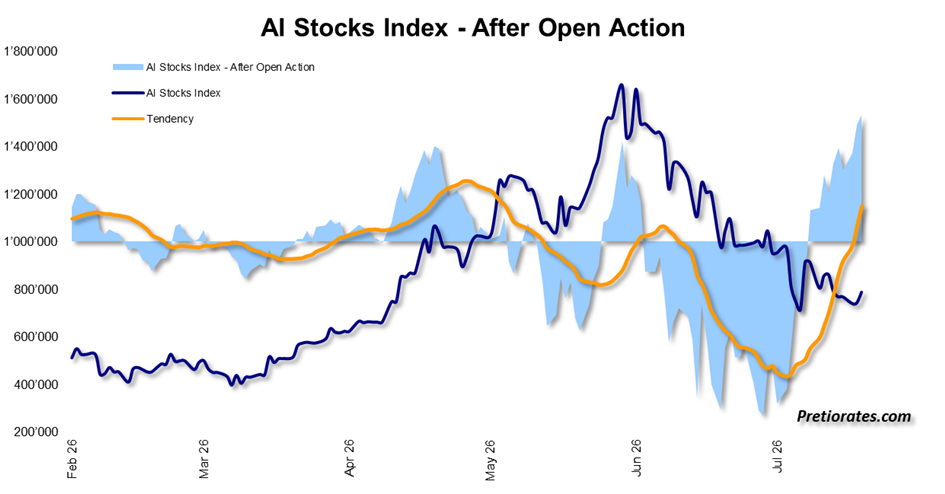
What’s interesting, however, is what’s happening beneath the surface. The after-hours activity of our AI Index shows that massive accumulation has been taking place behind the scenes for a few weeks now—even though the index itself is still falling. So while selling continues at the front, shopping carts seem to be filling up again at the back.
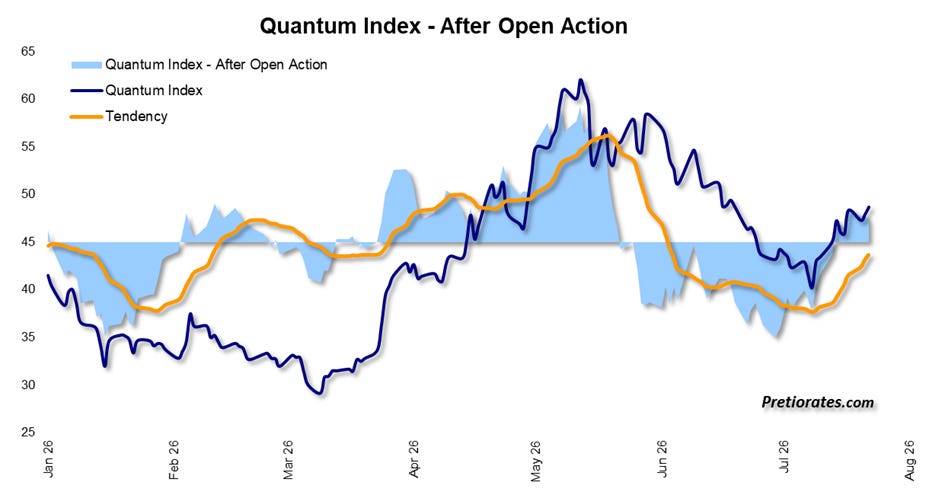
A very similar picture emerges in our Quantum Index. In mid-May, accumulation practically stopped overnight—and since then, the Quantum Stock Index has also lost more than a third of its value. But here, too, the picture behind the scenes is already shifting again: accumulation has long since resumed.
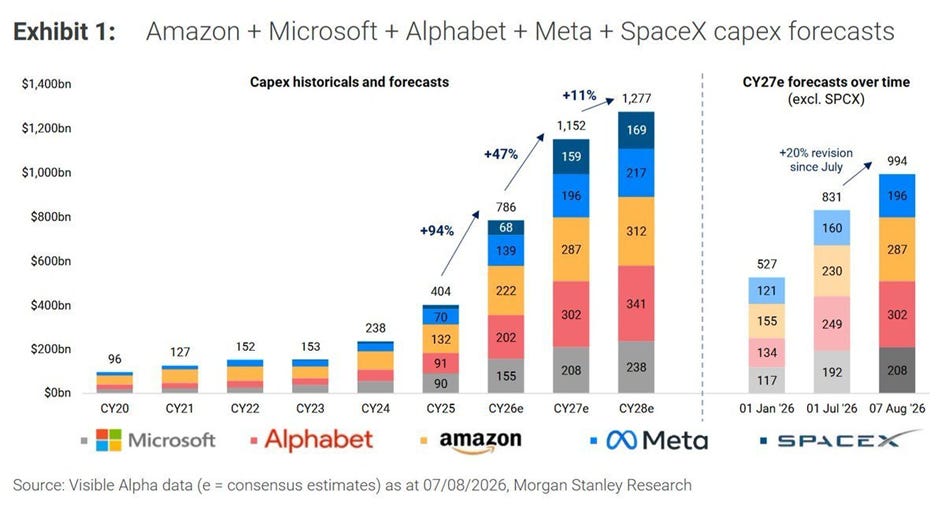
We are convinced that the computing power of quantum computers will expand the capabilities of AI many times over. And not sometime in the distant future, but within just a few years. The management teams of the hyperscalers are likely convinced of this as well—otherwise, their incredible investments, which now run into the trillions, can hardly be explained. So here’s a little reminder to everyone talking about an AI bubble: Are you really convinced you’re smarter than the management teams at Microsoft (MSFT), Alphabet (GOOGL), Nvidia (NVDA), Amazon (AMZN), Meta (META), or SpaceX??? Perhaps the current correction in some AI stocks is less of a warning sign and more of an opportunity?
In our latest issue, we also speculated that the Bank of Japan’s meeting might be more important than that of the Fed, which took place exactly two weeks ago. We received remarkable confirmation of this as early as the beginning of last week. For the first time since 1998 and 2011, the U.S. central bank has helped prop up the Japanese yen. 1998 was marked by the LTCM and Asian crises, while in 2011 Japan had to cope with the Fukushima disaster. The fact that the Fed is now supporting the yen for the first time since then should clearly demonstrate how seriously central banks are taking the current developments among the major currencies.
Japanese investors are the largest foreign buyers of U.S. Treasuries. If their own currency falls, the temptation to sell these investments—along with substantial currency gains—naturally increases. However, if Japanese investors were to exit the U.S. Treasury market on a large scale, U.S. market yields could rise even further. Then a currency problem would suddenly turn into a bond problem—and the high level of U.S. debt would be back in the spotlight faster than Washington would like. It is therefore hardly surprising that the U.S. Treasury has a very strong interest in helping the yen regain its former strength.
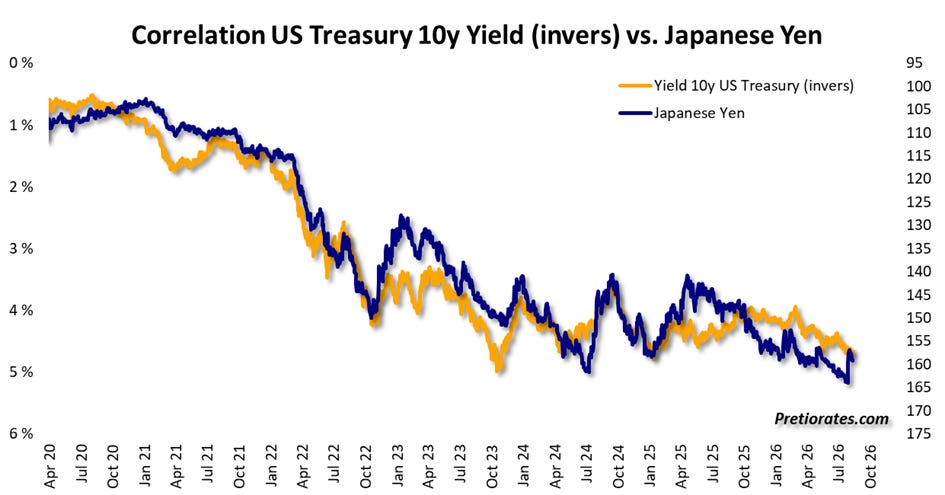
It is therefore quite possible that at its next meeting in September, the Bank of Japan will have to deploy what is arguably its most effective tool for strengthening the currency: higher interest rates.
This, however, brings us to the next topic we’ve discussed here on several occasions: carry trades—that is, positions financed by borrowing that take advantage of Japan’s very low interest rates to invest profitably in other currencies.
No one knows exactly how many billions—or even trillions—of these positions are still outstanding. We have often speculated that at some point these positions will no longer be refinanced, which would likely cause the yen to rise. So far, however, there has been little reason for the holders of such carry trades to rush. Although interest rates have risen, they remain comparatively low worldwide. At the same time, the yen has fallen, making repayment even cheaper. But with every interest rate hike by the BoJ—and as the yield spread between U.S. Treasuries and Japanese bonds narrows—interest in continuing these trades is likely to wane. When the loans are finally repaid, yen will have to be repurchased to cover them. And that is precisely what could give the Japanese currency a strong boost.
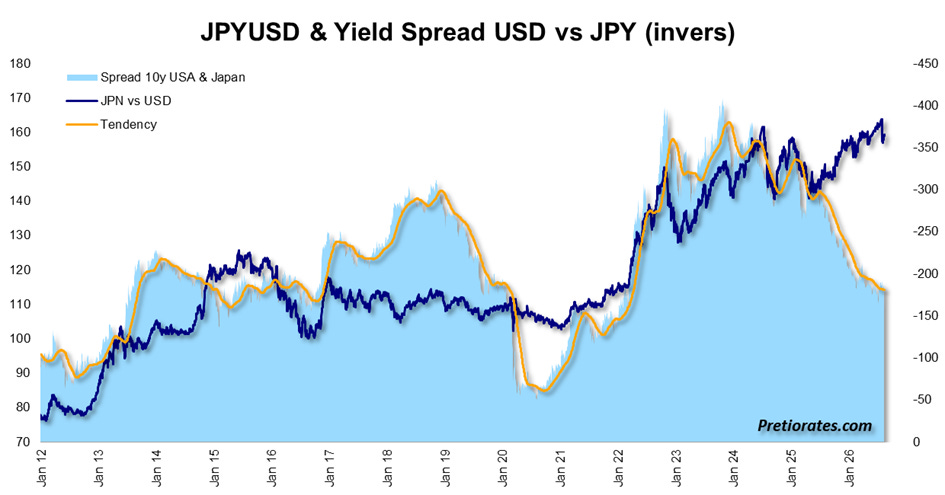
Is this scenario just speculation? Yes. But the alternative isn’t necessarily more reassuring. Should the yen continue to lose value, the resulting tensions could eventually spill over into the U.S. Treasury market—and things there would likely become quite uncomfortable and, above all, very expensive.
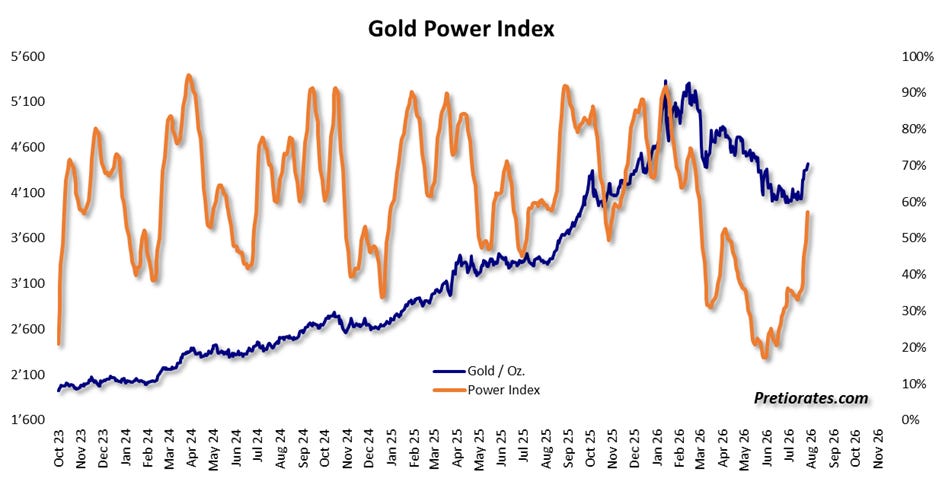
Over the past 30 years, the Japanese yen has been, in a sense, the “academic gold.” Just over twenty years ago, gold and the yen were quite comparable: neither paid interest. Mathematically minded investors, however, saw at least some “equivalent value” in the Japanese currency. That perspective has since shifted again. This makes what we’ve been observing for the past few weeks all the more interesting: gold’s Power Index is once again showing a clear upward trend…
Incidentally, it’s also intriguing that market discussions are already speculating about a possible replacement currency for the yen carry trade—a currency that also offers low interest rates. The candidate? The Swiss franc. But that’s a topic for a future issue of Pretiorates’ Thoughts …



Comments
Log in or sign up to join the conversation.