


Cracks are reappearing in the Hungarian labour market amid demographic decline, an uncertain business outlook and geopolitical tensions. The situation is far from catastrophic, but better days are unlikely anytime soon
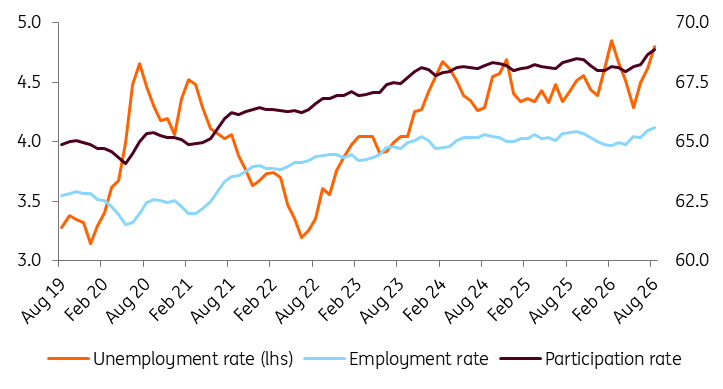
Hungary's unemployment rate has risen slightly once again, according to the latest labour market statistics from the Hungarian Central Statistical Office (HCSO. In August, the unemployment rate rose to 4.7% according to the monthly model estimate. Meanwhile, the official three-month moving average survey moved upwards to 4.8%, which is now just 0.1ppt below the 10-year high seen at the end of 2025. Both indicators suggest a negative trend emerging in the labour market. The number of unemployed people also increased, reaching approximately 230,000-235,000 by August and approaching a 10-year high. The deterioration is evident not only in the key indicators, but also in the fact that one in three unemployed people has been looking for a job for more than a year, suggesting that finding employment is becoming increasingly difficult.
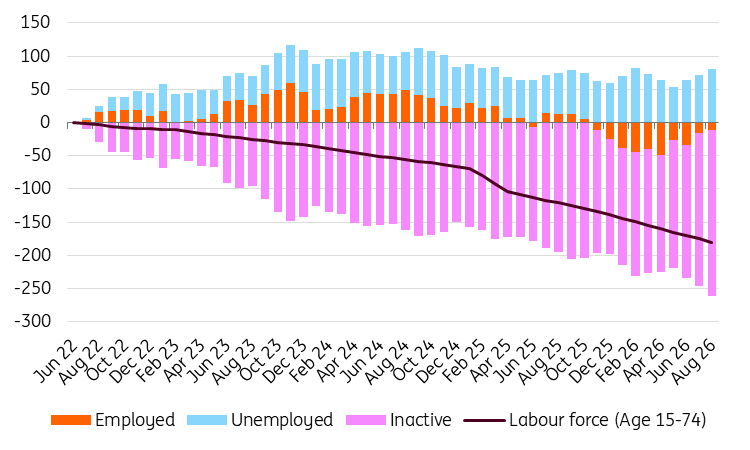
Examining the details, we can conclude that the population decline continued at the familiar rate of 5,000 people per month. This contributed to the decline in the number of economically active people in August. At the same time, the decline in labour market participation was also due to people reaching retirement age, with nearly 9,000 individuals transitioning from active to inactive status. Unsurprisingly, employment also declined by roughly 21,000 people from July to August. Of these, 14,000 had already left the labour market, while 7,000 joined the ranks of the unemployed. This all fits into the broader picture of an increasing number of companies implementing workforce rationalisation measures to cut costs.
Seasonal jobs, which typically emerge during the summer, usually help to stabilise labour market indicators. Assuming this premise remains, we can infer that underlying trends may have deteriorated more significantly than the headline figures suggest this August.
Changes in the labour market since mid-2022 ('000, 3-m moving avg)
Based on the figures, the Hungarian labour market remains tight but remains significantly less severe than at the end of the 2010s when acute and widespread labour shortages were commonplace. Ongoing geopolitical uncertainty and expected changes in domestic economic policy continue to limit the growth of business optimism. According to the latest GKI survey, businesses' willingness to hire remains slightly negative, meaning those planning to reduce their workforce slightly outnumber those planning to expand. Respondents from the construction industry were particularly pessimistic in September. It seems that rising labour costs are forcing more and more companies to streamline operations, and it is hard to believe that planned workforce reductions are primarily driven by a desire to improve efficiency.
Historical trends in the Hungarian labour market (%)
We do not anticipate any significant changes to the supply side of the labour market in the future; this will continue to curb companies’ plans to make layoffs, as no demographic shift is on the horizon. Based on August data, the supply side of the labour market has 180,000 fewer people than at its peak in mid-2022. For comparison, Hungary’s second-largest city’s total population is estimated at 200,000.
As the end of the year approaches, the issue of next year’s wages is also becoming increasingly pressing, forcing employers to make difficult decisions. The three-year wage agreement will certainly need revising, and the expected overhaul of the personal income tax system may also create a new situation. The sooner companies gain clarity on these issues, the sooner new trends in the labour market will begin to emerge. In light of the latest data, we are maintaining our labour market forecast for this year, which projects an average unemployment rate of around 4.5%. However, whereas risks were balanced until now, we have identified some upside risks to our unemployment rate forecast due to prolonged geopolitical uncertainty.



Comments
Log in or sign up to join the conversation.