

Industry, the main engine of French growth, is losing steam while other growth drivers remain stalled.
Manufacturing output declines
In recent months, the French economy has displayed a degree of duality. While weak household sentiment has weighed on the services sector and domestic demand, industry has performed much better, supported by strong external demand and a highly favourable sectoral mix. However, the data released today suggests that the main engine of the French economy is beginning to lose momentum.
Manufacturing output fell sharply in May, declining by 1.0% month-on-month after a 0.6% increase in April (revised upwards). The downturn was broad-based across sectors. Part of the decline, however, particularly in the production of transport equipment excluding motor vehicles, is not especially concerning. Aircraft and shipbuilding output is inherently volatile given the size and complexity of the products involved. Although production in this segment declined by 2.0% in May, it remains more than 20% higher year-on-year.
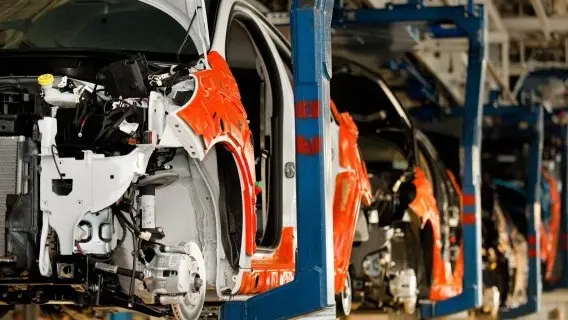
By contrast, the continued weakness in the automotive sector is more troubling. Vehicle production fell by 4.7% month-on-month in May and was 7.2% lower than a year earlier, providing further evidence of the challenges facing the European automotive industry. Industrial production also declined in electrical, electronic and computer equipment manufacturing (-2.3% after +1.4% in April), in other industrial goods such as metals, chemicals and pharmaceuticals (-0.4% after +0.1%), and in the food and beverage industry (-0.3% after being flat in April).
A strong rebound in gas and electricity production helped cushion the overall decline, leaving total industrial output down by only 0.1%, a smaller drop than that recorded in manufacturing.
Overall, French industry appears to be losing momentum, although manufacturing output remains 2.2% higher than a year ago. Meanwhile, construction output rebounded by 1.2%.
French growth lacks a clear engine
Looking ahead, June business survey data points to slower, though still positive, industrial production growth in the coming months. Some temporary factors that previously supported French industry, notably production disruptions among certain Asian competitors, are likely to fade as tensions in the Middle East ease. Other factors should continue to support activity, however, including strong demand in aerospace and rising defence spending, which particularly benefits the roughly 5% of French industry linked to defence manufacturing.
Overall, French industry is expected to continue outperforming the services sector, albeit with less momentum than at the start of the year. This slowdown is likely to affect broader economic growth. Indeed, the prospects for services and domestic demand remain weak despite lower oil prices, reflecting subdued consumer confidence, a weakening labour market and ongoing discussions about tighter fiscal policy in the future.
As a result, it appears unlikely that the services sector will be able to take over from industry as the main driver of French growth. In the absence of a strong growth engine, GDP growth prospects for 2026 remain modest. We continue to forecast growth of around 0.4% this year, followed by an acceleration to 0.9% in 2027.



Comments
Log in or sign up to join the conversation.