

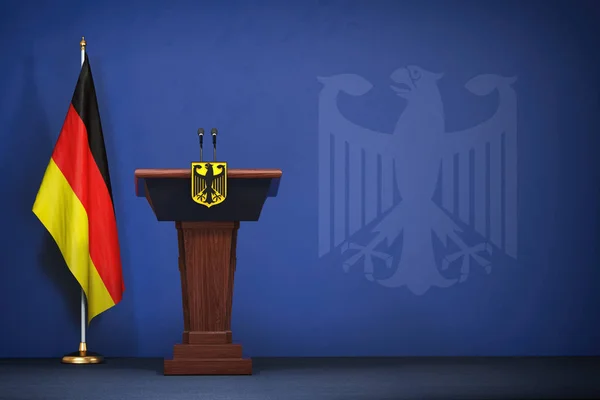
The German government just announced a big reform package aimed at cutting red tape, adding more flexibility to the labour market, capping costs for healthcare and pensions, as well as some relief. In short: a package finally aimed at restoring competitiveness.
Germany's World Cup campaign may have come to an abrupt end, but the country's reform drive is gathering momentum. In a bid to reverse the rather uncomfortable narrative, the government has just unveiled a sweeping reform package aimed at boosting competitiveness and demonstrating a renewed willingness to act. It may have taken longer than many hoped, but Germany's long-awaited summer of reforms has finally arrived.
The government announced a package of 34 measures, including last week’s pension reform, previously agreed healthcare reforms, plus a kind of bureaucratic detox to cut red tape as well as some €10bn tax relief for lower-income households, partly funded by a tax increase for the highest earners (with annual incomes of more than €280,000).
Amongst measures to cut red tape are plans to make working on Sundays and public holidays financially more attractive, the obligation to hand in a doctor’s attestation not only on the fourth day of sick leave but from the first day onwards, and a simplification of data protection rules as well as an end to gold-plating of European regulations.
Most of today’s announced measures have not come out of the blue. The bureaucracy detox and simplifications were already presented in two important reports at the end of last year. What is new is the tax relief for lower and middle-income households. What is still missing is a clear longer-term strategy for affordable energy for both households and companies, as well as some tax relief for companies. Still, today’s reform package is finally a clear sign that Germany is at last moving. A departure away from moaning and analysing, towards tangible action.
Admittedly, the package will still have to pass parliament, and it is not a package that will morph a stagnating economy into a booming economy overnight. But it is a package that could create the preconditions, the framework, for future growth. The healthcare and pension reform will put public finances on a sustainable footing in light of demographic change, and the other structural measures could loosen the brakes for future growth.
Add to that the ongoing fiscal stimulus for infrastructure and defence, and the narrative for German growth turns more optimistic. It seems as if Germany has finally understood that economic success does not simply or effortlessly return. This is an enormous change and shows that, for once, the German government is definitely one step ahead of the national football team.

Comments
Log in or sign up to join the conversation.