

Nothing epitomizes cheap money more than the lofty level of bond prices and their corresponding low yields. The old adage of "never chase yield" seems to have been pushed aside in favor of "buy more when the interest rate approaches zero".
Yield-hungry investors think they are being conservative, though. Some of that reasoning is due to the obvious volatility of the stock market; especially during the first twenty years of this century.
Even before the latest stock market dump, bonds could be considered a bigger risk than stocks. The risk is greater now. More so than it was in 2007-08, and probably more so than at any other time in history.
Interest rates have been declining for nearly forty years. The Federal Reserve has pursued and promoted lower interest rates for nearly four decades in their presumptive attempts to manage the stages of the economic cycle.
When the credit markets began to unravel twelve years ago, the Fed stepped in and made funds available to primary dealers and member banks at unusually attractive rates. They also purchased huge amounts of Treasuries, mortgage-backed securities, etc. which they retained on their balance sheet.
It was an unprecedented move. Buying up debt securities that were dropping rapidly in price put the brakes on a credit collapse that threatened to destroy the world's financial system.
Continuing down the path of artificially low-interest rates and ultra-cheap credit would eventually kill the U.S. dollar. The Fed knows this.
Their decision a few years ago to begin raising rates slowly was an attempt to begin a return to a higher level of economic activity with interest rates at a reasonably normal higher level. Their attempt to generate higher rates from abnormally low levels created additional strain on an economic system that was already quite fragile.
Easy credit and low-interest rates are the new normal. As bad as cheap credit can be on a fundamental basis, though, the effects of withdrawal from it can be just as bad. The Fed knows this, too.
Stocks, bonds, and real estate all benefited from cheap and easy credit. The 'reflation' effort was the primary reason that asset prices rose so dramatically from their post-crash lows ten years ago.
In other words, all asset prices were - and still are - severely and artificially overblown. Another credit collapse is likely in the cards. Nothing will be spared.
We are back at the precipice again. This time, instead of worthless auto loans and mortgages, the cascade over the edge will likely be initiated by corporate bankruptcies.
A restriction of economic activity (regardless of how appropriate) because of concerns associated with COVID-19 may be the sound that triggers the avalanche.
The risk to the system is there, and companies with borderline cash flow can quickly shutter their doors.
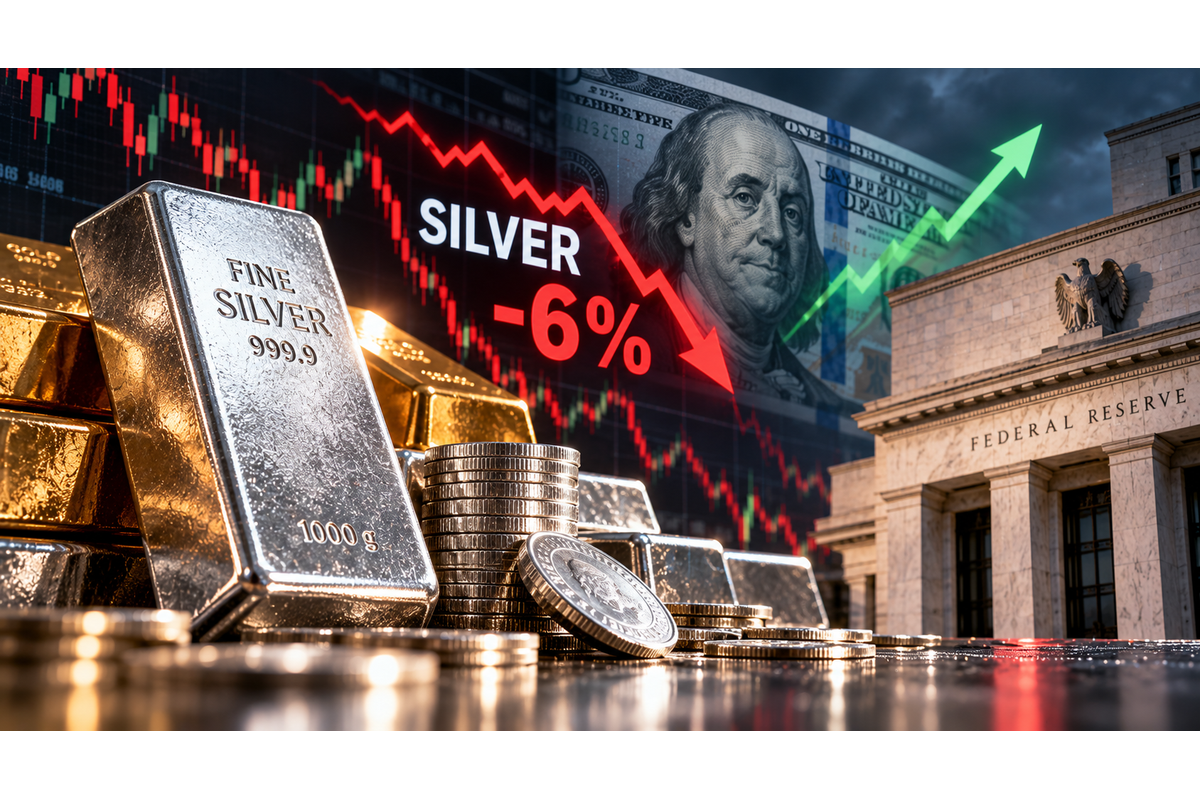
The Fed has already fired several shots at the specter of economic collapse, but they are almost out of bullets. A different weapon of choice will not likely have much effect, either.
Whatever action the Fed takes might make things worse, though. Remember, the Federal Reserve caused the Great Depression of the 1930s.
We are past the point where the Federal Reserve can stop a system-wide implosion once the ball starts rolling. It appears that is what is happening now.
(also see The Federal Reserve And Long-Term Debt - Warning!)
Comments
Log in or sign up to join the conversation.