

The current state of the global economic scene has been raising serious concerns for stakeholders. From Wall Street to institutional investors, governments, businesses, down to the pop and mom investors who watch Jim Cramer on CNBC: everyone knows that the global economy is not healthy. A testament to the illnesses plaguing the global economy is the cautious tone of the U.S. Federal Reserve that the current economic climate does not support the further raising of interest rates.
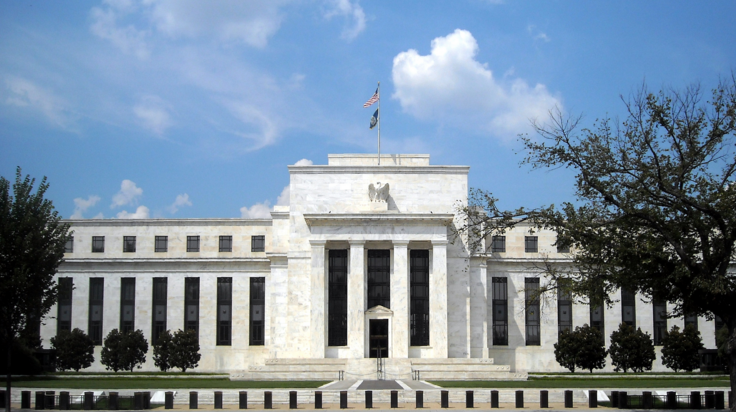
The fact that the U.S. Federal Reserve seems to be less bullish about the economic outlook has increased fears that we might be heading into a financial quagmire. Many analysts believe that the Great Depression of the 1930s was triggered by the inability of the Fed to halt a collapse of the money supply. Now, there exist startling similarities between the economic clime that led to the Great Depression and the current economic situation.
The global economy is currently balancing on ultra-low interest rates and some countries are even adopting negative interest rates. The U.S. has also propped up its economy with low interest rates for almost a decade until Fed raised the rates last year. Additional four rate hikes should have followed this year, but the Fed has revealed its helplessness in the face of global economic headwinds thus it might not go ahead to raise interest rates this year.
OECD urges improved government spending
On Thursday, the Organization for Economic Growth and Development, OECD chimed in on the gloomy outlook in the global economic landscape. The OECD advised that governments in the U.S., Europe, and other parts of the world should take "urgent" step to collectively increase investment spending in a bid to infuse life into the dying economic landscape.
The OECD noted that governments are in a vantage position to jumpstart economic growth because they can borrow at low rates. A collective effort by governments to borrow at low rates and to use the borrowed funds for infrastructural developments could significantly improve the global economic outlook.
The economic think tank's call for a proactive move by governments to increase investment spending comes on the heels of revelations that the U.S. Federal Reserve is no longer optimistic about the U.S. economic outlook. The minutes of the Feds January 26-27 meeting shows that the Fed is not as confident as it was when it decided to raise interest rates last year. In fact, it appears that the Fed might not go ahead with the four rate hikes slated for this year and the fed might be leaning towards negative interest rates.
Chinese economy is crucial for a healthy global economy. China occupies an important seat in the global economic scene and weakness in the Chinese economy often results into hiccups in Asia with a ripple effect through the rest of the world. China is currently seating on an economic keg of gunpowder and all it needs is a spark that would ignite a devastating economic wildfire. To start with, news coming out of Beijing says that new debt issued in China was more than $500B in January. The less than impressive news coming out of China is already having effects on the Forex markets as seen on currency pairs on currency trading platforms such as 10Trade. Of course, it is not as if all of China has turned into overnight debtors and some of those debts were a function of migrating foreign currency loans into local currency loans. Nonetheless, China has become a sort of destination place for loans after the country practically opened the floodgate to loans in order to mitigate a looming economic downturn.
The loan problem in China is only a symptom of a much bigger economic disease that could turn China into ground zero in another global financial crash. Private debt in China has been on a consistent increase since 2008, and a 2014 study by McKinsey Global Institute earmarks total debt in China as 282% of GDP – it doesn’t take a rocket scientist to know that China is wallowing in debt.
The Chinese economy is at the risk of crumbling under the weight of its debt burden – in fact, the crumbling seems to be a given, the timing is what we might not be able to pinpoint. At a point, China will be forced to deleverage its huge debt position by depreciating the Yuan/ adopting QE/ encouraging private spending. Whichever way China leans, it is obvious that China must eventually address its debt problem and the world had better start bracing up for a rough ‘Butterfly Effect’ when it is time for China to pay the piper.

Comments
Log in or sign up to join the conversation.