


The EURGBP is receiving support today amid the continued strengthening of the US dollar. The SFA Index shows that both the EUR and the GBP weakened, but the pound's weakness was more pronounced, pushing the pair up to 0.85900.
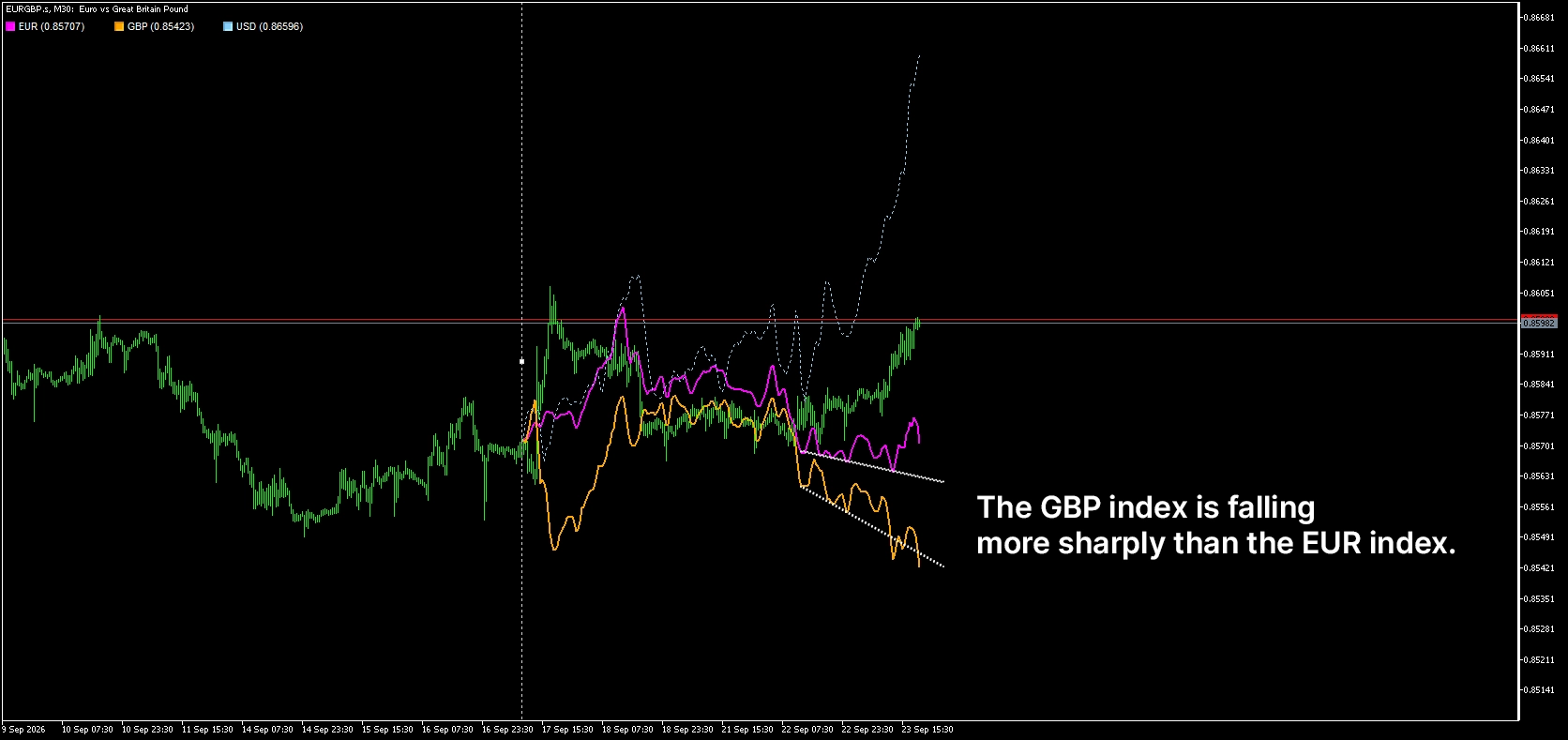
The pound is currently weaker than the euro due to the release of September PMI data (preliminary).
UK S&P Global Manufacturing PMI - up from 51.7 to 52.0
EU S&P Eurozone Manufacturing PMI - unchanged at 52.7
UK S&P Global Services PMI - down from 52.5 to 51.7
EU S&P Eurozone Services PMI - up from 51.6 to 53.0
UK S&P Global Composite PMI - down from 52.5 to 51.7
EU S&P Eurozone Composite PMI - up from 52.0 to 53.1
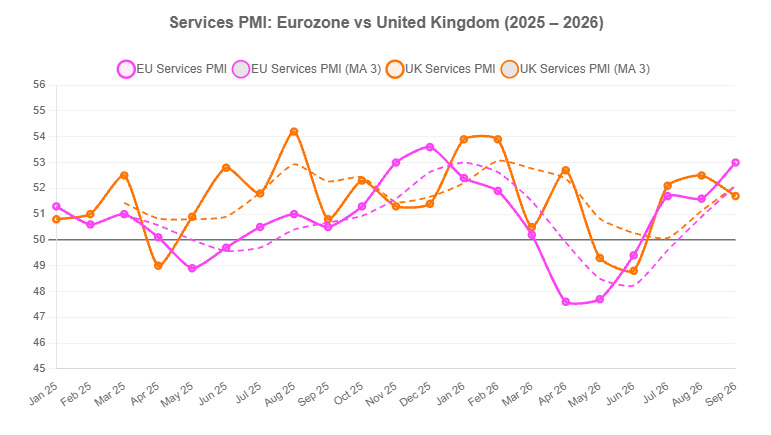
It's important to note that the most significant component for forecasting inflation in the UK and the Eurozone is the Services PMI. The three-month average of these indeces is currently at the same level: 52.1.
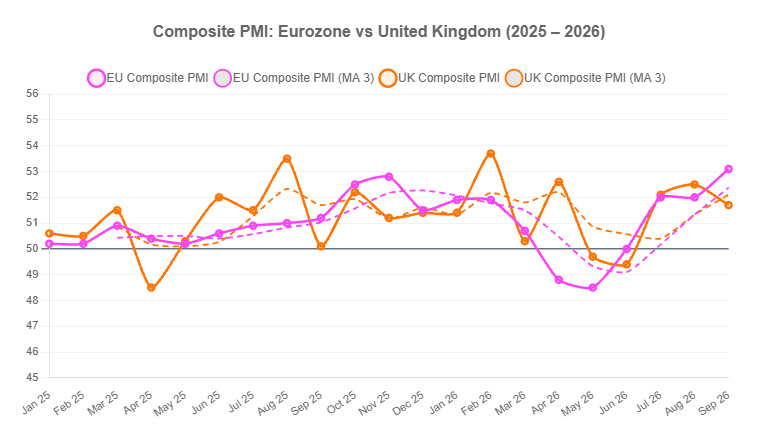
The three-month average Composite PMI in the Eurozone is 52.37, compared to 52.1 in the UK. The charts above clearly show a surge in the Eurozone indices, but both UK indices are more volatile, characterized by sharp dips and rises due to the significantly smaller survey sample. The smoothed three-month trend shows rising indices in both the Eurozone and the UK. This means that the current divergent data does not represent a reversal in established economic trends.
According to the S&P Global Flash PMI report, the Eurozone saw new orders inflow at the highest rate since May 2022. Export orders also increased for the first time in a long time. The main headwinds for the United Kingdom were high inflationary pressures from energy and raw materials, prohibitive borrowing costs, and regulatory and tax uncertainty ahead of the autumn budget. As a result, final index data showed mixed dynamics, which was the main factor behind today's strenghtening of the EURGBP.
On October 28, Andy Burnham's government will present its first full budget. Markets and businesses are awaiting this event with noticeable anxiety due to the expected rise in defense spending and measures to support living standards. If the budget focuses on infrastructure, housing, and business incentives, this could support economic growth in the medium term and push government bond yields higher. However, if the focus is on tax increases, the short-term effect on business activity could be negative, further weighing on PMI indices.



Comments
Log in or sign up to join the conversation.