


It is 3 a.m. and you are awake again, staring at the ceiling, doing arithmetic you cannot control. The market moved yesterday. It will move today. You own the metal, or you are thinking about buying it, and either way the question running circles in your head is the same one: did I do it right?
I have watched this market for five decades. Let me tell you the single most valuable thing I learned, and it is not a price target. It is this: the investor who sleeps well is not the one who predicts the market. It is the one who removed the need to predict it.
Here is how you do that.
Step One: Decide the End Objective First
Before you buy a single ounce of anything, answer one question in writing: what is this money for?
- Was it growth? You want the position to multiply, and you accept the swings that come with that.
- Asset preservation? You want what you have built to still be there, intact, when the storm passes.
- Maintaining purchasing power? You want your savings to buy in twenty years what they buy today.
- Posterity legacy? You want to hand something real to the generations that follow you.
At SilverScoreboard, we are primarily interested in building a legacy for the generations that follow them. That changes everything about how you behave — because a legacy holder is not racing anybody to an exit.
Most sleepless nights come from a position that does not know what it is for. Growth money held with legacy nerves. Legacy money checked with a trader's stopwatch. Decide the objective first, and half the worry dies right there, because now every market move has a context: does this change what the money is for? Almost never.
Investment vs. Hedge: The Intent Sets the Clock
This is where we must understand the difference between an investment and a hedge.
An investment is made to grow. You measure it against what you paid, and you watch the clock: is it working, how fast, compared to what?
A hedge is made to stand beside the rest of your savings — to hold value when other things fall, and especially to stand against inflation, which quietly eats away the nest egg year after year without ever making a headline.
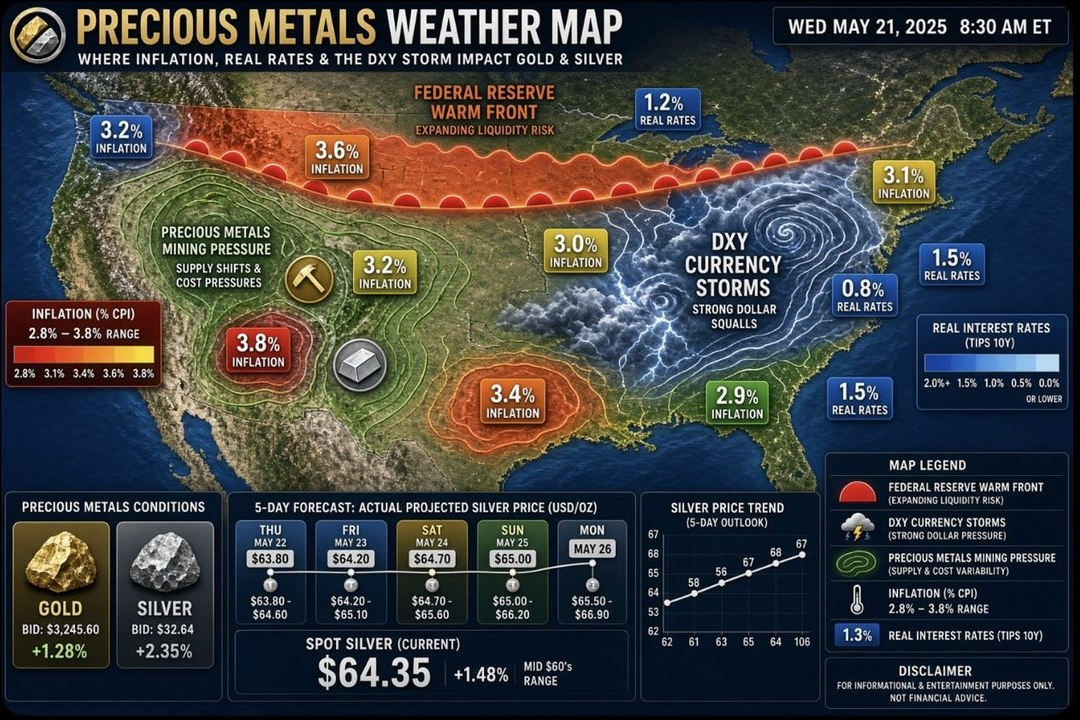
The intent changes your mindset and the timeline on your expectations. A growth investment asks "how much, by when?" A hedge asks "is it still doing its job?" Those are different questions, and only one of them lets you sleep. If you hold physical precious metals as a hedge against inflation, a Tuesday price move is not a verdict on your decision. It is weather.
"Be Anxious for Nothing" — Is That Actually Possible?
Biblically, we are instructed not to worry. "Be anxious for nothing, but in everything, by prayer and supplication with gratitude, make your requests known to God" (Philippians 4:6, MEV).
Is that possible with money at stake? I believe it is — not by willpower, but by structure. Worry lives in the gap between your responsibility and your control. Shrink that gap and the worry shrinks with it.
That is exactly what Dollar Cost Averaging does. It is a simple strategy that can eliminate multiple decisions and a lot of sleepless nights, because it replaces the question that tortures people — is now the right time? — with an answer that never changes: it is always the right time for the next planned purchase.
What Dollar Cost Averaging Actually Is
Let us define it plainly. Dollar Cost Averaging is the practice of investing a fixed dollar amount into the same asset on a fixed schedule — the same dollars, the same day, every month — regardless of price.
That last phrase carries the whole strategy. Not "when it feels right." Not "when the news quiets down." Regardless of price. When the price is high, your fixed dollars buy fewer ounces. When the price is low, the identical dollars buy more. You never make a market call; you make a standing appointment.
What It Buys You Over Time
The advantages compound the way the metal does:
- It removes the timing decision. Buying at highs on excitement and selling at lows on fear is the oldest mistake in investing. A standing purchase cannot panic and cannot chase.
- It turns falling prices into more metal. The dip that ruins a lump-sum buyer's year is quietly loading your shelf. Volatility stops being the enemy and becomes the discount.
- It averages your cost across every market climate instead of pinning your whole result to one emotional afternoon.
- It builds the habit that builds the legacy. Month after month, year after year, the stack grows on schedule whether the headlines are roar or whisper.
- It starves regret. There is no "I bought the top" story to tell, because every purchase was simply the plan arriving on time.
How the Strategy Works: The Same Dollars, the Same Day, Every Month
Dollar Cost Averaging means committing a fixed, dedicated percentage of your income to precious metals purchases on a regular basis over time — month after month, year after year. Not what feels right. Not what the news suggests. A number, chosen once, honored every month.
How do you calculate the number? Three steps:
1. Pick the percentage. Many families dedicate somewhere between five and ten percent of monthly income to their metal. The right number is the one you can keep through a bad month without touching the grocery money.
2. Convert it to dollars. Five percent of a $6,000 monthly income is $300. That is your purchase, every month, same day if possible. Automate it or calendar it so no monthly decision exists.
3. Buy the metal. The same dollar amount every time. When silver is high, your dollars buy fewer ounces. When silver is low, they buy more. That is the entire engine.
Here is a real twelve-month example — $300 a month through a swinging market (illustrative prices):
Month Price/oz Ounces bought Total ounces
1 $72.00 4.167 4.167
3 $64.00 4.688 13.234
5 $61.50 4.878 23.284
7 $70.50 4.255 32.085
9 $59.00 5.085 41.894
11 $67.00 4.478 51.172
12 $71.00 4.225 55.397
Total spent: $3,600. Total metal: more than fifty-five ounces — nearly four pounds in a single year. Average cost: $64.99 an ounce — in a year where the average price was $65.29 and the anxious buyer's first purchase was $72.00.
Notice what the strategy did not require: no prediction, no timing, no decision after decision after decision. The buyer who lump-summed at the top out of fear of missing out paid $72. The disciplined buyer averaged $64.99 without once needing to be right about anything. Twelve decisions became zero decisions. That is what eliminates the sleepless nights — not willpower, arithmetic.
Run the same $300 for five years and you have roughly 277 ounces — nineteen pounds of metal — accumulated without a single midnight decision. Ten years, and the legacy is unmistakable: 554 ounces, thirty-eight pounds, an asset with five thousand years of history behind it, and something your grandchildren can hold in their hands. Precious metals have a 5,000-year history and have never been worth zero. No paper currency in history can make that claim.
The Same Strategy Works in Stocks and Bonds — With Different Sleep
Let the reader be clear-eyed about this: Dollar Cost Averaging is not a metals-only trick. The very same strategy can apply to investments in stocks and bonds, and it is the classic form there too — the same dollars into the same index fund or the same bond ladder, every month, on schedule. The arithmetic of averaging works identically.
But there is a difference, and I would not be honest if I hid it. If you choose stocks and bonds, you have to accept worry in your life.
A company can fail. A bond can default. A currency can be printed into oblivion. Paper wealth has counterparties — somebody's promise standing between you and your money — and promises, however respectable, can break. Dollar Cost Averaging into paper smooths your entry price; it cannot smooth away the question of whether the thing itself endures. That question is the worry, and it never quite goes to zero.
Metal is different. Precious metals have a 5,000-year history and have never been worth zero. No paper asset — no stock, no bond, no currency in history — can make that claim. So the same discipline buys you two different nights of sleep: in paper, a disciplined strategy and a residue of worry; in metal, a disciplined strategy and the quiet that comes from holding something that cannot go broke.
Growth money and hedge money can live in the same house. Just know which dollar is which, and let the hedge be the part you never lose sleep over.
Watching the Stack Without Watching the Clock
One honest note on tools, because a hedge you never measure is a hope, not a plan. When you own physical metal, the only question that matters at any moment is "what is the whole stack worth today?" — and that is a living number, moving with the market. I built the SilverScoreboard to answer exactly that question: the signals that move metals, side by side with a running total of what you hold, so a $2 afternoon move is information instead of alarm. Check it once a week, the way a farmer checks the barometer — then go back to sleep.
The Standard Caveats
Dollar Cost Averaging does not guarantee a profit or protect against loss in a declining market; it is a discipline, not a prediction. Precious metals prices are volatile and can fall as well as rise. The percentages here are illustrations, not recommendations, and nothing in this article is financial advice — it is financial literacy, which is a different and more durable asset.

Comments
Log in or sign up to join the conversation.