

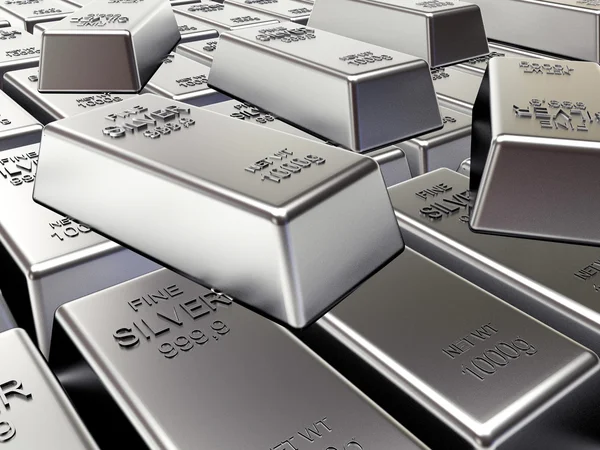
I was a very young man in the early '70s. On my 12th birthday my father gave me a 1921 Morgan Silver Dollar from my Great Grandfather. That started my love affair with silver. I never spent it and still have it. It was my first piece that started my now 5 decades journey. That one coin has about a $55.00 price tag today. But Silver didn't really go up, the dollar lost a lot of its purchasing power. Inflation, caused by the Government, has devalued our currency. That is why my passion in life is to help my fellow man (or Woman) build their own legacy with precious metals.
I've watched markets since the 1970s - gas lines wrapped around the block, 14% mortgages, and a grocery cart that cost a third of what it costs today. Somewhere in those decades I learned a lesson that has paid me better than any hot tip: silver prices aren't magic, and they aren't random. Four forces move that price, and once you can read them, the financial news loses its power to confuse you.
You don't need a finance degree to understand any of this. You need a scoreboard. Here's mine.
Force One: Real Interest Rates - The Price of Patience
Every asset competes with every other asset for your savings. A Treasury bill pays you interest. A savings account pays you interest. Silver sits in the safe and pays you nothing - no coupon, no dividend, no interest check. So the real question is always: what does the alternative pay?
Economists call this the "real interest rate" - your stated interest rate minus inflation. When a bond pays 5% and inflation runs 3%, your real return is +2%, and metal has to fight for your attention. But when rates sit at or below inflation, dollars leak value like an old radiator, and silver starts looking like honest money - a way to stand still while everything else slides.
This is precisely the 1970s story. Rates lagged inflation for the better part of a decade, and silver and gold did what they do when saving in dollars becomes a losing game. We're living a milder version of that today: CPI is running around 3.4%, and short-term rates after inflation are barely positive. Silver doesn't need a crisis to perform. It needs patience in bonds to stop paying.
How to watch it: Compare the 10-year Treasury yield to CPI. When the gap narrows toward zero or goes negative, silver historically catches a bid. When real rates rise sharply, silver has a headwind. That's not a prediction - it's a tide table.
Force Two: The Dollar - The Currency Silver Is Priced In
Silver is quoted worldwide in U.S. dollars, and that creates a seesaw most investors never think about. When the dollar weakens against other currencies, silver becomes cheaper for foreign buyers - a European, an Indian jeweler, a Chinese manufacturer - and their buying carries the price right back up. When the dollar strengthens, foreign buyers step back and the price sags under its own weight.
Right now the dollar index sits near 98 after two years of sideways grinding. Nothing dramatic - and that's the point. The seesaw doesn't have to slam down for silver to rise; it just has to keep tilting the same general direction while the other three forces do their work.
How to watch it: The U.S. Dollar Index (DXY). A falling or flat-to-falling dollar removes silver's biggest pricing headwind. A sharp dollar rally - the kind that comes with global panic into cash - is usually silver's worst short-term weather.
Force Three: Industry - The Demand Nobody Can Turn Off
Here is the part of the silver story that makes it different from gold: industry eats silver. Roughly half of all silver demand goes into solar panels, electronics, medical devices, electric vehicles, and brazing alloys. That silver is consumed - dissolved into a panel or a circuit board, never coming back to the market as coin or bar.
Gold is almost entirely a monetary metal; almost all of it ever mined still exists in vaults and jewelry boxes. Silver is a monetary metal that industry keeps eating. Mines pull roughly 800 million ounces a year from the ground, and demand has run ahead of mine supply for years - the gap is filled by recycling and above-ground stockpiles, and those stockpiles are a fraction of what they were decades ago.
How to watch it: Annual supply/demand reports from the Silver Institute, plus the clean-energy buildout numbers. Every new solar farm is a silver purchase nobody announces on the evening news.
Force Four: The Shanghai Premium - Where the Real Demand Lives
Paper prices are set in London and New York. Physical metal has its own heartbeat, and today that heartbeat is in Asia. When silver in Shanghai trades consistently above the London price, it tells you Eastern buyers are willing to pay extra to take real delivery - and metal follows the premium, flowing east on boats.
That premium has run hot through 2026, often into double digits. When Shanghai pays 13% over spot and the boats keep sailing east, Western paper prices eventually have to reconcile with Eastern physical demand. That is not conspiracy talk; it is arbitrage, the oldest force in markets.
How to watch it: The Shanghai-London silver premium. Persistent premiums mean physical demand is outrunning paper supply. When the premium collapses, the East is sated - for the moment.
Putting It on One Scoreboard
On our live scoreboard recently, silver traded near $67.50 - about 9% above its 50-day average, with the S&P-to-silver ratio near 115 against a ten-year average of 128. Translation: it took 115 ounces of silver to buy one unit of the S&P 500, versus an average of 128. By that long measure, silver remains historically inexpensive relative to stocks even after a strong run.
Read the four forces together and headlines stop being noise. Real rates tell you whether patience is being paid. The dollar tells you the weather. Industrial demand tells you the floor. The Shanghai premium tells you where the metal is actually going. No force works alone - but when three or four point the same direction at the same time, that is when the big moves happen. They pointed together in 1979-80, in 2010-11, and they are pointing the same general direction today.
None of this is advice, and nobody should buy anything because of one article. This is education: learn to read the forces, and you will never again have to take a stranger's word for what silver is doing or why.
Fifty-plus years ago a boy got a silver dollar from his great-grandfather and never spent it. He never got rich on it. But he learned the lesson it taught - that real money doesn't ask permission. My passion is helping my fellow man (or woman) build their own legacy with precious metals, one honest lesson at a time.
Comments
Log in or sign up to join the conversation.