

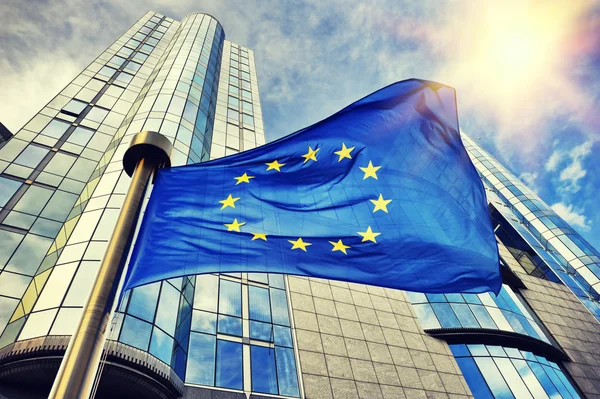
The just-released minutes of the ECB’s June meeting confirmed its inflation concerns, but gave few hints at what the next steps might be.
Given this week's spike in energy prices, there remains a small chance that the ECB could be inclined to hike in two weeks' time. We think a September move is more realistic.
No, it was not an insurance rate hike, but a rate hike based on thorough analysis. This is the main message provided by ECB President Christine Lagarde at the last press conference, and it was also repeated in the just-released minutes of the meeting. While we still think that an insurance rate hike should always be based on a thorough analysis, the aim of the ECB’s communication was clear: it was higher inflation and higher inflation projections that called for a rate hike, rather than the ECB's concerns with its own credibility.
Anyhow, here are some of the more remarkable statements from the minutes:
The ECB is trying to deal with Ireland. “With regard to economic activity, members concurred with the assessment presented by Mr Lane. Adjusting for a temporary factor in Ireland, the euro area economy had grown in the first quarter of the year, supported by domestic demand and exports. When this adjustment was not taken into account, euro area GDP had unexpectedly contracted by 0.2% in the first quarter, owing to a sharp reduction in measured multinational activity in Ireland. It was important that the economic assessment and communication should distinguish statistical effects in Ireland from economic fundamentals, primarily by focusing on the modified domestic demand indicator for economic activity in Ireland developed by staff.”
Risks to the growth outlook tilted to the downside, but the ECB remains less concerned about the adverse impact of an energy price shock. “Members assessed that the risks to the growth outlook were to the downside, mainly owing to the war in the Middle East, which had added to the volatile global policy environment…It was also argued that the euro area economy had become more adaptable to energy shocks, reflecting its reduced dependence on fossil fuels.”
Without naming it, the ECB also tackled Harry Styles-induced inflation in the Netherlands. “All of this implied that the surprise rise in services inflation could raise questions about the speed at which inflation would converge to the 2% target. However, it remained to be seen to what extent the latest rise in services inflation reflected temporary factors, such as the cost of package holidays in Germany and concert-related hotel prices in the Netherlands, or whether it could be considered more persistent.”
The deteriorating inflation outlook as the main reason for a rate hike. “With the energy shock proving more persistent than had been envisaged at the time of the March and April meetings, and indirect effects starting to become increasingly visible and broad-based, the inflation outlook had deteriorated further…Against this background, members assessed that the risks to the inflation outlook were to the upside.”
The rate hike decision was unanimous. “All members supported the proposal made by Mr Lane to raise the three key ECB interest rates by 25 basis points.”
The insurance rate hike saga. “Given these considerations, while a hike could have been seen as precautionary had it been decided at the Governing Council’s monetary policy meetings in March or April, the current adjustment should not be seen as an insurance hike but rather as a decision that was robust across the baseline outlook and the full range of alternative scenarios, supported by a thorough assessment.”
All in all, the minutes gave plenty of arguments for the rate hike decision in June, but revealed very little about what will come next.
One more hike to come, probably in September
Looking ahead, surprisingly slow inflation data in June, as well as the drop in oil prices (until recently, that is), may have led some ECB officials to question whether the June rate hike was really necessary. Historically, it has been rare for the ECB to embark on a new tightening cycle ahead of other major central banks. It would be a bittersweet irony if this display of global leadership were eventually judged to have been a mistake. However, the recent rebound in oil prices amid renewed Middle East tensions serves as a reminder that the inflation outlook remains far from settled.
Given that even in the ECB’s milder scenario in June, core inflation would still increase towards 2.6% year-on-year by year-end, a majority at the ECB will probably continue to favour another rate hike. Not as another insurance or credibility-enhancing rate hike, but rather as a move to preempt any further knock-on and particularly second-round effects. Whether a second increase is really what the eurozone economy needs remains a different story.
Until earlier this week, we would have argued that lower energy prices had taken the rate hike option entirely off the table for the ECB’s July meeting – but some members might feel tempted to use the latest resurgence in higher energy prices as a reason to get things done as quickly as possible. This means that, for now, there remains a small chance that the ECB could be inclined to hike in two weeks' time. The more realistic scenario, however, is a hike at the September meeting.

Comments
Log in or sign up to join the conversation.