

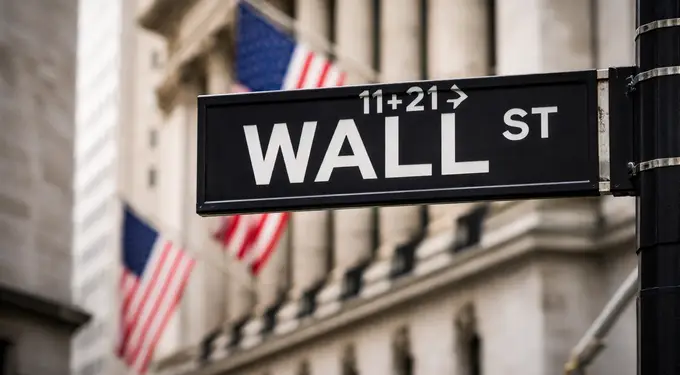
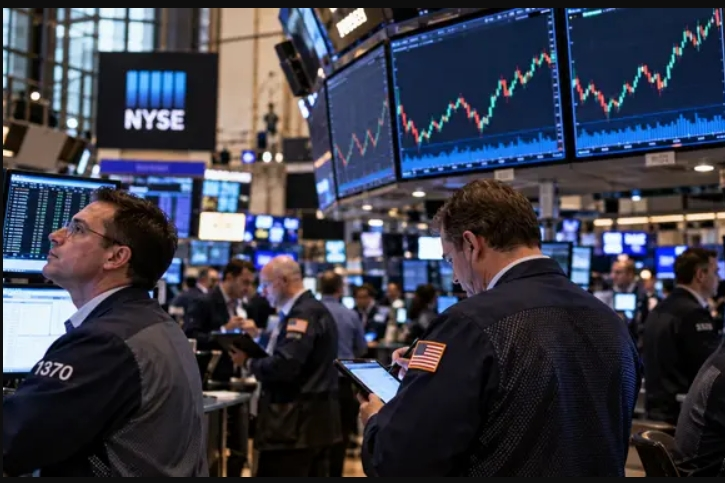
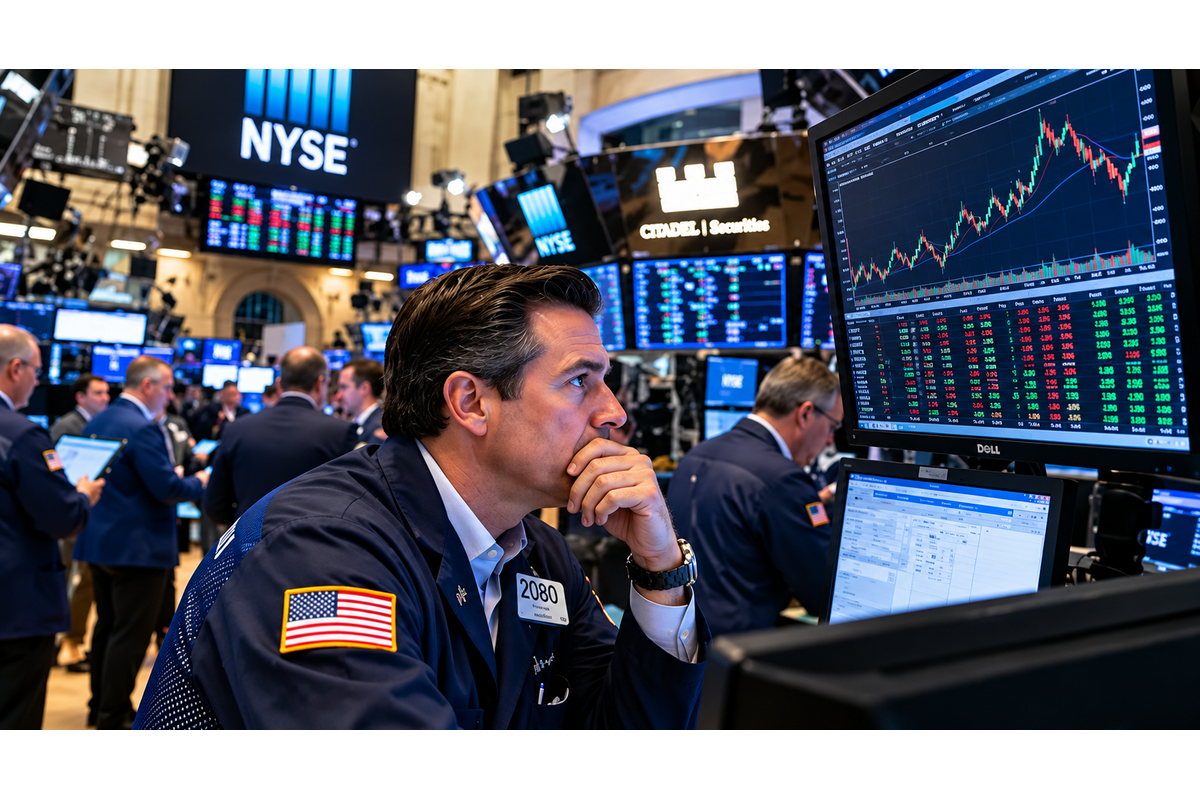
US stocks closed mixed on Monday as a decline in technology and semiconductor shares weighed on the S&P 500 and Nasdaq, while the Dow Jones Industrial Average gained.
Investors also assessed lower Treasury yields, fresh tariff threats and the prospect of expanded US sanctions on countries doing business with Iran.
The S&P 500 fell 0.28% to 7,652.96, while the Nasdaq Composite dropped 0.76% to 25,980.19. The Dow rose 139.98 points, or 0.26%, to 53,416.99.
Tech stocks weigh on S&P 500 and Nasdaq
Semiconductor stocks led the declines, with Micron Technology (MU) falling more than 5%, while Advanced Micro Devices (AMD) and Broadcom (AVGO) declined 3% and 2%, respectively.
The iShares Semiconductor ETF (SOXX) fell 2%.
Other technology stocks also came under pressure. Coherent (COHR) and Lumentum (LITE) dropped 4% each, while SanDisk and Seagate Technology (STX) declined 6%. Corning (GLW) fell 3%.
Nvidia also declined ahead of its quarterly earnings report due Wednesday. The results are expected to be a key test for investor confidence in artificial intelligence-related stocks and broader market valuations.
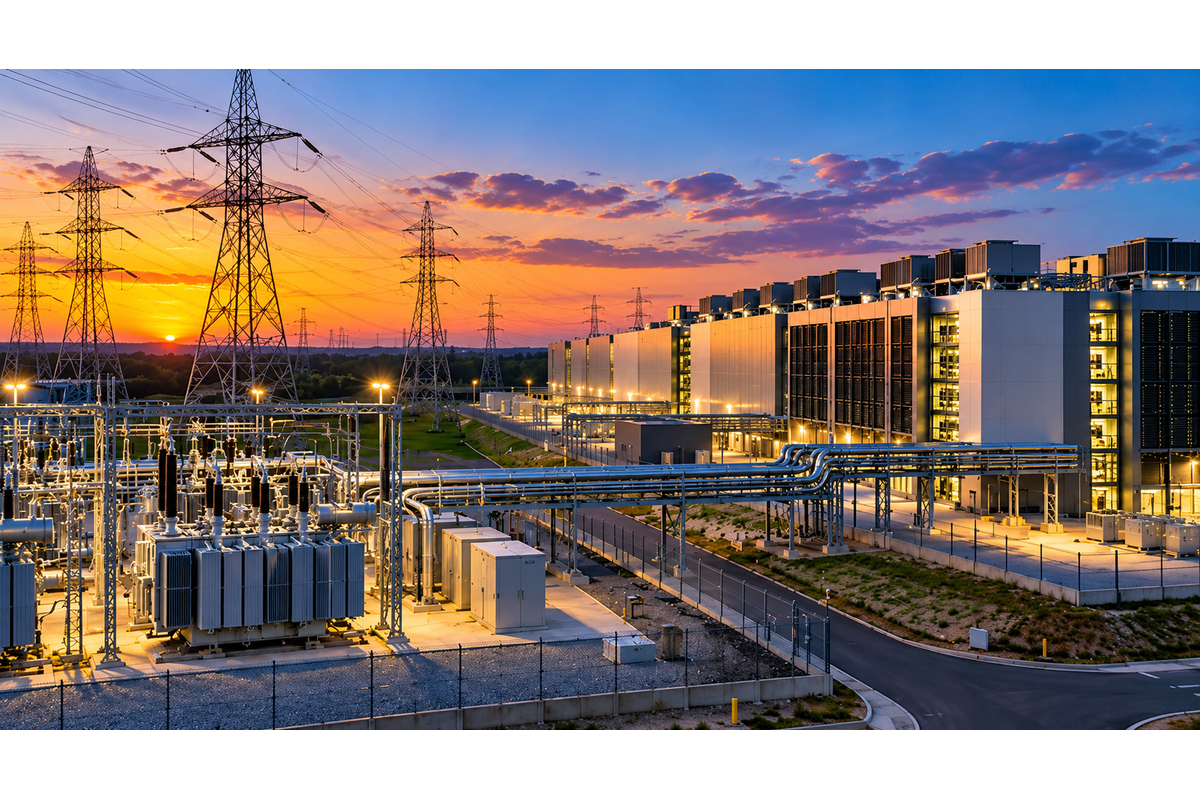
Technology sentiment was also affected by growing political opposition to AI data centers.
Texas Governor Greg Abbott has ordered a pause on approvals for new data center projects through the state's grid interconnection process, citing concerns over electricity demand and grid reliability.
Financial stocks provided some support to the Dow. JPMorgan Chase (JPM) and Visa (V) gained, helping the blue-chip index remain in positive territory despite weakness elsewhere in the market.
Ad
Treasury yields fall as markets await Warsh
Treasury yields moved lower after reports that the US Treasury could use its nearly $1 trillion General Account to help fund a bond buyback operation.
The 10-year Treasury yield declined more than four basis points to 4.69%, while the 30-year yield fell six basis points to 5.216%. The long-term yield had climbed above 5.3% last week, reaching levels not seen in nearly two decades.
The Treasury had previously announced plans to at least double the pace of government debt buybacks over the coming months. The measures initially provided some relief to longer-term Treasury yields, although the impact was limited.
Attention is now turning to Federal Reserve Chair Kevin Warsh's speech at the Jackson Hole symposium on Friday.
Investors will look for indications of how policymakers view interest rates and the Treasury's efforts to support the bond market.
Markets will also receive the July personal consumption expenditures price index on Wednesday.
The report is the Federal Reserve's preferred inflation gauge and could influence expectations for monetary policy. LSEG data showed traders were pricing in one 25-basis-point rate hike by the end of 2026.
Iran pressure and Canada tariffs add to risks
Investor sentiment was also affected by new US economic pressure on Iran. The Trump administration announced a possible expansion of secondary sanctions against countries doing business with Iran, although no penalties were imposed immediately.
The development comes as investors remain concerned that the US-Iran conflict could persist, potentially keeping oil prices elevated and adding to inflation pressures.
Separately, President Donald Trump said tariffs on cars, trucks, automotive parts and steel imports from Canada would rise to 50% from January 1, 2027, after trade talks broke down.
Ford (F) and General Motors (GM) shares declined, while J.B. Hunt Transport (JBHT) also fell sharply.
With Nvidia (NVDA) earnings and inflation data due this week, investors are watching whether corporate earnings and economic data can offset pressure from technology valuations, geopolitical risks and uncertainty around interest rates.
Comments
Log in or sign up to join the conversation.