

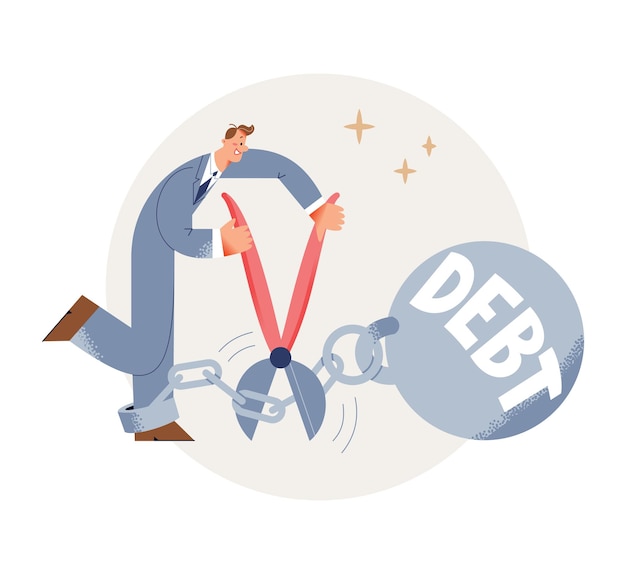
Personal debt is a common problem faced by millions of people worldwide. It occurs when an individual borrows money from a lender, such as a bank, credit card company, or loan provider, with the expectation that they will repay the debt with interest over time.
Personal debt can take many forms, such as credit card debt, student loans, car loans, and mortgages, and can quickly become overwhelming if not managed properly.
Understand personal debt
When discussing personal finance, it's important to have personal debt fully explained to understand the potential consequences of taking on debt. For example, when you borrow money from a lender, you typically agree to pay it back with interest over a specific period. The expense of borrowing funds is referred to as interest and is generally represented as an annual percentage rate (APR).
The higher the APR, the more you'll pay in interest over the life of the loan. If you fail to make your payments on time, you may incur additional fees and penalties, further increasing your debt.
Types of personal debt
Personal debt comes in various forms, and each type has its set of terms and conditions. Understanding the differences between the types of personal debt is essential to manage your finances effectively.
Here are some of the common types of personal debt that you may come across:
Credit card debt: This type of debt arises when you use your credit card to purchase goods and services. The interest rates on credit card debt are usually higher than other types of debt, often ranging from 15% to 25% or more. Additionally, credit card companies may charge fees for late payments, exceeding the credit limit, or cash advances.
Student loans: Loans designed to cover expenses related to higher education are known as student loans, which can be obtained through either federal or private lenders. Student loan interest rates and terms may differ based on the lender. Federal student loans are generally considered more advantageous since they offer lower interest rates and greater repayment flexibility than private student loans.
Car loans: Car loans are loans that you can take out to purchase a car or other vehicle. Interest rates and terms for car loans may vary depending on the lender and your credit score. You may also need to make a down payment or provide collateral for the loan.
Mortgages: Mortgages are loans you can take out to purchase a home. They typically have longer repayment terms and lower interest rates than other types of personal debt. However, the interest rates and mortgage terms may vary depending on the lender, credit score, and loan amount.
Managing personal debt
Managing personal debt can be challenging, but it's crucial to understand personal debt to develop effective strategies to get your debt under control. There are several strategies that you can use to help manage your debt.
Create a budget
To effectively manage personal debt, it is essential to create a budget as the initial step. Through budgeting, you can analyze your income and expenses and determine areas where you can reduce your spending. By cutting back on your expenses, you will have more financial resources available to allocate toward debt repayment.
Pay more than the minimum
If you're only making the minimum payment on your debt, it can take years to pay off the balance. Instead, try to pay more than the minimum payment each month. This will help you pay down the debt faster and save money on interest.
Prioritize high-interest debt
If you have multiple types of debt, focus on paying off the debt with the highest interest rate first. This will help you save money on interest over time.
Consider debt consolidation
The process of debt consolidation entails merging various debts into one loan, usually with a reduced interest rate. This approach can simplify debt management and result in savings on interest payments.
Seek help if needed
If you're struggling to manage your debt, don't be afraid to seek help. There are many resources available, such as credit counseling services, that can provide guidance and support.
Conclusion
Personal debt can be a significant source of stress and anxiety for many people, but it's essential to remember that you're not alone. By understanding personal debt, creating a budget, paying more than the minimum, prioritizing high-interest debt, considering debt consolidation, and seeking help (if needed), you can take control of your finances and work towards a debt-free future.



Comments
Log in or sign up to join the conversation.