

Overnight news has delivered several macro cross-currents, but the broad message is that markets are again being asked to look through a more complicated inflation backdrop. Drone and missile attacks have been reported across the Middle East, with Iran targeting countries including Bahrain and Kuwait, while the US struck an IRGC control centre on Qeshm Island. Brent is now above yesterday’s range at around $97/bbl, showing that the oil market is still quick to price renewed escalation even if equities remain more focused on AI and tech momentum.
The resilience in equities is notable but not especially surprising. The AI trade continues to provide a powerful offset to geopolitical stress, especially after the latest Asian tech momentum and stronger China services data. RatingDog’s May services PMI rose to 54.4, more than two points above expectations, though some of that may reflect a holiday-season boost. Still, for markets looking for confirmation that the global growth pulse is not rolling over, the China data help. The problem is that better growth alongside higher oil is not an easing story; it is more likely to reinforce the idea that central banks can stay cautious.
Tariffs are also back on the agenda. Reports suggest Trump is considering new 10%–12.5% tariffs on most nations through a mechanism different from the one recently struck down by the Supreme Court. Implementation is not immediate, with at least a month of consultation ahead, but the direction of travel matters. If tariffs return while oil is already elevated, they broaden the inflation impulse and make it harder for central banks to dismiss as a one-off energy shock. Markets may not price the full effect today because the timeline is delayed, but they are rebuilding the policy risk premium.
The Warsh Fed is also beginning to take shape. Temporary advisor appointments have been announced, and the FT reports that Warsh may start retreating from forward guidance as soon as the next meeting. That would be a meaningful shift in communication style. Less forward guidance means more data dependence in practice, but also potentially more volatility in rates because markets lose a clearer policy reaction map. In the current environment — with oil, tariffs and labour data all leaning inflationary — a retreat from guidance is unlikely to be interpreted as dovish.
The US labour market data make that point clearly. The big jobs week started with a very strong April JOLTS report. The layoffs rate eased to 1.1%, while the job openings rate rose 0.4ppts to 4.6%, translating into a 731k jump in vacancies to around 7.6mn. The simplest summary is that the ratio of unemployed workers to job openings dipped back below 1. If there are more vacancies than people seeking employment, it is difficult to argue that the economy needs imminent monetary easing, especially with gasoline and tariff risks still pushing in the wrong direction for inflation.That does not mean the labour market is overheating in the traditional sense. The broader picture may still be “low-hire, low-fire,” with firms cautious on adding headcount but also reluctant to shed workers. But the April JOLTS data weaken the argument that labour-market slack is building quickly enough to give the Fed comfort. Ahead of ADP, ISM services, the Beige Book, Challenger job cuts, and payrolls, the initial signal from vacancies suggests that the Fed has little reason to rush toward a softer policy stance.
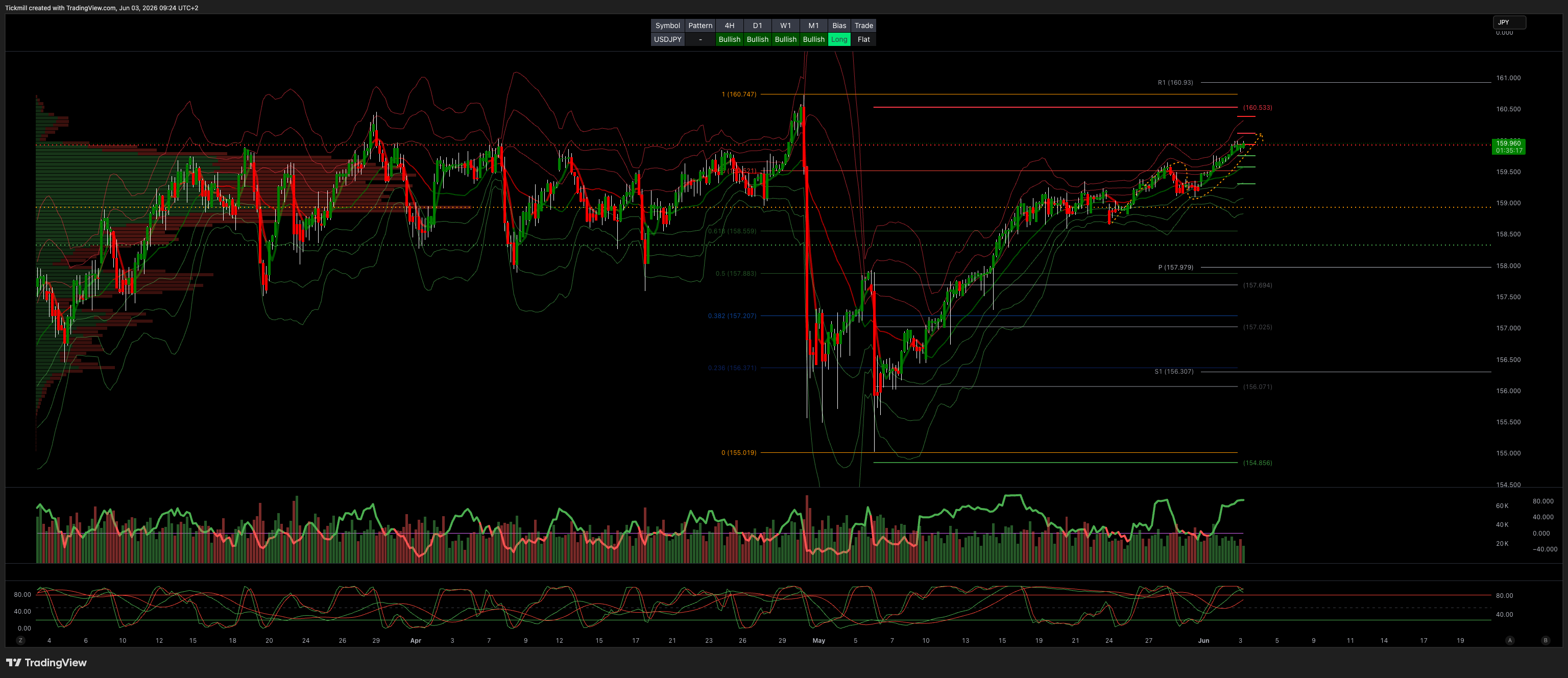
Japan remains another pressure point. Dollar-yen is back around 160, and Finance Minister Katayama reiterated that the government is ready to respond to FX moves at any time. Intervention risk is therefore rising again, but the main driver remains the same: wide rate differentials and uncertainty over the BoJ’s willingness to tighten, even as domestic inflation signals have softened. Verbal intervention can slow the move, but without a shift in rates or a decisive FX operation, the market will continue to test official tolerance.
Australia’s Q1 GDP disappointed slightly at 0.3% q/q, below market and RBA expectations. There may be some weather-related give-back in Q2, so the miss is not necessarily decisive, but it does highlight the challenge facing central banks outside the US: growth is not uniformly strong, yet imported inflation pressure from energy and FX remains persistent. That creates the same uncomfortable trade-off seen across several economies.
In the UK, political risk remains a concern. The FT reports that Andy Burnham cancelled a call with hedge fund managers on Monday at short notice, though he is expected to rearrange it. The planned topic — balancing fiscal policy change with bond market pressure — directly addresses the issue priced into gilts. Burnham has tried to reassure investors over fiscal rules, but markets are still sensitive to the risk that a leadership change could mean a more expansionary or interventionist policy mix. With long-end gilt term premium already elevated, the optics of engagement with bond investors matter.
In short, the market is still willing to prioritise AI momentum, but the macro backdrop is again becoming less supportive. Oil is back near $97, tariff risk is returning, JOLTS points to a tighter labour market, and the Fed may be moving toward less predictable guidance under Warsh. That combination argues against an easy pivot to lower rates. For now, equities can keep leaning on tech, but rates and FX are more likely to trade the inflation risk.
Overnight Headlines
US And Iran Exchange Renewed Fire As Peace Talks Stall
Iran’s IRGC Attacks US Fifth Fleet HQ, Airbase, Local Media Says
US Proposes Broad Tariffs Of At Least 10%, Citing Forced Labour
Trump Administration Seeks Public Comment On China Trade Board
Oil Prices Rise As Middle East Hostilities Flare And Talks Stall
Iraq To Boost Ceyhan Oil Exports As Hormuz Strait Remains Shut
Warsh Set To Revamp Federal Reserve Signalling To Wall Street
BoE Should Ease Stablecoin Proposals, Lawmakers Say
ECB’s Wunsch: Iran Peace Deal Would Not Change Case For Hike
Japan Unveils $19B Extra Budget To Cushion Middle East Impact
Japan’s FinMIn Reiterates Readiness To Act On FX As Yen Weakens
Yen Slips To Key 160 Level As Gulf Hostilities Boost Dollar
Australia Q1 GDP Growth Slows More Than Expected
Microsoft Launches AI That Works Like An Executive Assistant
SpaceX Plans To Set IPO Terms As Soon As Wednesday
Broadcom Backing Lowers Debt Costs On $36B Anthropic Deal
Palo Alto Revenue Rises, Customers Boost CyberSec Spending
FX Options Expiries For 10am New York Cut
(1BLN+ represents larger expiries and is more magnetic when trading within the daily ATR.)
EUR/USD: 1.1850 (EU1.54b), 1.1700 (EU1.43b), 1.1625 (EU1.17b)
USD/JPY: 159.75 ($1.55b), 158.70 ($901m), 160.00 ($661.3m)
AUD/USD: 0.7200 (AUD771.4m), 0.7155 (AUD381.3m), 0.7150 (AUD372.4m)
EUR/GBP: 0.8800 (EU386.2m)
GBP/USD: 1.3500 (GBP499.3m), 1.3440 (GBP413.6m), 1.3400 (GBP377m)
USD/CAD: 1.3830 ($723.4m), 1.3750 ($559m), 1.3810 ($323m)
USD/BRL: 4.9600 ($1.04b), 5.0675 ($711.1m), 5.4750 ($460.3m)
USD/MXN: 17.39 ($379.6m)
CFTC Positions as of May 29, 2026:
Speculators have been busy adjusting their positions across various Treasury futures. The net short position for CBOT US 5-year Treasury futures has been reduced by 27,389 contracts, now sitting at 1,323,127. Similarly, the CBOT US 10-year Treasury futures saw a trim of 60,098 contracts, bringing its net short position down to 787,954. In a more significant shift, the CBOT US 2-year Treasury futures net short position decreased by a hefty 305,591 contracts, now totaling 1,255,246.
On the flip side, the CBOT US UltraBond Treasury futures saw an uptick in their net short position, increasing by 5,378 contracts to reach 259,842. Additionally, there’s been a rise in the net short position for CBOT US Treasury bonds futures, which climbed by 20,577 contracts to hit 199,251.
Turning to equities, equity fund speculators have ramped up their net short position in the S&P 500 CME by 63,334 contracts, now totaling 447,470. However, equity fund managers are taking a different approach by increasing their net long position in the S&P 500 CME by 3,488 contracts, bringing it to an impressive 1,009,014.
In the cryptocurrency realm, Bitcoin maintains a net long position of 2,282 contracts.
The foreign exchange market shows some interesting dynamics: the Swiss franc has a net short position of -35,140 contracts, while the British pound is even deeper in the red with a net short of -61,398 contracts. The Euro is faring better with a net long position of 29,426 contracts, but the Japanese yen is struggling with a significant net short position of -114,667 contracts.
Technical & Trade Views
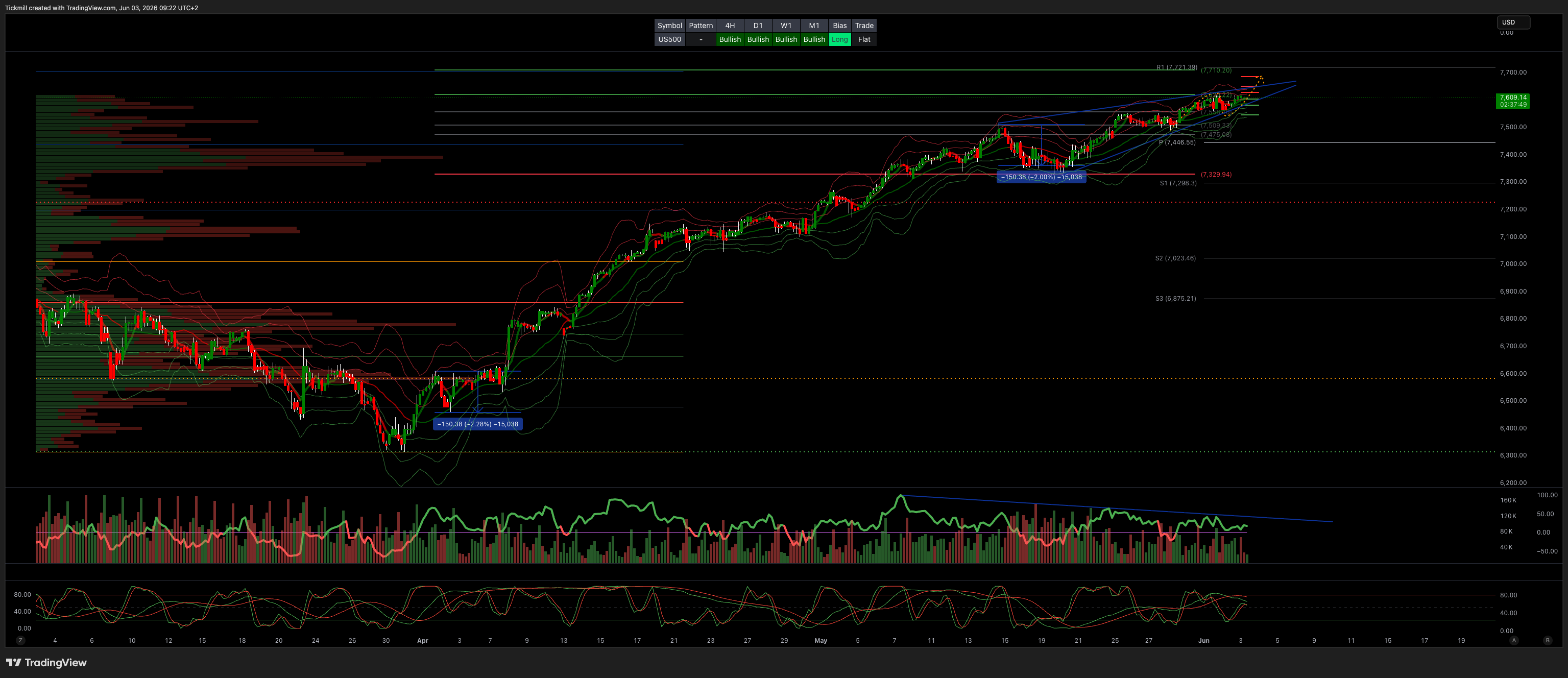
SP500
Daily VWAP Bullish
Weekly VWAP Bullish
Above 7559 Target 7700
Below 7500 Target 7400
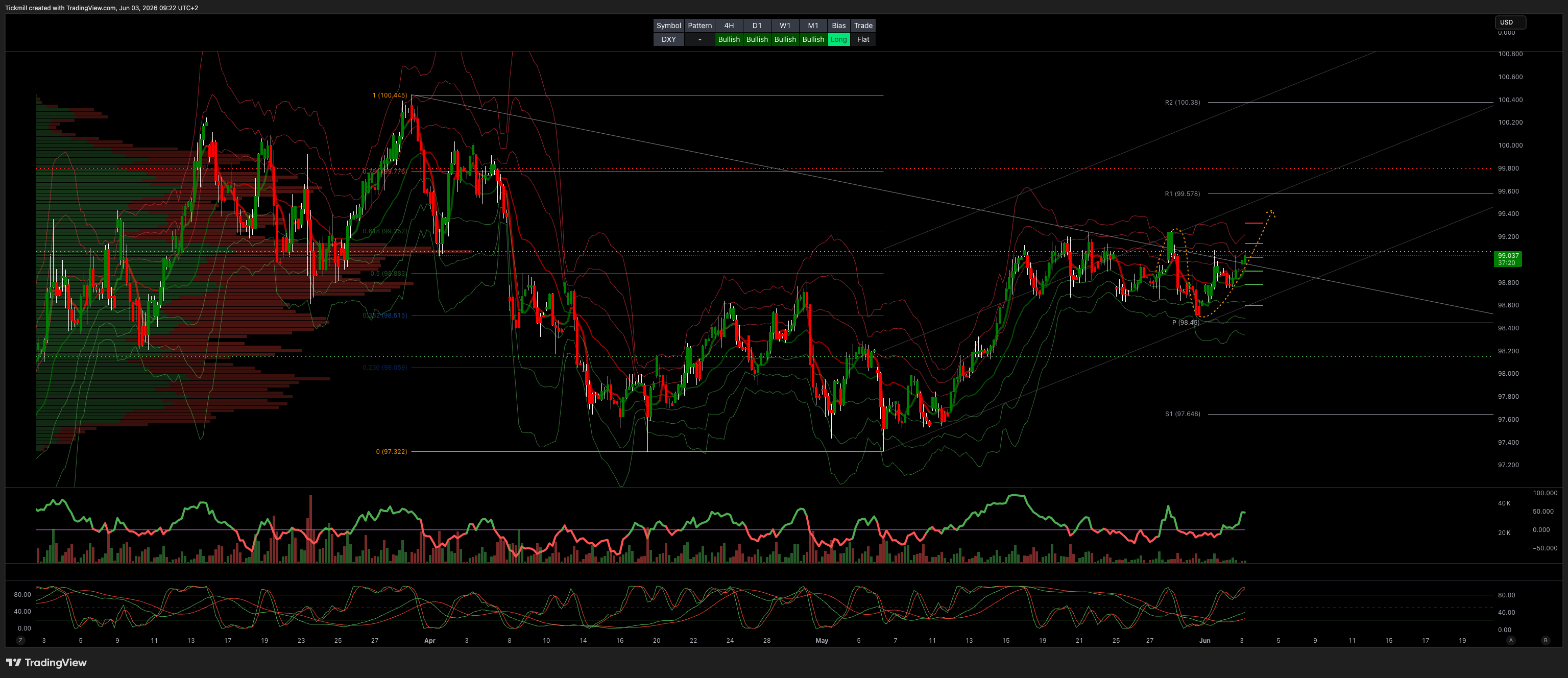
DXY
Daily VWAP Bearish
Weekly VWAP Bullish
Above 98.50 Target 99.50
Below 98.20 Target 96.12
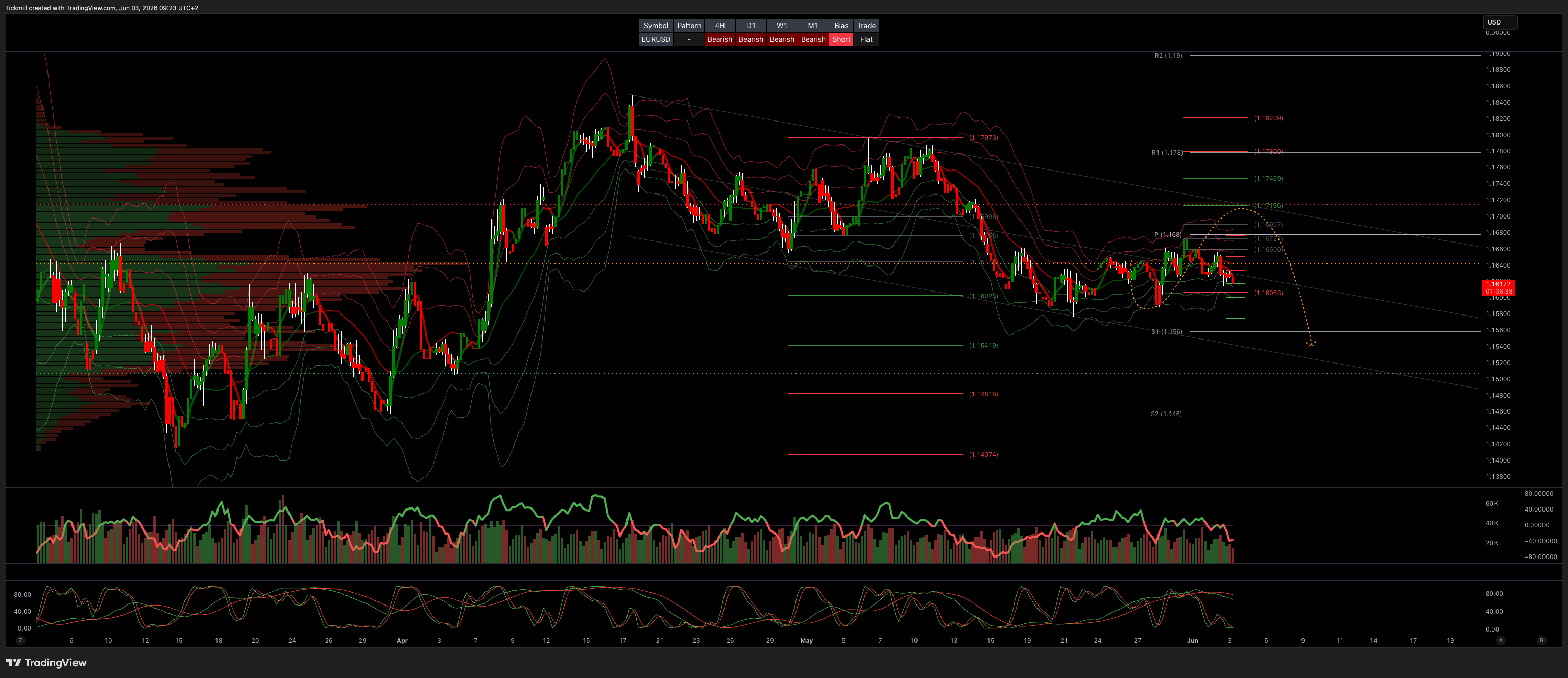
EURUSD
Daily VWAP Bearish
Weekly VWAP Bearish
Above 1.1710 Target 1.18
Below 1.1680 Target 1.1550
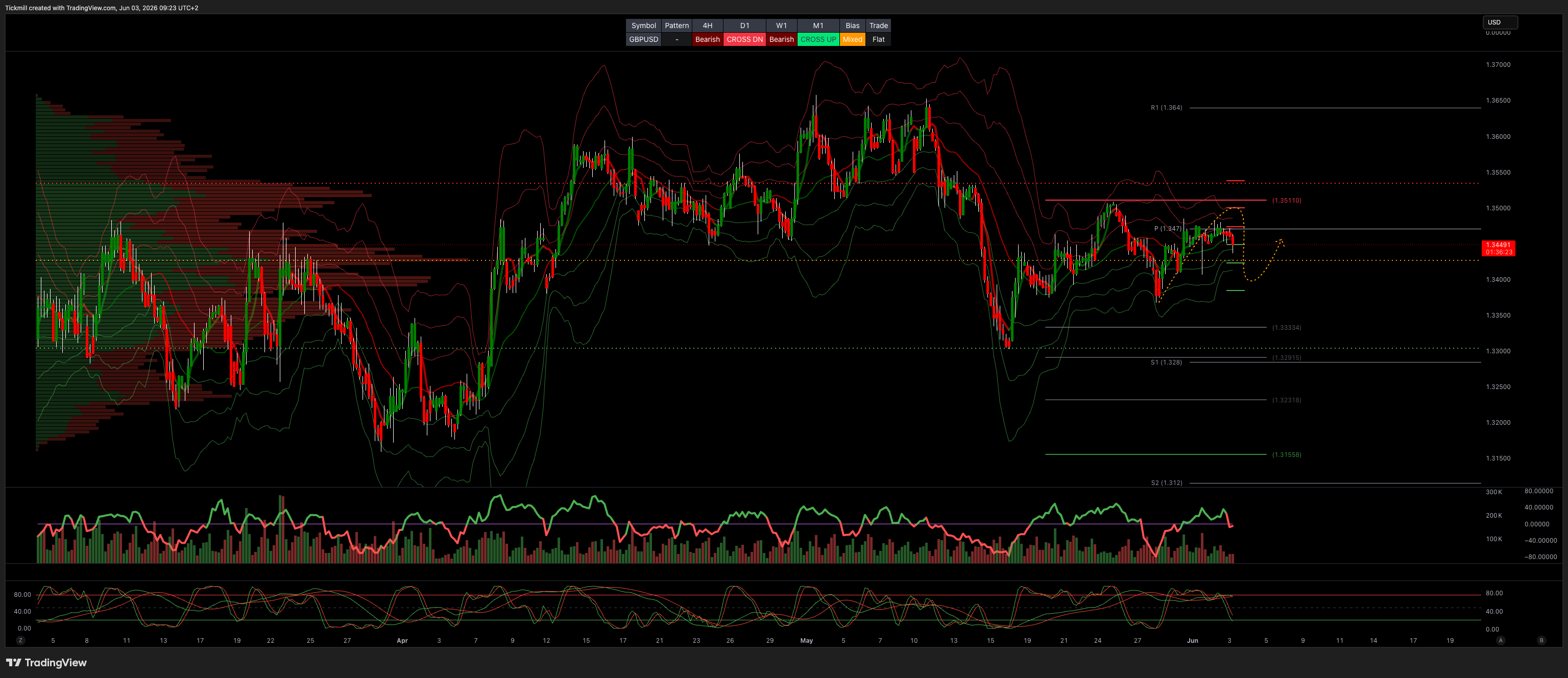
GBPUSD
Daily VWAP Bullish
Weekly VWAP Bearish
Above 1.3465 Target 1.3525
Below 1.3425 Target 1.3350
USDJPY
Daily VWAP Bullish
Weekly VWAP Bullish
Above 160 Target 161
Below 159.50 Target 157.50
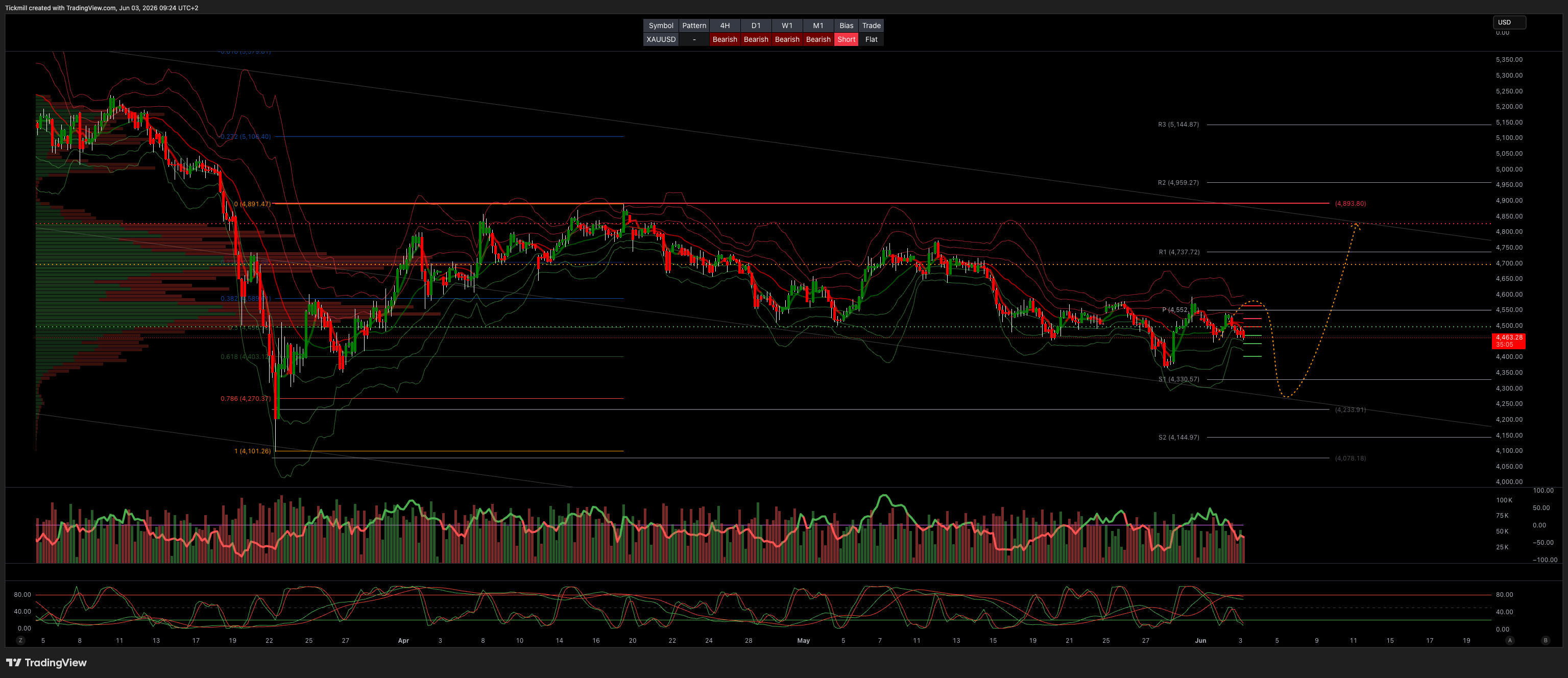
XAUUSD
Daily VWAP Bearish
Weekly VWAP Bearish
Above 4700 Target 4800
Below 4500 Target 4386
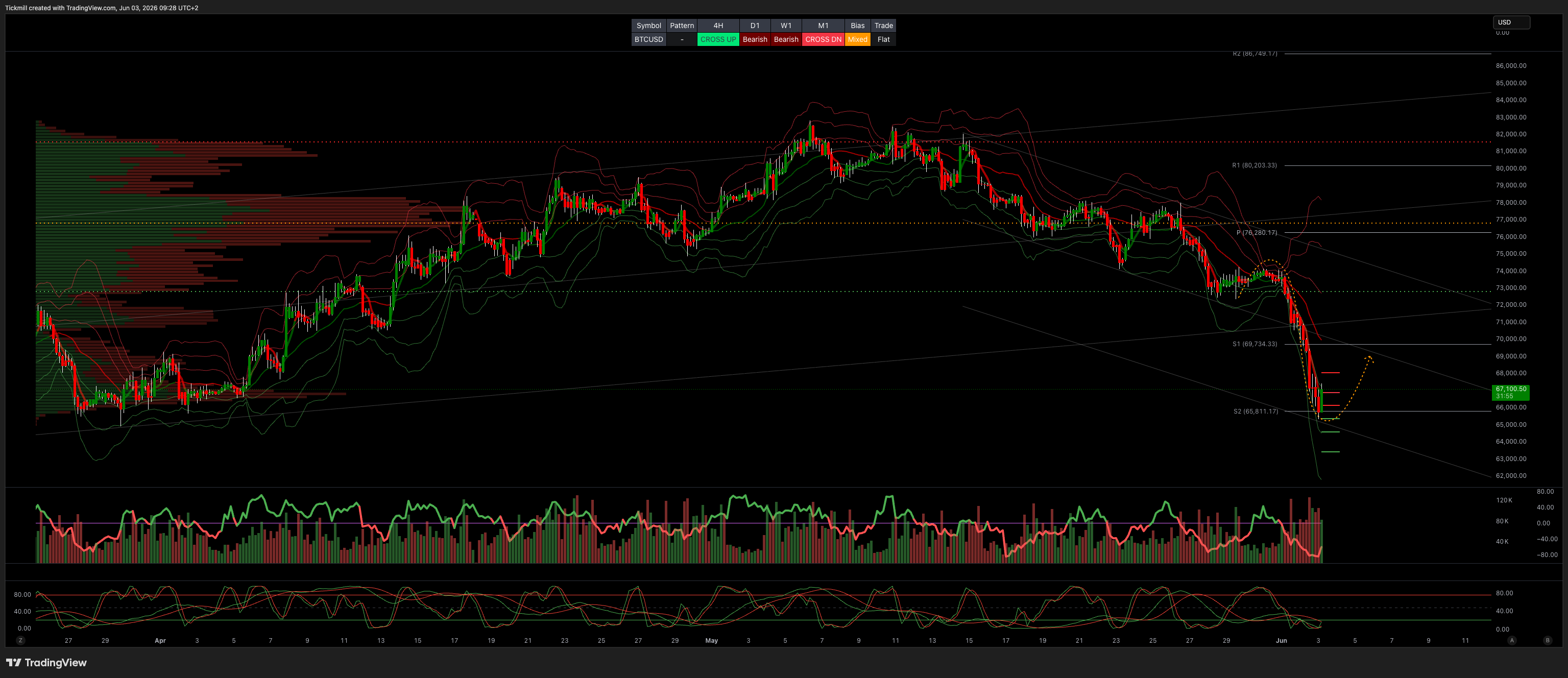
BTCUSD
Daily VWAP Bearish
Weekly VWAP Bearish
Above 71.5k Target 73.5k
Below 70.5k Target 59.6k

Comments
Log in or sign up to join the conversation.