

‘Oil is back in the inflation seat; Iran risk is back on the tape; Korea’s AI trade is cracking; gold is catching the haven bid; and tonight’s Fed minutes now land with inflation expectations moving the wrong way. Markets are no longer trading a clean AI-versus-rates story; they are trading a geopolitical supply shock layered on top of stretched tech positioning, sticky expectations and central banks that have less room to look through energy than they did a week ago.’
Brent crude surged more than 2% above $76 a barrel after US airstrikes on Iran and Washington’s decision to revoke the waiver that had allowed Tehran to sell oil internationally. The escalation follows renewed attacks on shipping routes around the Strait of Hormuz, turning what had been a fading risk premium back into a live inflation shock. The oil market is no longer simply pricing tanker flows or surplus risk. It is pricing the possibility that Middle East disruption returns at the exact point central banks were hoping lower energy would do part of the disinflationary work. The geopolitical backdrop has deteriorated sharply. US Central Command reportedly targeted more than 80 sites in Iran, while Tehran warned of retaliation. Reports of drones launched toward Bahrain and missile threats prompting a response from Kuwait only add to the sense that the conflict risk is broadening beyond bilateral US-Iran confrontation. Markets do not need a full regional war to reprice risk; they only need enough uncertainty around energy flows to lift crude, steepen inflation expectations and make central-bank decisions harder. Bonds reacted accordingly. Government yields rose in Australia and Japan, while US Treasuries were comparatively steadier. The distinction matters. Treasuries are still being pulled between haven demand, Fed uncertainty and inflation risk, while local bond markets in Asia are more directly absorbing the energy shock and regional risk premium. The RBNZ proceeded with its expected rate hike, reinforcing the broader point that central banks are not yet free to ignore inflation even as growth and risk assets wobble. Equities came under pressure, though the damage was concentrated rather than universal. MSCI’s Asia Pacific Index fell 0.6%, but South Korea again carried the pain. The Kospi dropped more than 5%, moving into bear-market territory as investors continued to dump crowded semiconductor exposure. This is the second warning in as many sessions that the AI trade has moved from leadership to liquidation in parts of Asia. When the highest-beta chip market in the world falls into a bear market while broader indices hold up better, the issue is positioning as much as macro.
The US setup is more mixed that suggests investors are still trying to separate the broader AI platform story from the semiconductor unwind. But that distinction may be harder to maintain if Korea keeps selling off, oil keeps rising, and real yields refuse to fall. The AI bid can absorb profit-taking. It struggles more when energy, inflation expectations and geopolitical risk all move against duration-heavy growth equities at the same time. Safe havens were firmer but not disorderly. The Dollar held steady after Tuesday’s gains, while gold rose above $4,100 an ounce as investors sought protection against geopolitical escalation. Bitcoin fell around 1.5%, behaving less like digital gold and more like a high-beta liquidity asset. That cross-asset split is important. In a genuine geopolitical inflation shock, gold still attracts defensive capital; crypto still trades with risk appetite.
The inflation backdrop is becoming less comfortable for the Fed. The June New York Fed survey showed one-year and three-year inflation expectations both rising 0.2 percentage points, to 3.7% and 3.3%, respectively. Those are the highest readings since September 2023 for the one-year horizon and since June 2022 for the three-year measure. The near-term figure may get some relief if recent declines in pump prices feed through, but the three-year move is harder to dismiss. It suggests households are not simply reacting to gasoline volatility; they may be embedding a more persistent inflation premium. That makes tonight’s Fed minutes more important. The market will be watching how much concern hawkish FOMC members expressed about inflation expectations, especially after the first Warsh-led policy meeting. The minutes may read hawkish given the prior dot-plot bias toward at least one further hike this year, but the bigger signal will be whether the committee is more worried about expectations becoming unanchored or about the labour market losing momentum. With oil now spiking again, the inflation-expectations discussion has become less academic.
The UK Financial Policy Committee delivered a clearer domestic signal: bank capital levels are broadly where the Bank of England wants them, but the leverage framework needs to become more usable, releasable and internationally comparable. The FPC acknowledged that the UK leverage regime has become more binding than intended, particularly relative to global peers, and set out a package aimed at improving balance-sheet flexibility without weakening resilience. The immediate change is that O-SII buffers will effectively become releasable in systemic stress, extending the logic already applied to the countercyclical capital buffer. More significantly, the FPC plans to consult on a broader leverage overhaul. The proposed package includes removing the countercyclical leverage buffer, increasing the additional leverage ratio buffer to 50% of systemic buffers in line with Basel standards, reducing the minimum leverage ratio from 3.25% to 3.0%, and introducing a new 25bp releasable leverage buffer. The package is estimated to reduce effective leverage requirements for large UK banks by roughly 0.20 percentage points in aggregate. Directionally, that is constructive. It should increase balance-sheet flexibility, improve market-intermediation capacity and bring the UK framework closer to international norms. Bailey repeatedly framed the reforms as supporting lending and market functioning during stress, which fits the Bank’s broader attempt to balance resilience with competitiveness. The market implication is modestly positive for gilts, but not transformational. Easier leverage constraints may support bank capacity for intermediation and, at the margin, demand for lower-risk assets. But expectations for a large outright gilt bid should be treated cautiously. The FPC has not signed off the full package, further analysis will be conducted with the PRA, and the Bank explicitly wants to assess whether easing bank leverage constraints could create stability gaps elsewhere, including through higher market-based leverage. That is the more important structural point. The Bank is increasingly drawing a line between bank leverage, which it sees as well capitalised and resilient, and non-bank leverage, where the concerns are rising. The Financial Stability Review highlights hedge fund leverage, basis trades, sovereign debt market fragility and broader market-based finance as areas of vulnerability. The direction of travel is therefore not deregulation in the broad sense. It is targeted flexibility for banks, paired with tougher scrutiny of leverage outside the banking system. The plan to advance minimum repo haircuts fits that logic.
The day’s market message is uncomfortable. Oil is no longer a disinflation tailwind, the Middle East risk premium has reappeared, AI leadership is under pressure, and inflation expectations are moving higher just as the Fed prepares to publish minutes from its first Warsh-led meeting. The UK leverage review is constructive for bank balance-sheet capacity, but the gilt impact is likely to be slower and smaller than the headline suggests. Risk appetite has not collapsed, but the macro backdrop has turned materially less forgiving.
Overnight Headlines
US Military Launches New Wave Of Strikes Against Iran
US Revokes Waiver Allowing Iran Oil Sales After Tanker Attacks
Oil Surges As US Strikes Targets In Iran Following Ship Attacks
Fed Proposes Changes To Anti-Money Laundering Rules For Banks
Japan Weighs Revising Monetary Policy Wording Over BoJ Hike Concerns
Japan’s Bank Lending Rises Fastest Since Covid, Backing BoJ Path
Japan’s Borrowing Costs Soar To 30-Year High On Debt Fears
New Zealand Raises Key Rate To Head Off Inflation Pressures
Trump Administration Lifts Restrictions On OpenAI’s GPT-5.6
Apple Testing China’s CXMT DRAM Chips For Domestic Devices
Meta Debuts New AI Image-Gen Model Inside Chatbot, Instagram
Samsung Mass Produces Storage Drives For Nvidia’s Vera Rubin
Exxon Sees $3.7B Profit Surge From War-Driven Oil Rally
US Rare Earths Flow To Asia As Domestic Demand Is Slow To Emerge
FX Options Expiries For 10am New York Cut
(1BLN+ represents larger expiries and is more magnetic when trading within the daily ATR.)
EUR/USD: 1.1500 (EU2.08b), 1.1350 (EU1.49b), 1.1900 (EU1.16b)
USD/JPY: 162.00 ($2.2b), 162.50 ($819m), 160.00 ($696.5m)
USD/CAD: 1.4000 ($936m), 1.4100 ($715.7m), 1.3200 ($330m)
USD/BRL: 5.1900 ($760.3m), 5.2500 ($585.8m), 5.3000 ($577.5m)
AUD/USD: 0.6930 (AUD558.4m), 0.6830 (AUD460m), 0.6690 (AUD380m)
USD/CNY: 6.6500 ($1.2b), 6.8000 ($642.7m)
GBP/USD: 1.3360 (GBP435.2m), 1.3770 (GBP370.4m), 1.3505 (GBP308m)
EUR/GBP: 0.8730 (EU505.4m), 0.8660 (EU337m)
USD/MXN: 18.30 ($418.8m), 17.85 ($403.4m)
CFTC Positions as of July 6
Equity fund speculators have made some notable adjustments recently, reducing their net short position on the S&P 500 CME by 7,187 contracts, bringing the total down to 348,482. Meanwhile, equity fund managers have also trimmed their net long position in the S&P 500 CME, cutting it by 8,851 contracts to a total of 979,126.
In the Treasury futures, speculators have ramped up their net short position on CBOT US 5-year Treasury futures by 19,241 contracts, now standing at 1,320,510. They have also scaled back their net short positions in CBOT US 10-year Treasury futures by 26,375 contracts, resulting in a total of 808,891. The trend continues with CBOT US 2-year Treasury futures, where speculators have trimmed their net short position by 31,265 contracts to reach 1,287,581. Additionally, the net short position in CBOT US UltraBond Treasury futures has been reduced by 31,431 contracts, now totaling 286,669. The most significant cut comes from the CBOT US Treasury bonds futures, where speculators have decreased their net short position by a whopping 85,263 contracts, leaving it at 90,780.
Bitcoin bulls are holding a net long position of 3,770 contracts.
In the currency markets, the Swiss franc has posted a net short position of -38,958 contracts, while the British pound stands at a net short position of -102,147 contracts. The euro is faring better with a net long position of 1,099 contracts, whereas the Japanese yen finds itself in a challenging spot with a net short position of -155,092 contracts.
Technical & Trade Views
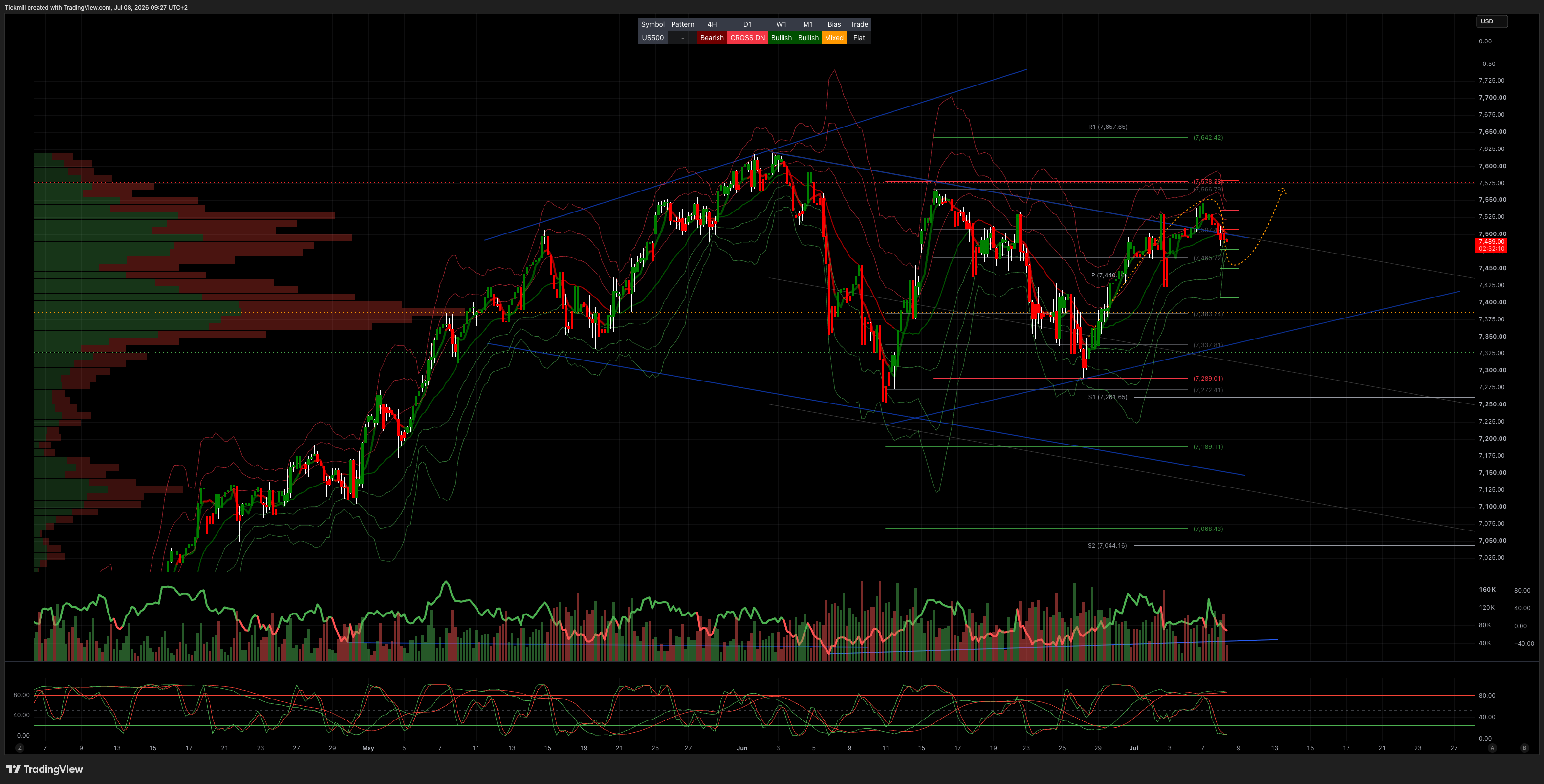
SP500 - 7400 weekly bull/bear level
Daily VWAP Bullish
Weekly VWAP Bearish>Bullish
Above 7450 Target 7575
Below 7400 Target 7285
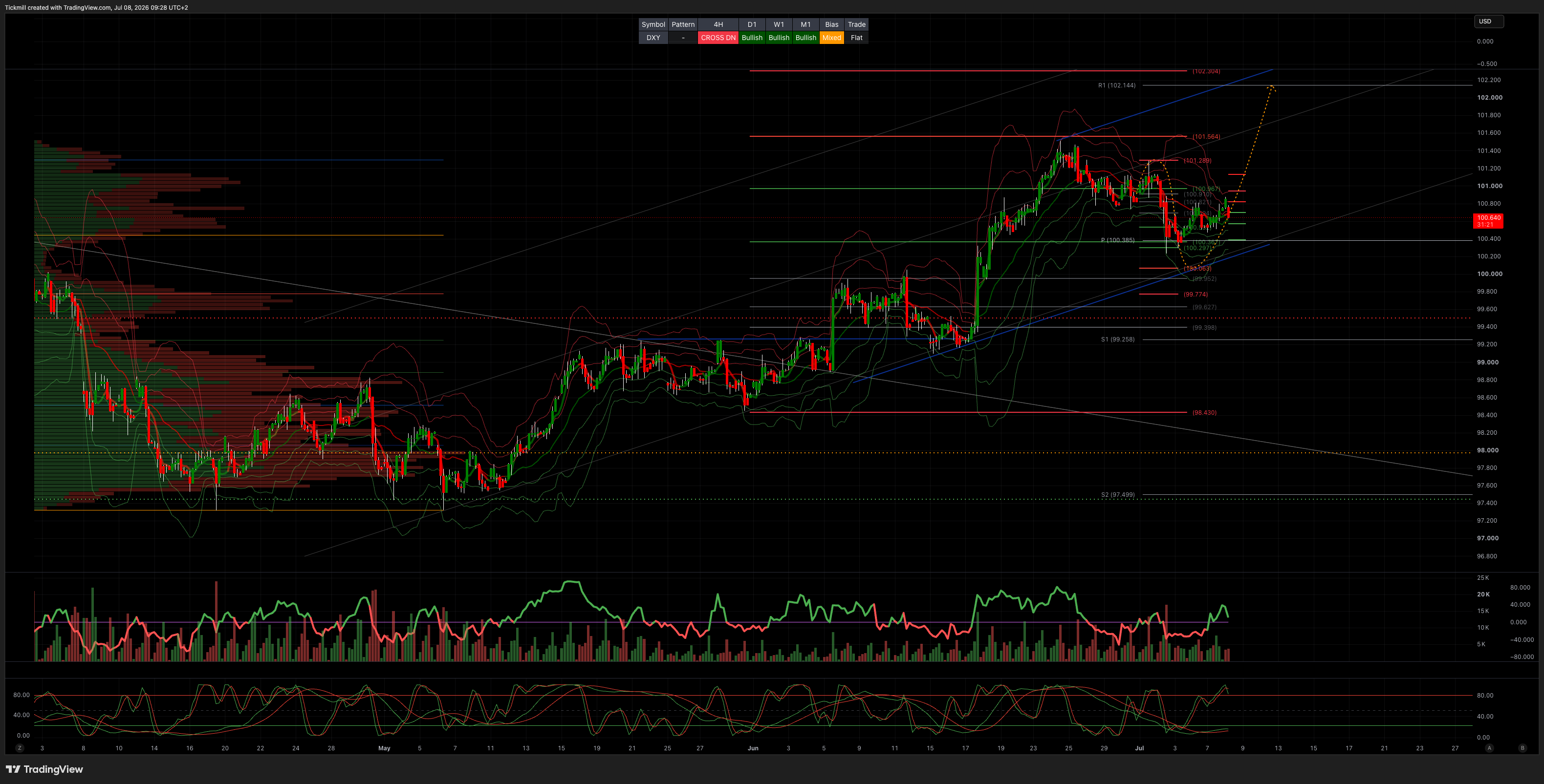
DXY - 100 weekly bull/bear level
Daily VWAP Bullish
Weekly VWAP Bullish
Above 100 Target 102.50
Below 99.40 Target 98.40
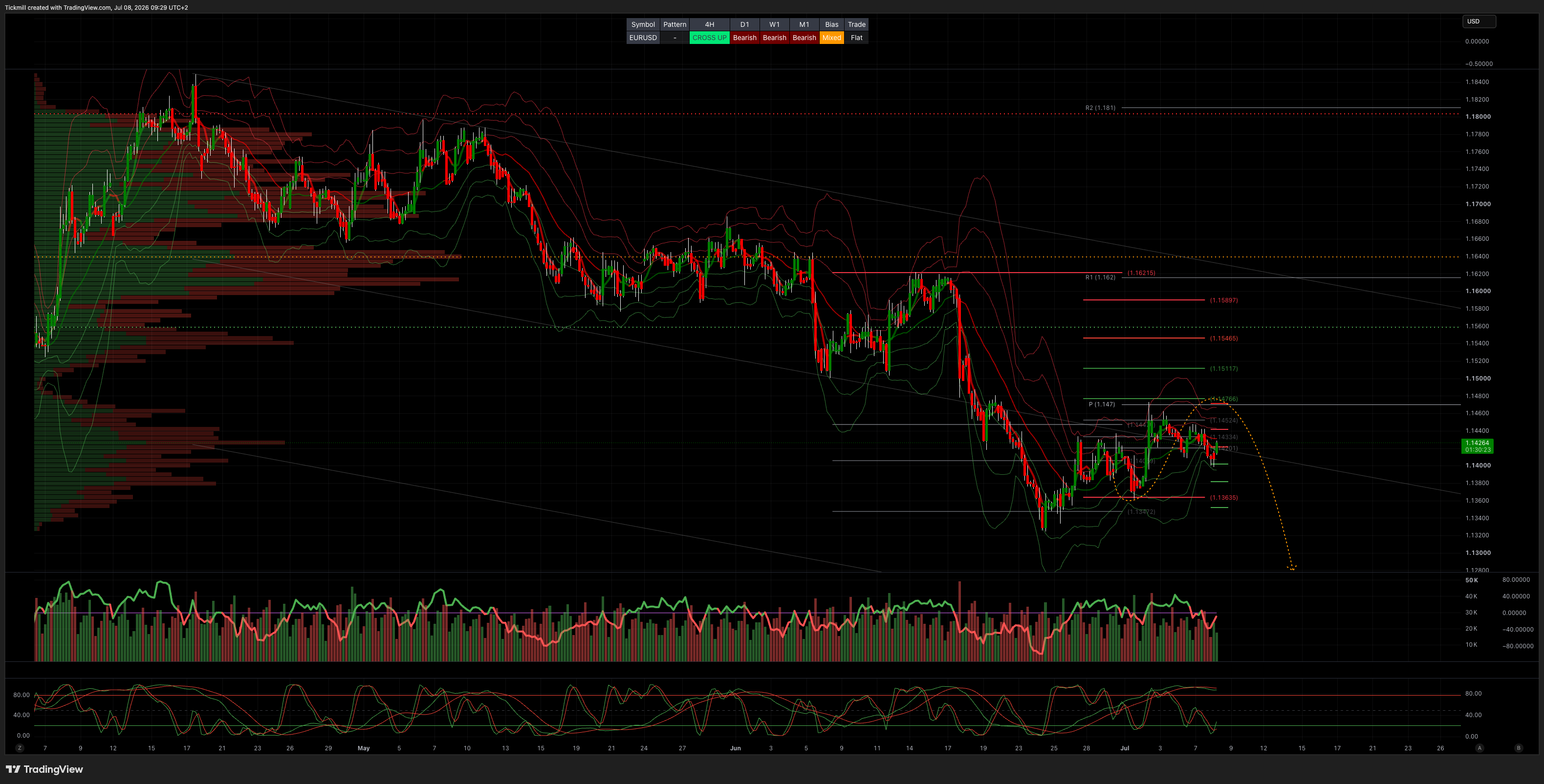
EURUSD - 1.15 weekly bull/bear level
Daily VWAP Bearish
Weekly VWAP Bearish
Above 1.15 Target 1.1780
Below 1.1490 Target 1.1270
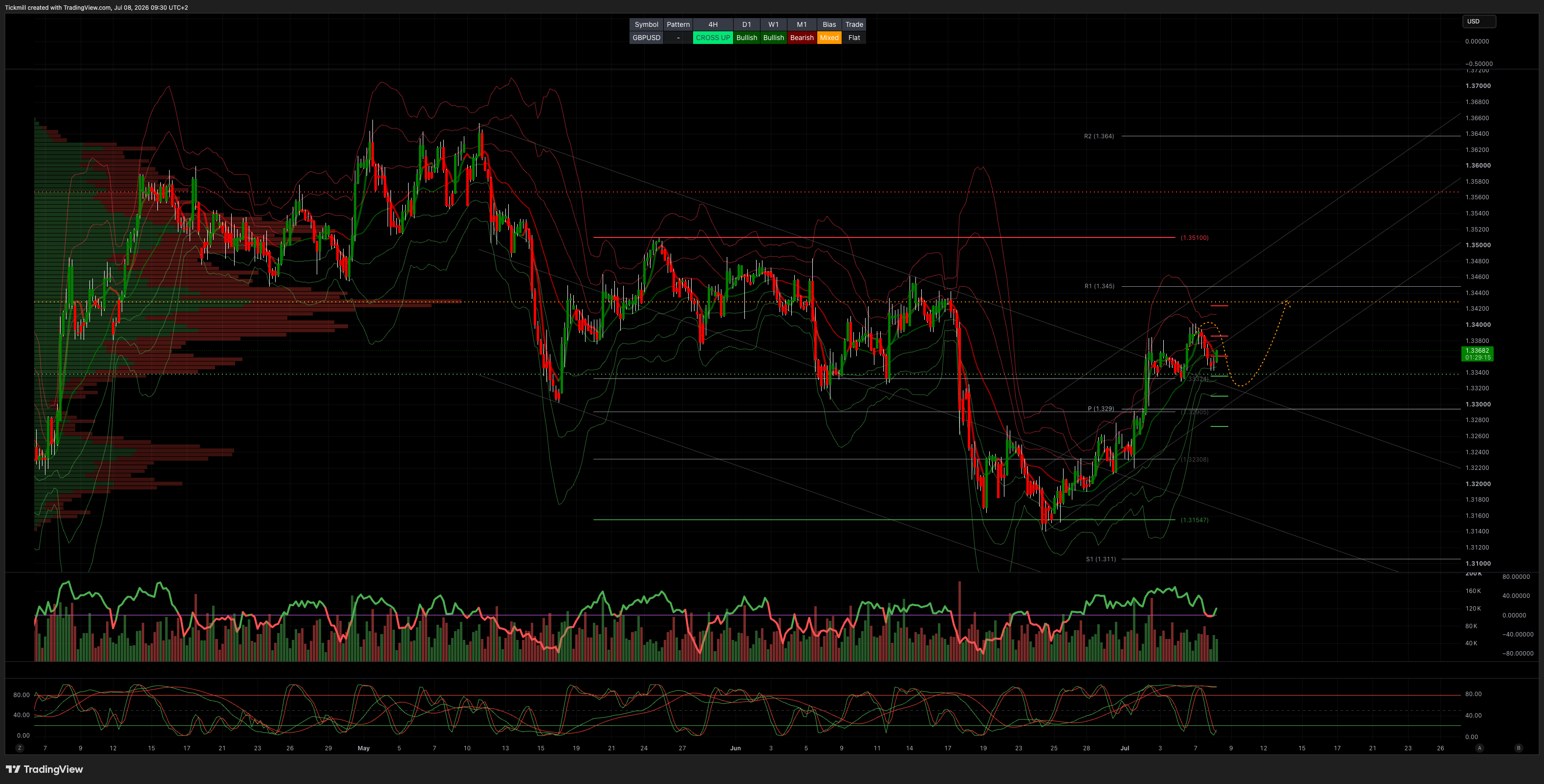
GBPUSD - 1.33 weekly bull/bear level
Daily VWAP Bullish
Weekly VWAP Bullish
Above 1.34 Target 1.35
Below 1.33 Target 1.3050
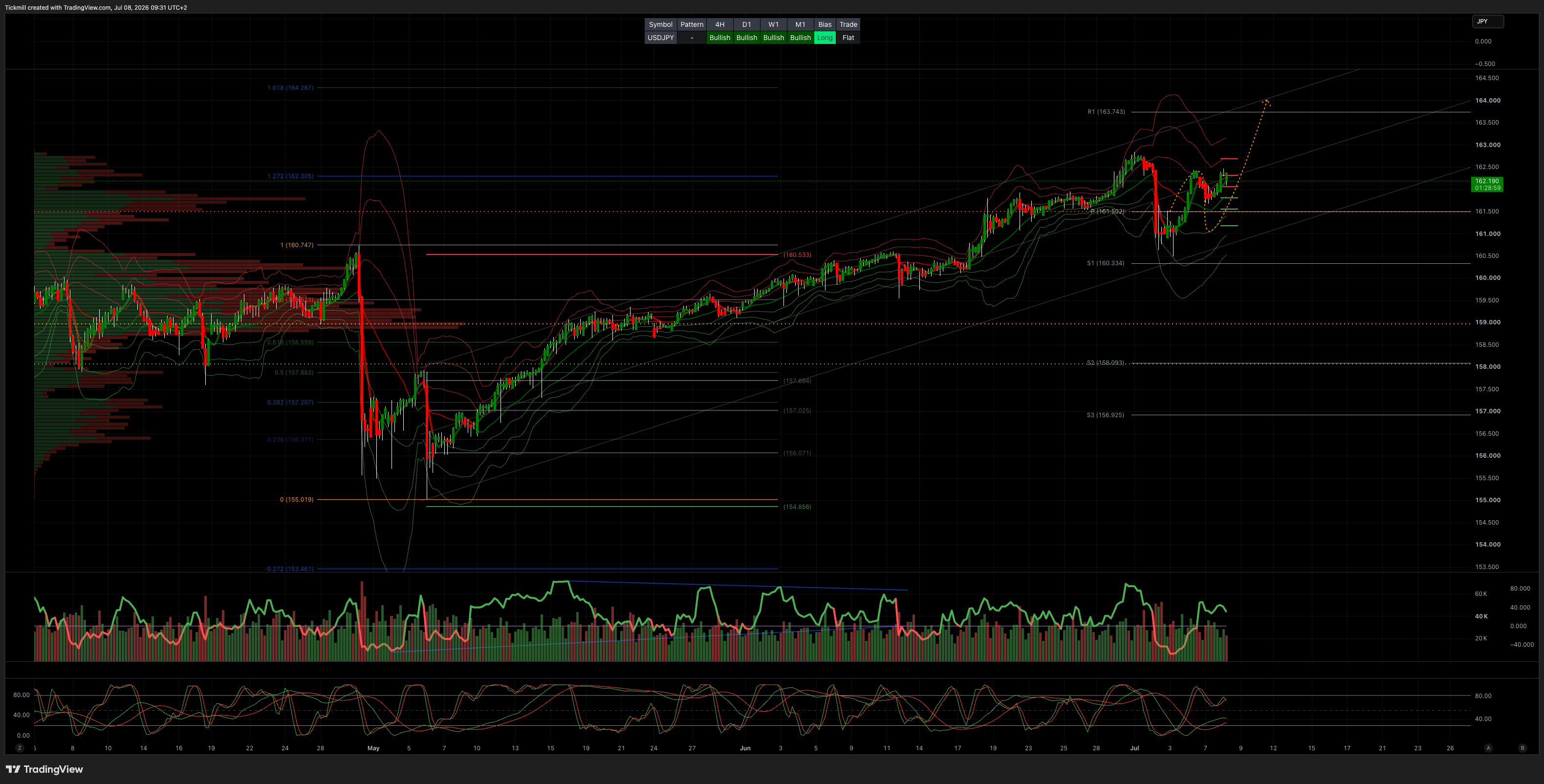
USDJPY - 160.50 weekly bull bear level
Daily VWAP Bullish
Weekly VWAP Bullish
Above 162 Target 163.75
Below 159Target 157.95
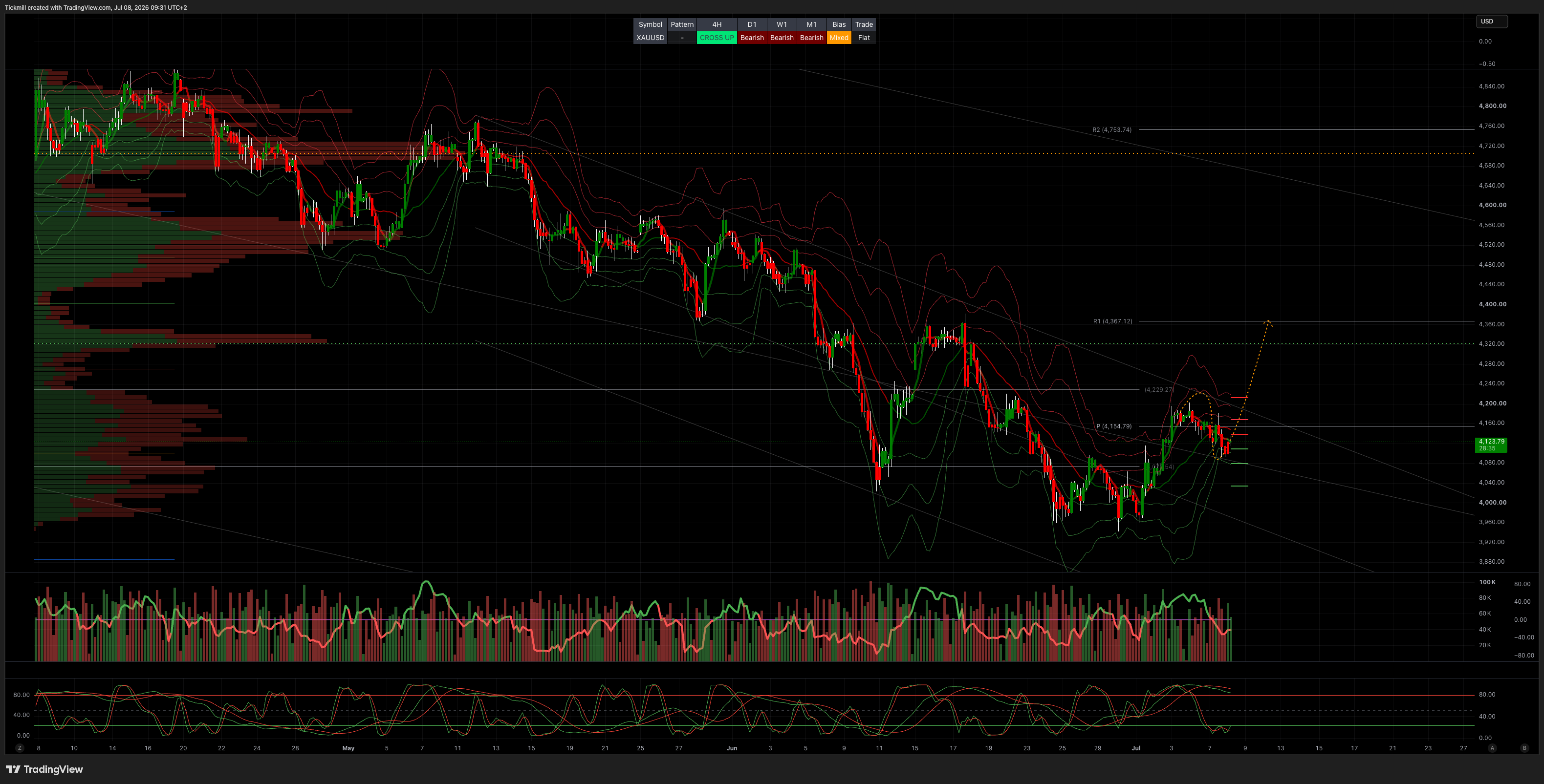
XAUUSD - 4100 weekly bull bear level
Daily VWAP Bearish
Weekly VWAP Bearish
Above 4200 Target 4500
Below 4100 Target 3569
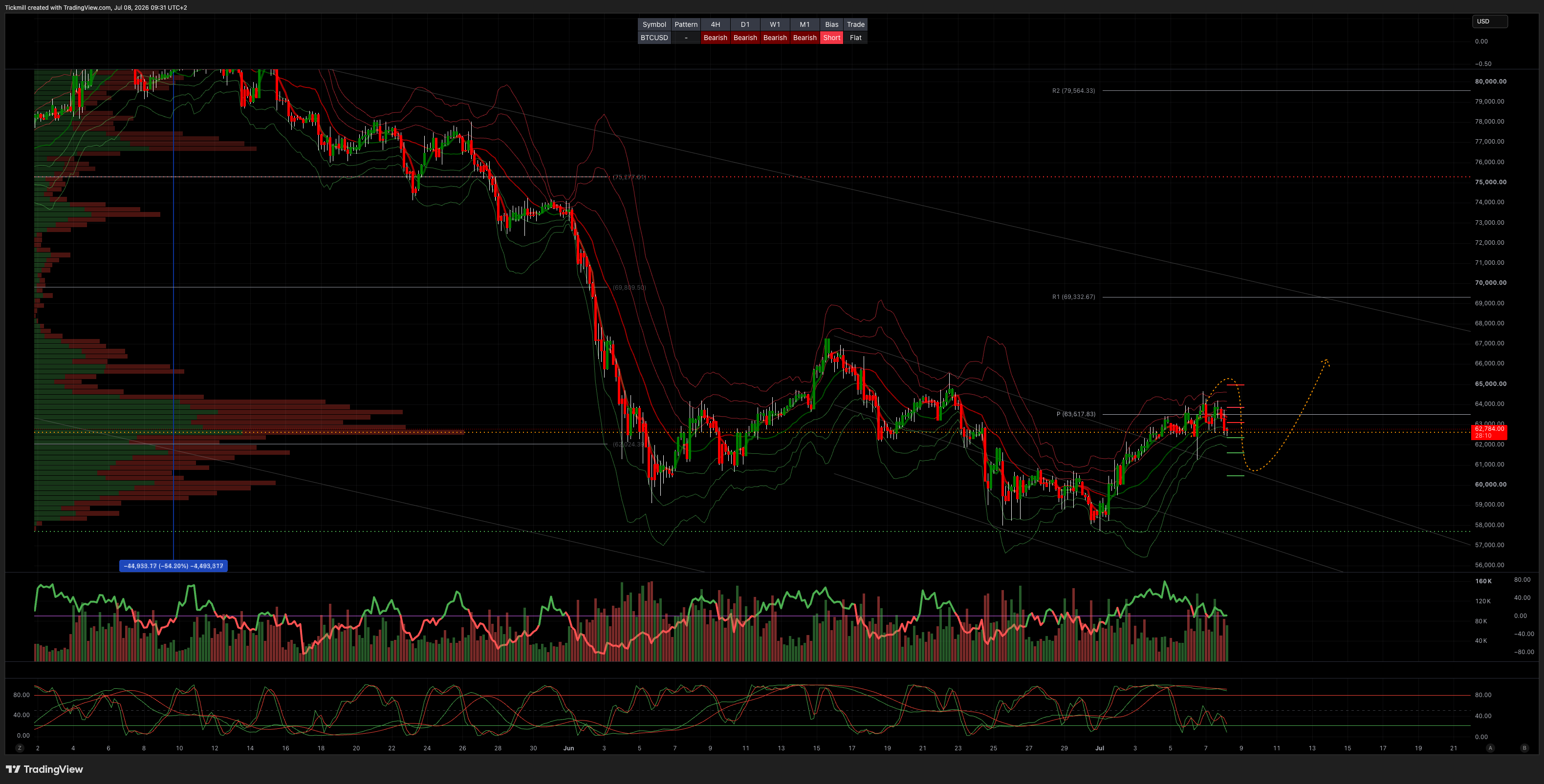
BTCUSD - 60.5 weekly bull bear level
Daily VWAP Bearish
Weekly VWAP Bearish
Above 67.2k Target 70.5k
Below 60.5k Target 52.2k

Comments
Log in or sign up to join the conversation.