


Global equities have pushed to fresh records as AI enthusiasm returns, oil risk fades and traders trim expectations for further rate hikes. Chipmakers are again carrying the market higher, helped by renewed confidence in Nvidia’s product cycle and relief that the Middle East crisis may be moving toward an interim settlement. But beneath the surface, two familiar complications remain: AI spending discipline is still being tested, and in the UK, fiscal engineering may translate into more gilt supply even if it does not immediately consume official fiscal headroom.
The MSCI All Country World Index rose 0.4% to a new all-time high, while Asia-Pacific equities gained 2.2%. Australian shares also reached record levels, following the S&P 500 and Dow Jones to historic highs. US and European futures point to further gains, leaving the global equity tape in a much better place than it was during July’s AI-driven shakeout.
The recovery is being led by semiconductors. SK Hynix rose 6.7% in Seoul, while Nvidia gained more than 2% after-hours following optimistic commentary around its next generation of AI chips. That has helped restore confidence that the AI infrastructure cycle remains alive and that last month’s panic over capex returns was overdone. In market terms, the AI trade has moved from liquidation back to leadership.
But the sector is still being judged more harshly than before. AMD fell 9% after a disappointing sales forecast, while SpaceX dropped 7.5% after projecting higher AI-related spending. That distinction matters. Investors are rewarding companies that can point to revenue growth, chip demand and product-cycle momentum, but they are punishing those where AI investment looks like a cost burden rather than an earnings accelerator. The market is enthusiastic again, not indiscriminate.
Oil is giving risk assets another tailwind. Brent fell 0.7% to around $78.75/bbl, extending the retreat from last week’s crisis premium as optimism builds around a potential interim deal between the US and Iran. Reports suggest Washington, Tehran and Oman are close to an agreement to reopen the Strait of Hormuz, which would be a major de-escalation if delivered. The key caveat is still implementation. Oil can price diplomatic optimism quickly, but physical flows, insurance costs and shipping confidence may take longer to normalise.
Treasuries rallied as lower oil reduced inflation pressure and traders pared expectations for further rate hikes. The US dollar weakened for a third consecutive session as safe-haven demand faded and rate expectations softened. Interestingly, gold rose 1.4% to around $4,135/oz, with silver and platinum also firmer. That combination — weaker dollar, lower hike expectations and still-present geopolitical uncertainty — is supportive for precious metals even when equities are rallying.
The broader market message is constructive but not carefree. Lower oil, softer rate-hike pricing and strong AI earnings are a powerful mix. Yet valuations are high, positioning has rebuilt quickly, and July’s selloff showed how vulnerable the AI complex can be when investors question spending discipline. The next phase of the rally will depend less on excitement and more on proof: orders, margins, cloud revenue and monetisation.
In the UK, the main story is fiscal rather than geopolitical. The Times reports that the Treasury is looking at ways to kick-start growth through an additional borrowing push of up to £9bn a year by 2031, structured in a way that exploits flexibility within the fiscal rules. The basic idea is that some extra investment spending can be treated as the purchase of a financial asset, which may avoid worsening the government’s target metric under the second fiscal rule: Public Sector Net Financial Liabilities, or PSNFL.
This is where the accounting becomes important for gilt investors. Spending structured as an asset purchase can net off against PSNFL, preserving apparent fiscal headroom. But it still adds to Public Sector Net Debt, or PSND, which is a better proxy for the stock of gilts that need to be issued. In simpler terms: it may not break the fiscal rule, but it can still mean more bonds for the market to absorb.
That wedge between PSNFL and PSND is the key issue. If the government increasingly uses balance-sheet structures to support investment without eating into the official fiscal headroom metric, gilt issuance forecasts may need to move higher even if the fiscal-rule narrative remains intact. The £9bn-a-year figure appears to come from the Resolution Foundation rather than a direct Treasury leak, so it should not be treated as confirmed policy. But the direction of risk is familiar: more investment, more issuance, and more scrutiny from gilt investors.
This matters because the gilt market is already sensitive to the combination of fiscal ambition, energy uncertainty and central-bank caution. A strategy that looks clever from a fiscal-rule perspective can look less clever if investors focus on gross supply. The Budget therefore remains a major event risk, not only for tax and spending choices but for the credibility and transparency of the framework itself.
In the US, the June job openings report did little to challenge the Fed hawks. Openings fell modestly to around 7.35mn from roughly 7.5mn, taking the vacancy rate from a revised 4.5% to 4.4%. That is a cooling signal at the margin, but with the unemployment rate at 4.2% in June, the labour market still looks tight overall.
The layoffs rate remains low at 1.1%, even after slight upward revisions. That is important because a genuinely weakening labour market would usually show up first in firms becoming more willing to cut workers. For now, layoffs are still consistent with an economy operating near full employment rather than one rolling over.
The quits rate may be the more interesting detail. It rose 0.1ppt to 2.0%, suggesting workers are a little more willing, or able, to leave jobs. That brings the quits rate more into line with the low unemployment rate, whereas previously it had made the 4.2% unemployment rate look somewhat anomalously low. The signal is not that the labour market is reaccelerating sharply, but that it remains healthier than a simple cooling narrative would suggest.
For the Fed, this report is unlikely to change much. Last week’s hawkish dissenters — Hammack, Logan and Kashkari — will not see these data as a reason to rethink their concern. The labour market is cooling only gradually, inflation remains above target, and the recent easing in oil helps but does not erase the broader price-stability challenge. Chair Warsh’s no-forward-guidance regime means markets will keep paying more attention to each data point, but this particular release does not obviously push the Committee toward a dovish turn.
The macro mix is therefore supportive for equities but still challenging for bonds. Lower oil and reduced hike expectations help duration, but stronger labour data and heavier issuance risks keep the long end from enjoying a clean rally. In the UK, prospective fiscal manoeuvring reinforces that supply matters. In the US, the labour market remains too tight to let the Fed sound relaxed.
Wednesday’s market minute: the rally has real fuel. AI leadership is back, oil has dropped below $80/bbl, and global equities are making new highs. But the market is now operating on a higher standard of proof. AI winners need to show earnings conversion, central banks need to see inflation relief without labour reacceleration, and the UK Treasury needs to remember that fiscal headroom is not the same thing as gilt-market capacity. The tape is risk-on, but the homework has not gone away.
Overnight Headlines
US: Strait Of Hormuz Is Open As Bessent Says Deal With Iran Is Close
Fed’s Schmid Says Tighter Policy Needed To Reduce Inflation
Trsy's Bessent: US Will Do Whatever It Takes To Support Japan
BoJ Debated Mounting Price Risks Even Upon Hiking Rates In June
Japan’s Nominal Wages Rise Again, Backing BoJ Rate Hike Case
Japan PM Asked BoJ To Buy More Bonds When Needed, Jiji Reports
US Yen Intervention Signals Perfect Storm Rising In FX And Bond Markets
New Zealand Jobless Rate Rises As Energy Shock Drags On Hiring
US Bans Export Of Tungsten And Battery Waste To Protect Supplies
Samsung, SK Hynix Test Chinese Chip Tools As Hedge Against US Risks
China’s Official Newspaper Warns US Over Expanding Tech Curbs
China’s Open-Weight Models To Be Spared US Tests, US Firms Told
AMD Sales Outlook Disappoints Investors After AI-Fuelled Rally
SpaceX Q2 Revenue Jumps As Satellite And AI Businesses Surge
Gilead Sales Beat Expectations On Strong HIV Prevention Growth
Amgen Lifts Outlook On Strong Sales, To End Early Dev of Obesity Treatment
Booking Holdings Reports Higher Revenue On Strong Travel Demand
Paramount Raises FY Profit Guidance, ‘Confident’ About WBD Merger
FX Options Expiries For 10am New York Cut
(1BLN+ represents larger expiries and is more magnetic when trading within the daily ATR.)
USD/JPY: 165.45 ($1.12b), 164.50 ($1.01b), 155.35 ($980m)
EUR/USD: 1.1500 (EU1.72b), 1.1450 (EU985.5m), 1.1465 (EU984.1m)
AUD/USD: 0.7250 (AUD731m), 0.6950 (AUD538.4m), 0.7000 (AUD423.1m)
USD/CAD: 1.3955 ($776.2m), 1.3210 ($375m), 1.4055 ($319.6m)
GBP/USD: 1.3430 (GBP530.9m)
USD/MXN: 18.75 ($448.7m), 17.14 ($410m)
NZD/USD: 0.5650 (NZD555.3m), 0.5760 (NZD307.6m)
CFTC Positions as of 31/7/26
Equity fund speculators reduced their S&P 500 CME net short position by 28,795 contracts, bringing it to 287,277. Meanwhile, equity fund managers increased their net long position by 12,702 contracts to 939,115. The Bitcoin net long position stands at 3,904 contracts.
In currency positions, the Swiss franc has a net short of -33,462 contracts, the British pound -64,814, the euro -72,447, and the Japanese yen -163,412.
Speculators also decreased their net short positions in various Treasury futures: CBOT US 5-year by 126,929 contracts to 1,146,400; CBOT US 10-year by 3,587 contracts to 876,119; CBOT US 2-year by 30,023 contracts to 1,124,574; and CBOT US UltraBond by 642 contracts to 320,708. However, they increased their net short position in CBOT US Treasury bonds futures by 30,707 contracts to 217,497.
Technical & Trade Views
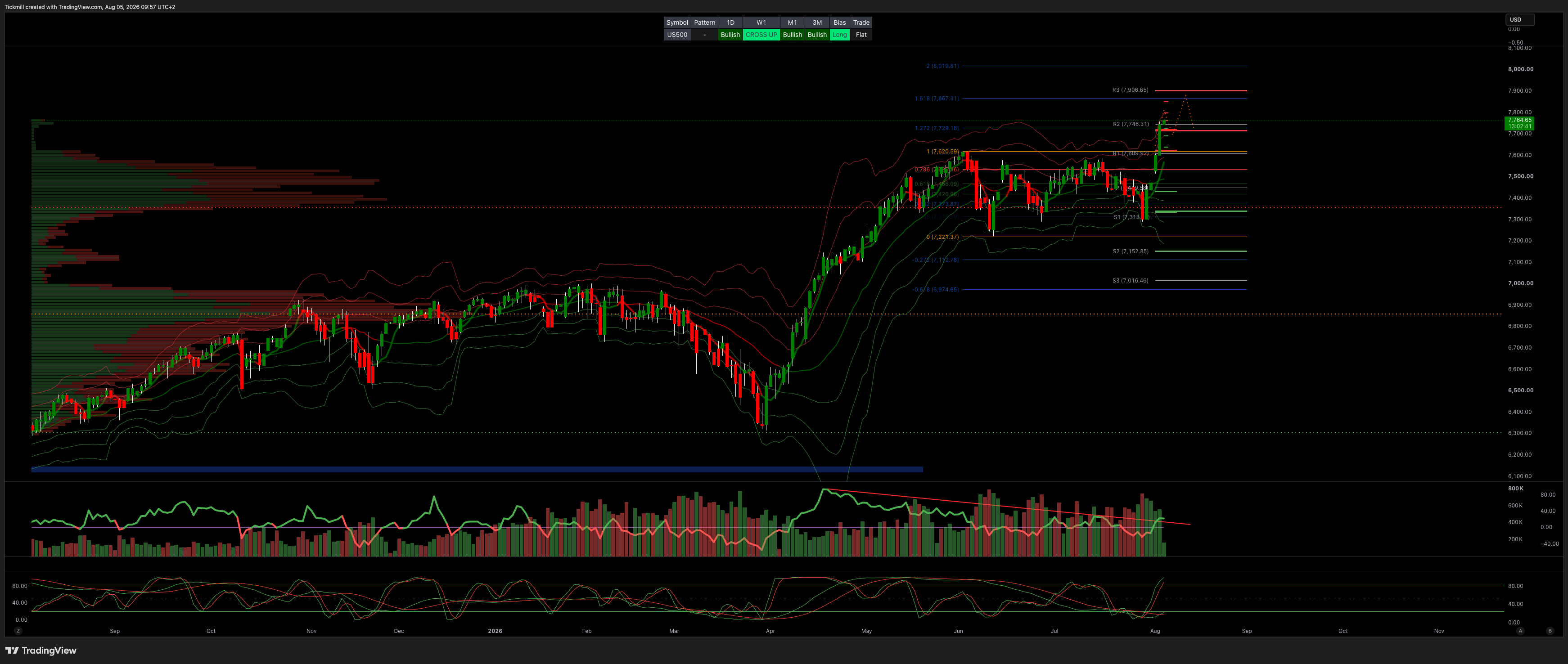
SP500 - 7485 weekly bull/bear level
Daily VWAP Bullish
Weekly VWAP Bullish
Above 7620 Target 7870
Below 7600 Target 7485
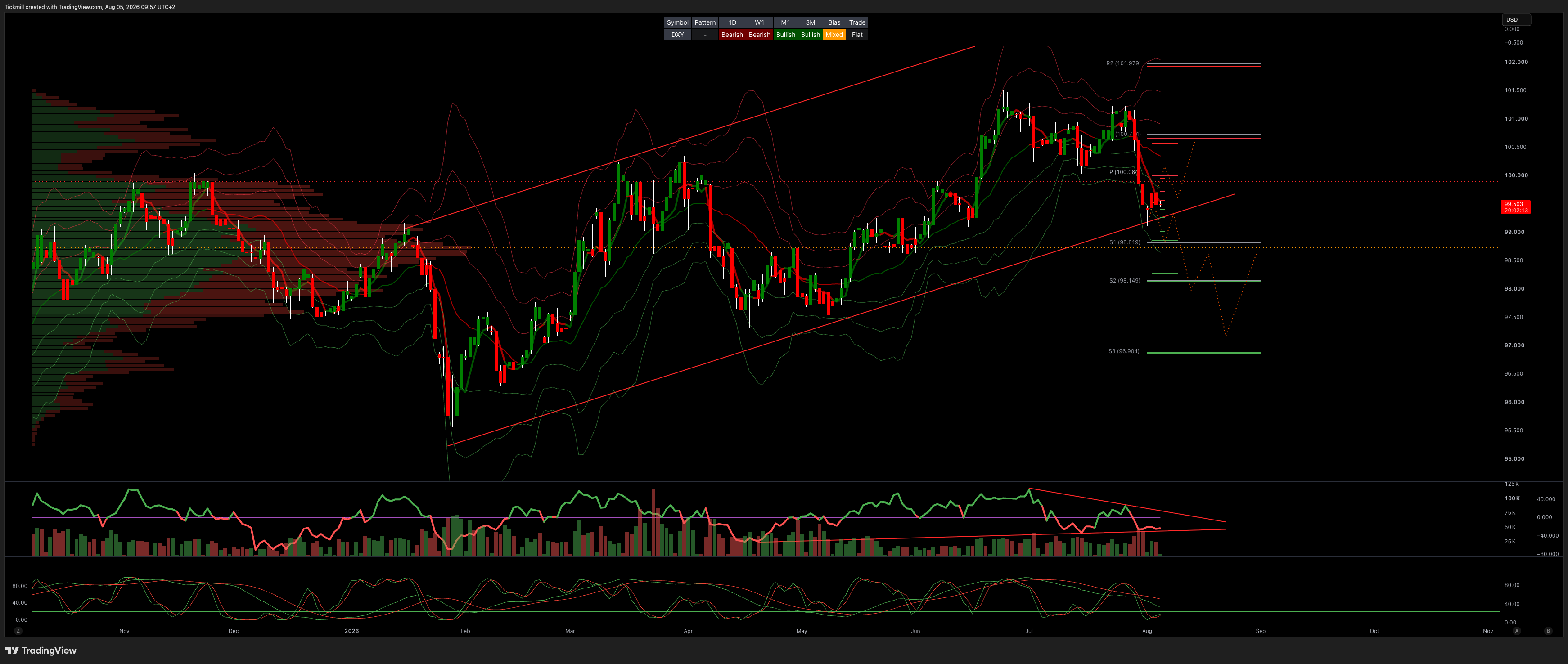
DXY - 99 weekly bull/bear level
Daily VWAP Bearish
Weekly VWAP Bearish
Above 99 Target 98
Below 99 Target 100
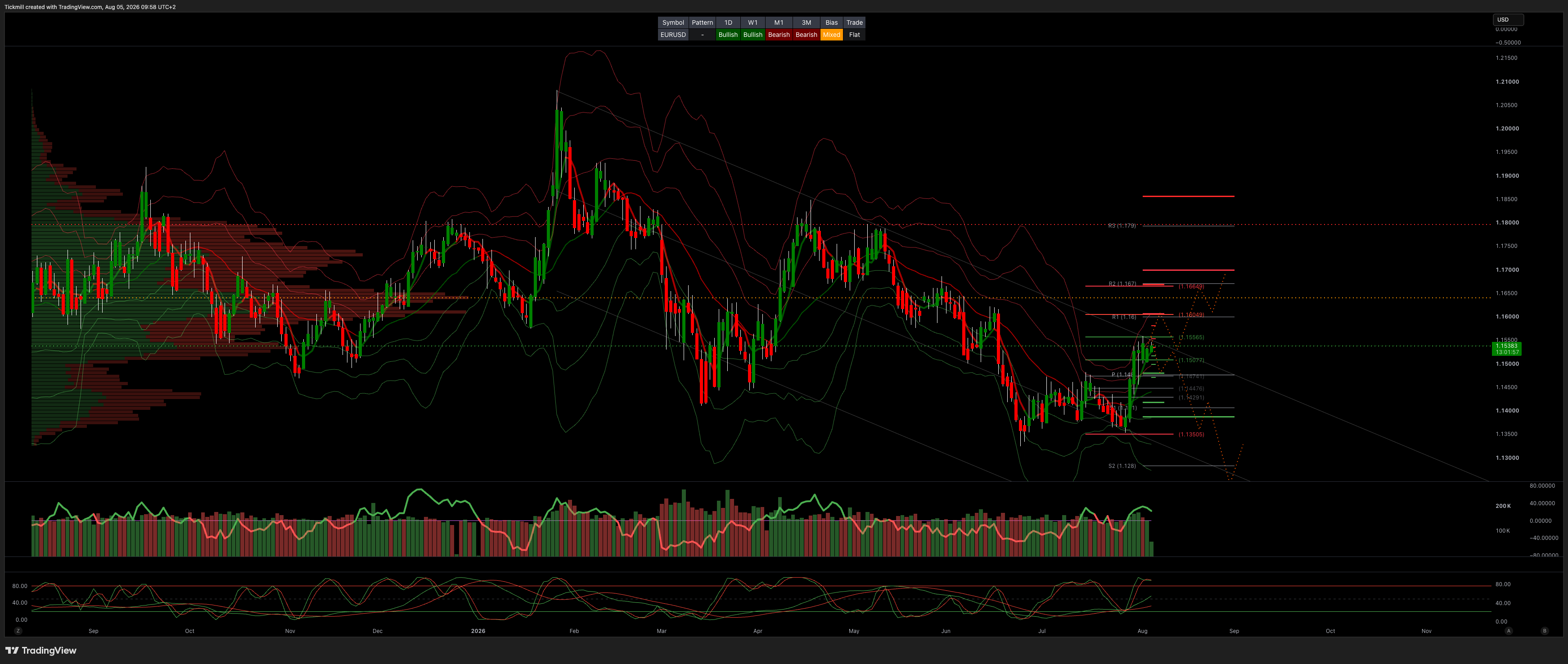
EURUSD - 1.1550 weekly bull/bear level
Daily VWAP Bullish
Weekly VWAP Bullish
Above 1.1550 Target 1.17
Below 1.1480 Target 1.1420
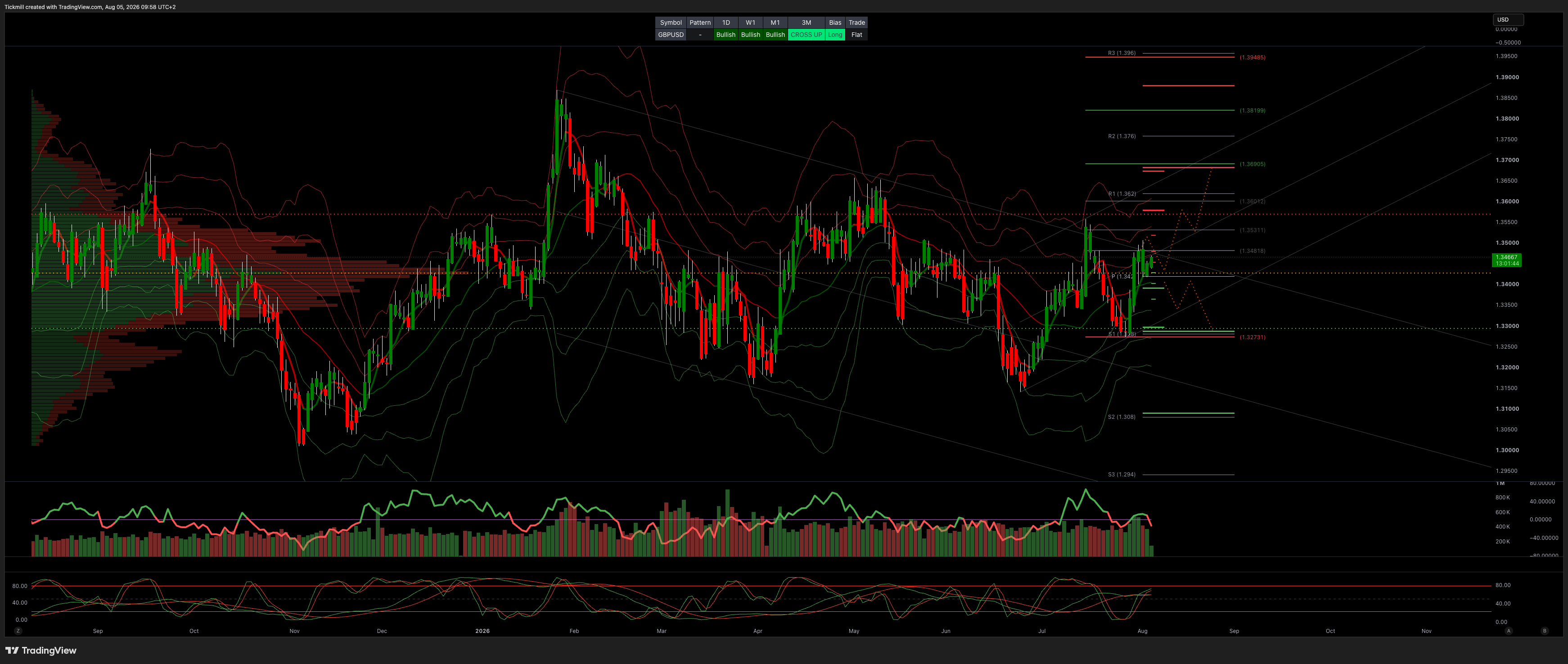
GBPUSD - 1.3450 weekly bull/bear level
Daily VWAP Bullish
Weekly VWAP Bullish
Above 1.3450 Target 1.3690
Below 1.34 Target 1.33
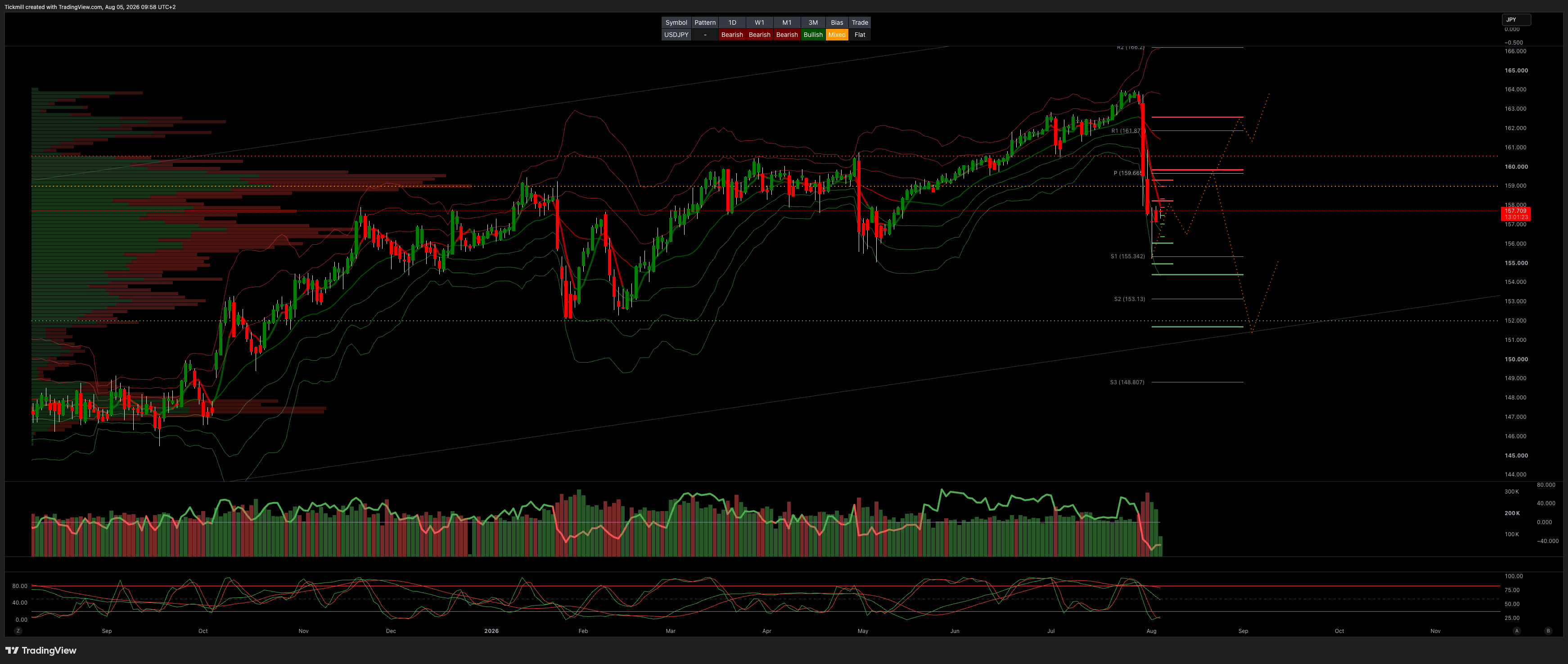
USDJPY - 160 weekly bull bear level
Daily VWAP Bearish
Weekly VWAP Bearish
Above 155 Target 160
Below 155 Target 152
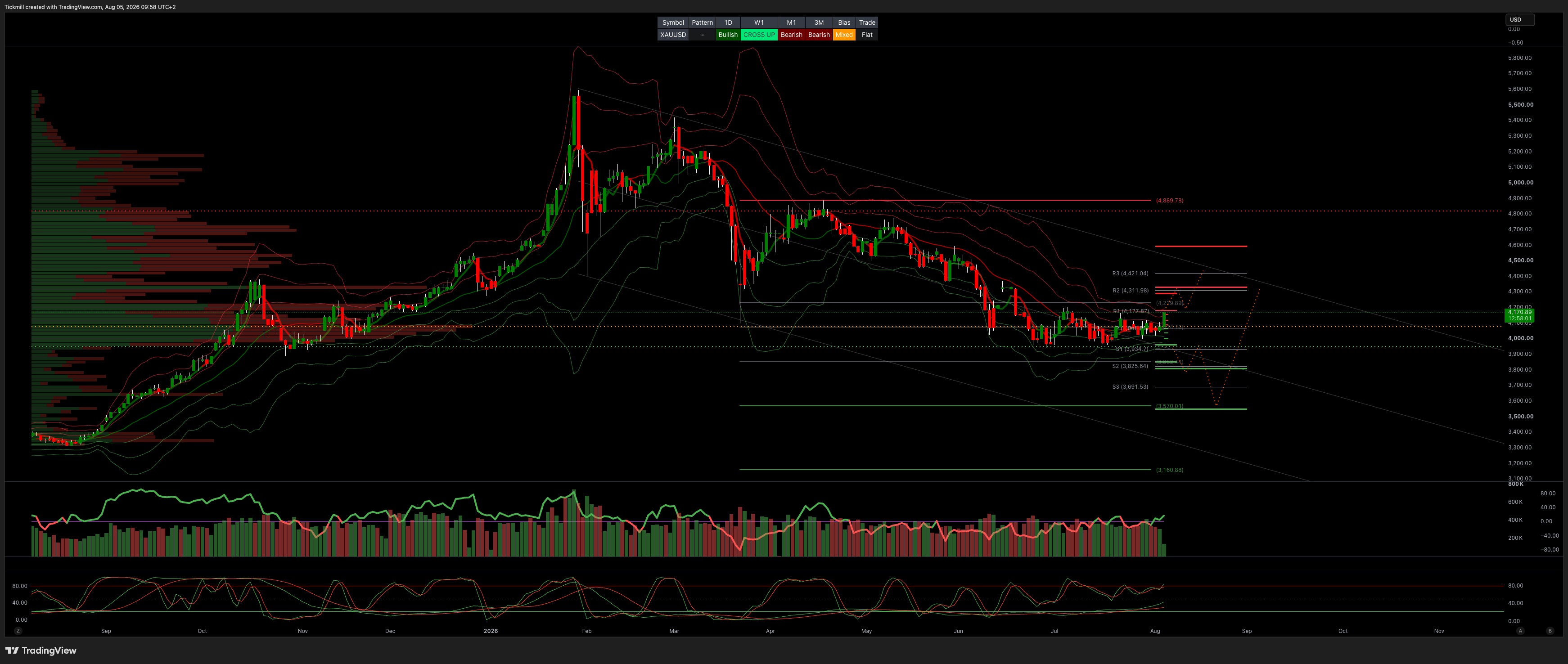
XAUUSD - 4170 weekly bull bear level
Daily VWAP Bearish
Weekly VWAP Bearish>Bullish
Above 4170 Target 4400
Below 3940 Target 3570
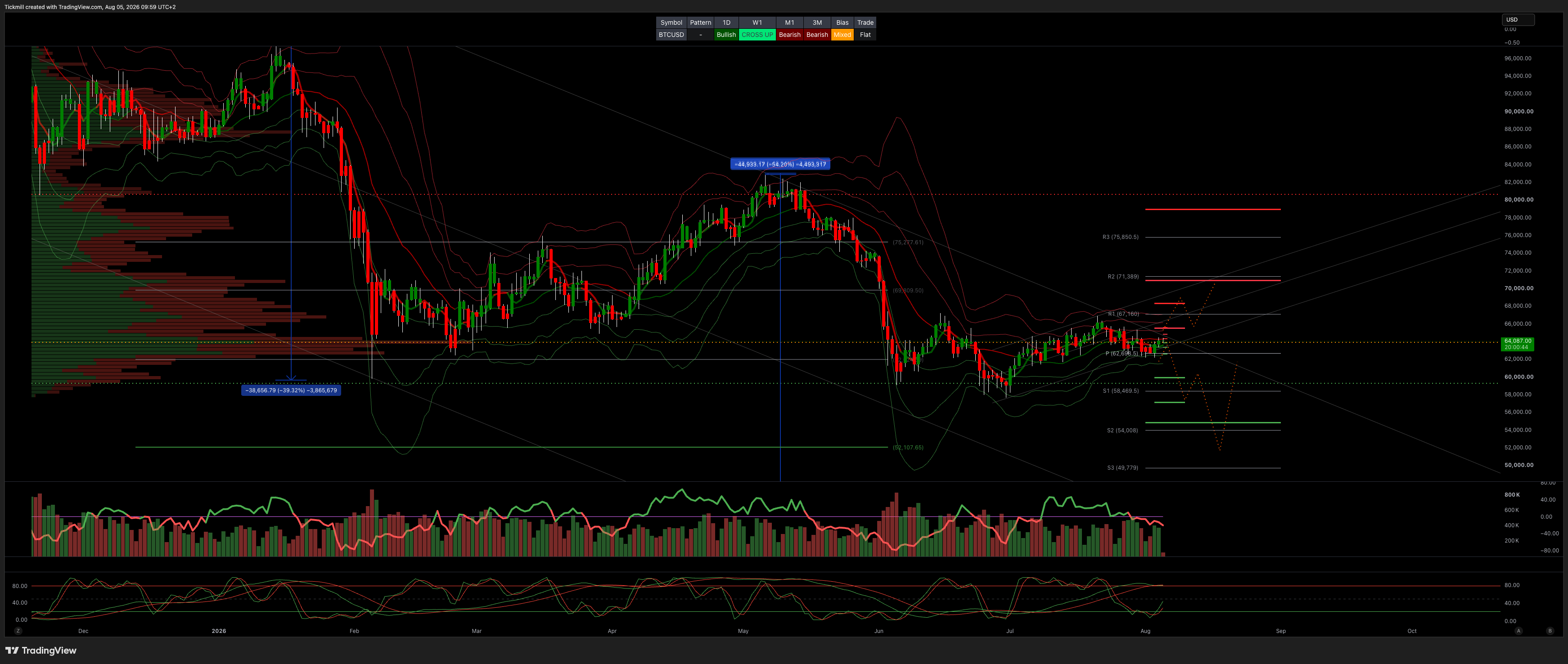
BTCUSD - 64k weekly bull bear level
Daily VWAP Bullish
Weekly VWAP Bearish>Bullish
Above 64k Target 71k
Below 61k Target 52.2k


Comments
Log in or sign up to join the conversation.