

" Hormuz deal is a genuine risk-positive development and has unleashed a powerful rally in global equities. Lower oil reduces inflation pressure, supports consumers and gives central banks more room to wait. But it is not a full return to the pre-conflict world. Oil is still above its February level, the US economy has remained resilient, and second-round inflation risks have not vanished overnight. This week’s Fed and BoE meetings will test whether policymakers are ready to validate the relief rally — or whether they prefer to keep markets wary until the disinflation evidence is stronger."
Global markets have started the week with a powerful risk-on move after the US and Iran reached an agreement to reopen the Strait of Hormuz. The deal has eased fears of a lasting energy supply disruption and triggered a broad rally across equities, credit-sensitive assets and growth-linked trades. The MSCI Asia Pacific index rose around 3%, while US and European equity futures are up more than 1.2%. Japan’s Nikkei 225 is on track for a record close, helped by the combination of lower oil, stronger risk appetite and renewed confidence that the global growth shock may be fading. Oil is the clearest market expression of the breakthrough. Brent has fallen more than 4% toward $83/bbl, its lowest level in three months and around 12% below last week’s open. In real terms, Brent is now only around 5% above its long-run average. That is a major change from the peak of the conflict, when markets were pricing a much more severe supply-disruption scenario. But oil has not returned to its immediate pre-conflict level of around $72.50/bbl, and that distinction matters for central banks.The improvement in risk sentiment is not confined to equities. The Dollar is softer against most major currencies as investors rotate away from havens, while Bitcoin has risen to its highest level in almost two weeks. Commodities are more mixed. Crude is lower as geopolitical risk premia evaporate, but gold, silver and copper have all risen as investors reposition for a better global growth outlook. Gold’s near-3% rise alongside stronger equities is unusual but reflects a market still hedging the durability of the deal while also responding to a softer Dollar. The key point is that rates markets have not fully followed oil lower. At the end of February, markets were pricing roughly 60bps of Fed cuts by year-end. Now, even after the Hormuz agreement, they still price around 15bps of hikes. That lag matters. It says investors are not treating the deal as a full macro reset. Instead, they are fading the most extreme energy-shock scenario while keeping a more cautious view on inflation, labour-market resilience and central-bank reaction functions.
There are three reasons why Fed pricing has not retraced fully. First, the details of the US-Iran agreement remain unclear. The text has not been made public, the formal signing is not expected until Friday, and early commentary already suggests differing interpretations. Recent experience argues against taking optimistic geopolitical headlines entirely at face value. A reopening of Hormuz would be a major positive, but the market still needs confidence that the deal is durable, enforceable and operationally effective. Second, the US economy has proved resilient despite the energy shock. The labour market has rebounded from its winter soft patch, consumption has held up better than feared, and equity-market momentum has been supported by AI and technology optimism. That combination reduces the urgency for the Fed to ease and keeps alive the risk that stronger demand allows earlier energy price increases to feed into broader inflation pressures.Third, even if Hormuz reopens, the inflation impact does not disappear immediately. Backlogs, shipping bottlenecks and the effect of recent fuel-price increases on inflation expectations can persist. That was essentially the ECB’s argument for hiking last week: the first-round shock may be external, but central banks still need to manage the risk of second-round effects. The fall in oil is helpful, but it does not automatically erase the policy problem created over the past several months. That leaves plenty for Warsh to address at his first FOMC meeting as Fed Chair on Wednesday. The decision itself is expected to be unchanged, but the communication will matter enormously. In line with the likely evolution of his tenure, a “less is more” strategy would not be surprising. Rather than fine-tuning language in a way markets interpret as removing an easing bias or adding a tightening bias, Warsh may try to reset the Fed closer to a deliberate absence of guidance. The message would be data dependence in its purest form: less signalling, fewer promises, and more emphasis on realised inflation, labour-market and financial-condition data.That approach would fit with his earlier comments about rethinking the Fed’s guidance framework and paying more attention to steadier inflation measures such as trimmed mean inflation. But it also creates market risk. If investors are used to extracting strong signals from every phrase, a deliberate reduction in guidance can increase volatility. The market may interpret ambiguity as hawkishness if the labour data remain firm, or as dovishness if oil keeps falling and inflation expectations ease.
The BoE meeting on Thursday is also important, though a change in Bank Rate from 3.75% is not expected. The pivotal detail will be the vote split. Governor Bailey’s recent Reykjavik speech provided a useful reminder of the framework the MPC uses when inflation and activity point in opposite directions. The UK is in exactly that trade-off environment: inflation has been pushed higher by energy, while activity and labour-market indicators look increasingly fragile. In that setting, policymakers cannot avoid the cost of the shock. They can only decide where the burden falls. One option is to tighten policy enough to bring inflation back to target faster, accepting more volatility in output and employment relative to potential. The other is to tolerate inflation above target for longer in order to avoid a deeper GDP shortfall. Bailey has clearly come down in favour of the second approach for now. He appears unwilling to impose the demand trade-off required to re-anchor inflation quickly while the domestic economy is softening. Not everyone on the MPC sees it that way. Pill already voted for a hike in April, preferring to minimise the inflation overshoot in both magnitude and duration. Greene’s subsequent comments suggest she is likely to join Pill with a hawkish dissent. Mann remains harder to call because of her activist approach, while Lombardelli has not been especially vocal. The central expectation is therefore a 7-2 vote to hold, though a 6-3 split would not be a major surprise if Mann joins the hawks. The more interesting risk is not whether the usual hawks vote for a hike. Even if all four hawkish members did so, rates would still stay unchanged as long as Bailey remains the median vote. The more bearish scenario for UK rates would be if one of the previously dovish members leapfrogs the Governor and backs a hike. Taylor and Breeden’s intermeeting comments suggest they are not imminent hawks. Dhingra and Ramsden are more interesting because both referenced circumstances in which tighter policy may be necessary in their individual paragraphs in the minutes. It does not feel like this is the meeting where either breaks cover, but it is a risk to monitor heading into the July MPR. That matters for gilts because the UK already carries a political and fiscal risk premium. If markets begin to think that dovish MPC members could switch to hikes while political uncertainty remains unresolved, the front end could reprice higher even as long-end gilts remain burdened by fiscal concerns. This week’s Makerfield by-election adds to that sensitivity because it may shape expectations around Labour leadership and the future fiscal strategy.
For now, the macro market hierarchy is clear. The Hormuz agreement has reduced the left-tail risk of a severe energy supply shock, supporting equities and weakening the Dollar. But rates markets are not willing to fully reverse the post-conflict repricing until the deal is signed, oil flows normalise and inflation expectations show clearer signs of stabilising. Central banks will therefore remain cautious.
Overnight Headlines
US Agrees To Peace Deal With Iran After Pakistan Mediation
Trump: Iran Deal Is Complete; Hormuz Strait To Reopen Upon Signing
Iran Deputy Foreign Minister Confirms Deal Reached With US
UK, France, Germany And Italy Ready To Lift Iran Sanctions After Deal
Israel Strikes Beirut, Threatening To Complicate Push For Iran Deal
Trump Tells Israel To Stop As Lebanon Attacks Risk Iran Agreement
BoJ Set To Hike To Highest Level Since 1995 Despite Ueda’s Absence
More BoE Officials Seen Backing Rate Hikes As Iran War Frays Unity
Trump Speaks With Putin, Zelenskyy As Peace Talks Remain Stalled
China Tees Up Digital Payments System To Compete With The Dollar
Xi Swaps Fighter Jets For Diplomatic Pressure In Campaign Against Taiwan
Heavy Trading Expected When SpaceX Options Launch In Coming Days
Anthropic Flies Staff To Washington To Contain White House Fallout
UK Intercepts Russian Shadow Fleet Oil Tanker In English Channel
FX Options Expiries For 10am New York Cut
(1BLN+ represents larger expiries and is more magnetic when trading within the daily ATR.)
EUR/USD: 1.1500 (EU3b), 1.1700 (EU1.47b), 1.1825 (EU1.23b)
USD/JPY: 159.00 ($1.41b), 158.00 ($625m), 162.04 ($503.6m)
USD/MXN: 18.00 ($1b), 16.00 ($1b)
AUD/USD: 0.7080 (AUD424.2m), 0.7150 (AUD383.4m), 0.7000 (AUD340m)
USD/CNY: 6.7000 ($600m), 6.8000 ($598.5m)
USD/BRL: 5.1600 ($351.2m)
EUR/GBP: 0.8675 (EU487.2m), 0.9075 (EU462.3m), 0.9000 (EU314.6m)
NZD/USD: 0.5820 (NZD340.6m), 0.6050 (NZD325.6m)
USD/CAD: 1.3840 ($400m)
CFTC Positions as of June 12, 2026:
Equity fund speculators have reduced their net short position on the S&P 500 CME by a significant 48,536 contracts, bringing the total down to 437,047. Meanwhile, equity fund managers have also scaled back their net long position in the S&P 500 CME, cutting it by 5,095 contracts to a total of 980,112.
Turning to the Treasury futures, speculators have trimmed their net short position in CBOT US 5-year Treasury futures by 49,056 contracts, now standing at 1,320,162. However, there’s been an uptick in the net short position for CBOT US 10-year Treasury futures, which has increased by 34,232 contracts to reach 863,807. In contrast, the net short position for CBOT US 2-year Treasury futures saw a significant reduction of 130,350 contracts, settling at 1,219,838.
On the other hand, speculators have raised their net short positions in CBOT US UltraBond Treasury futures by 31,021 contracts, now totaling 318,731. Additionally, there’s been a slight increase in the net short position for CBOT US Treasury bonds futures by 3,452 contracts, bringing it to 163,305.
In the cryptocurrency, Bitcoin bulls hold a net long position of 3,018 contracts.
Currencies are experiencing fluctuations in their net positions: the Swiss franc is showing a net short position of -36,665 contracts; the British pound stands at -64,213 contracts; while the euro boasts a net long position of 13,932 contracts. Lastly, the Japanese yen continues to struggle with a net short position of -145,818 contracts.
Technical & Trade Views
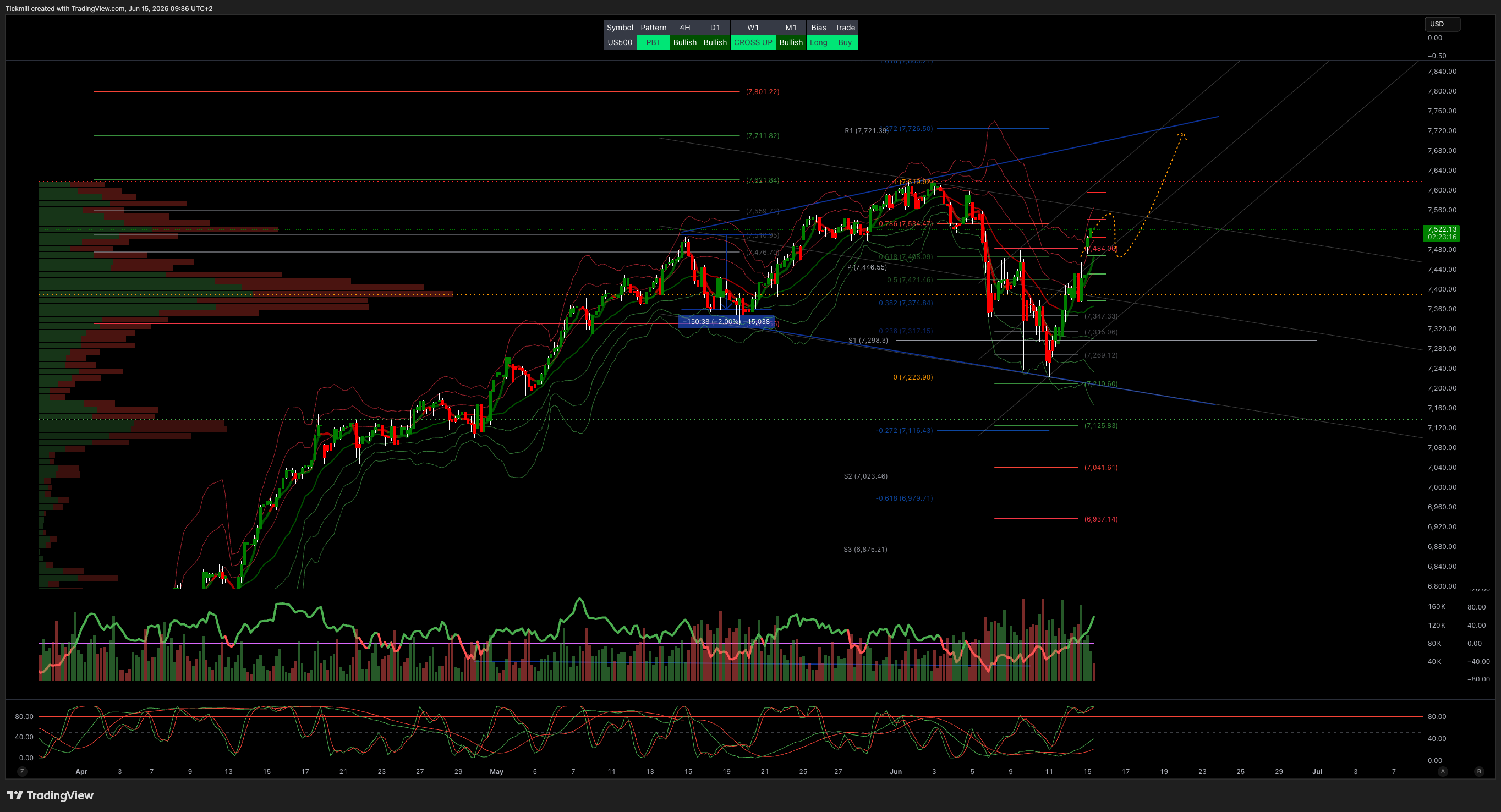
SP500
Daily VWAP Bullish
Weekly VWAP Bearish
Above 7560 Target 7700
Below 7480 Target 7395
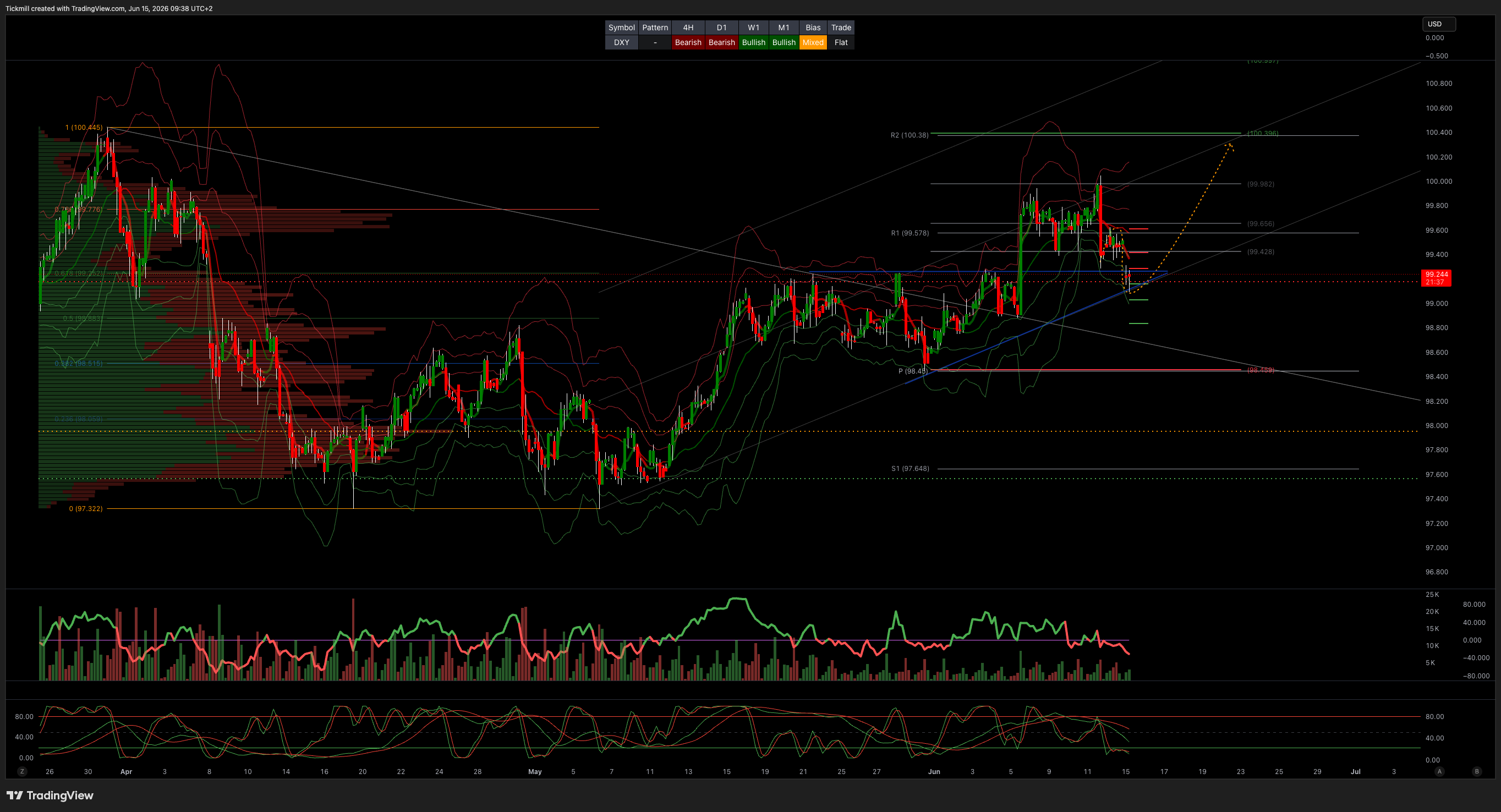
DXY
Daily VWAP Bearish
Weekly VWAP Bullish
Above 99.20 Target 100.30
Below 99 Target 98.40
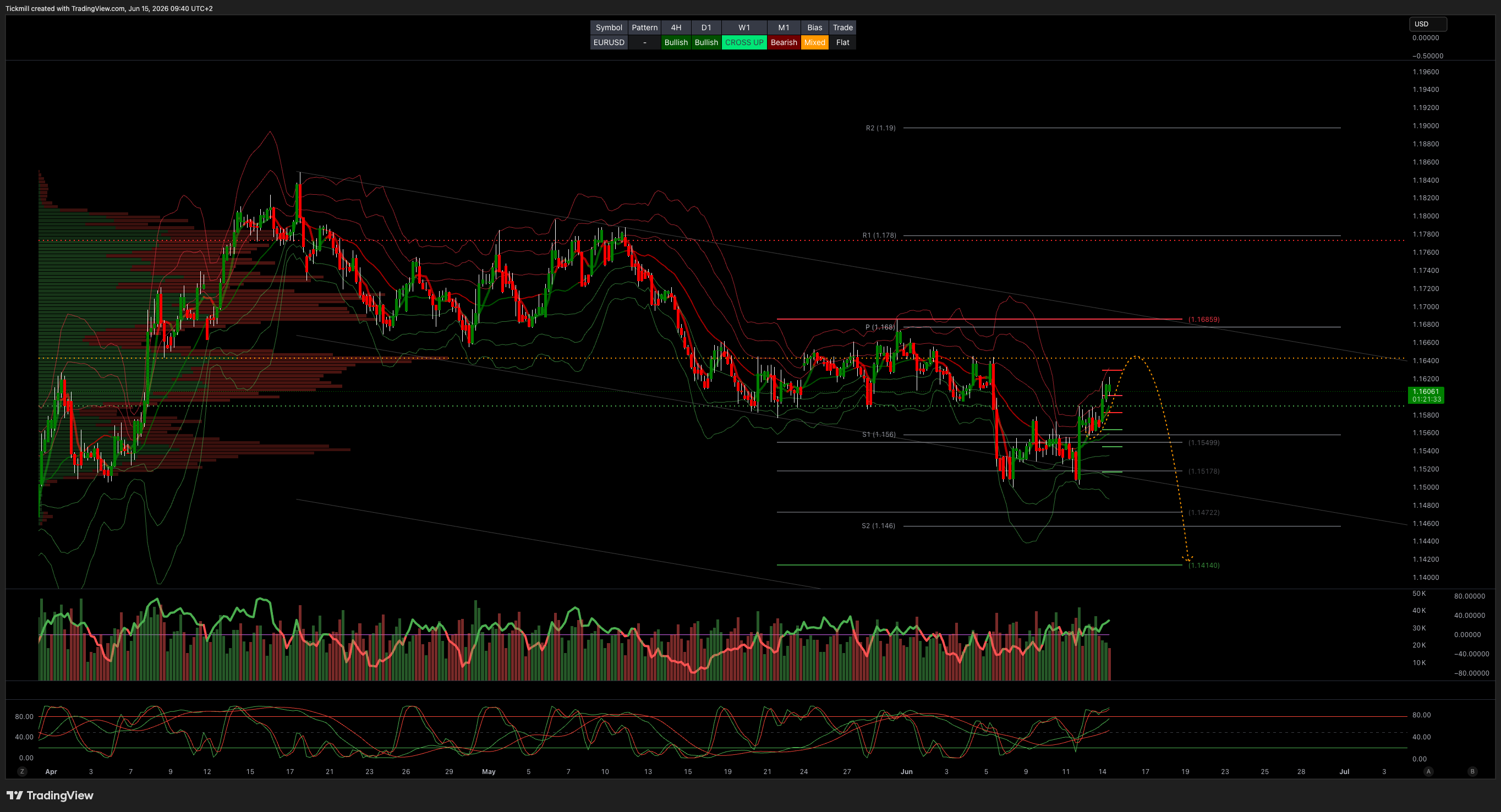
EURUSD
Daily VWAP Bullish
Weekly VWAP Bearish
Above 1.17 Target 1.1780
Below 1.1650 Target 1.1450
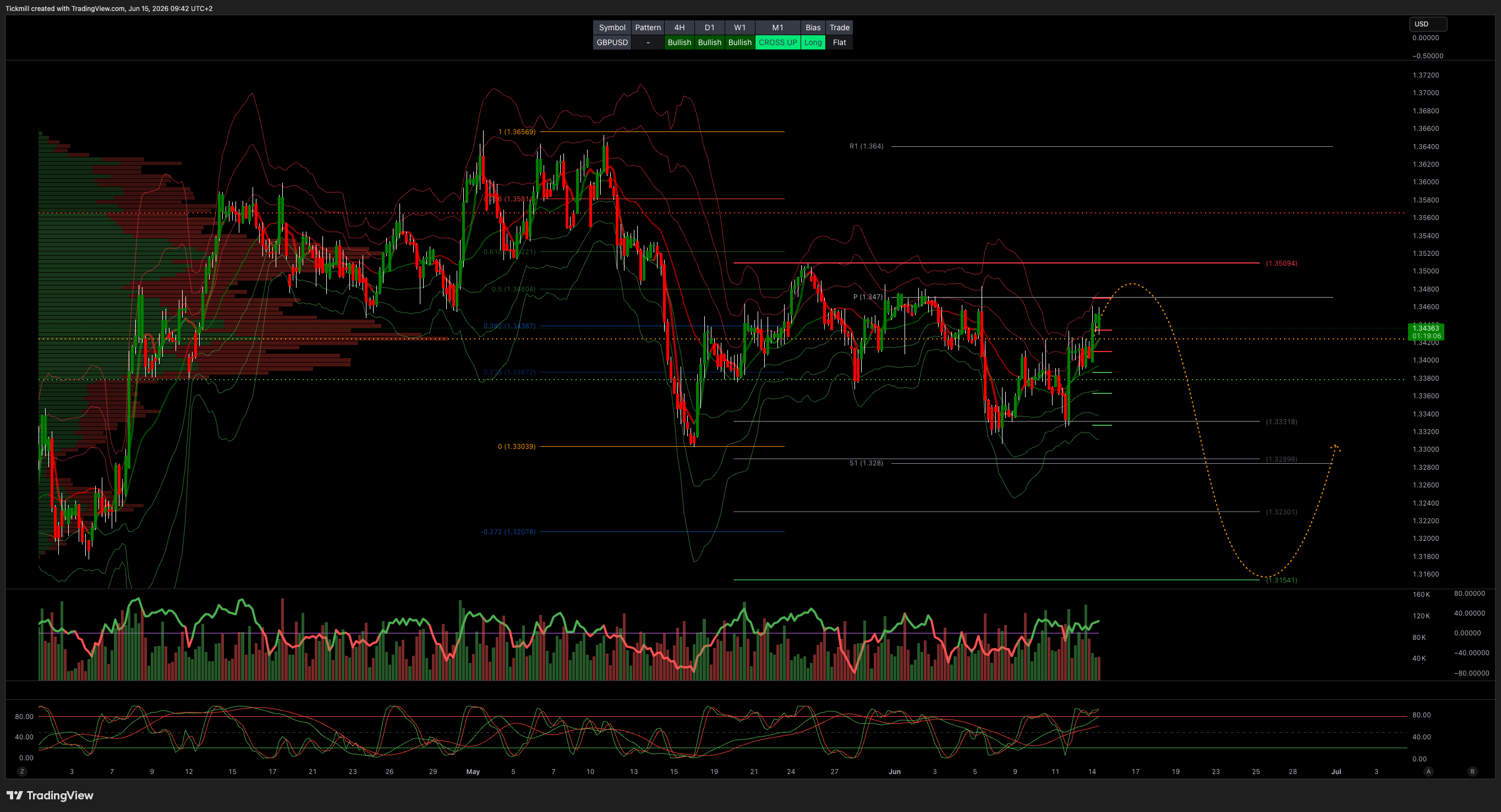
GBPUSD
Daily VWAP Bullish
Weekly VWAP Bullish
Above 1.35 Target 1.3580
Below 1.35 Target 1.3150
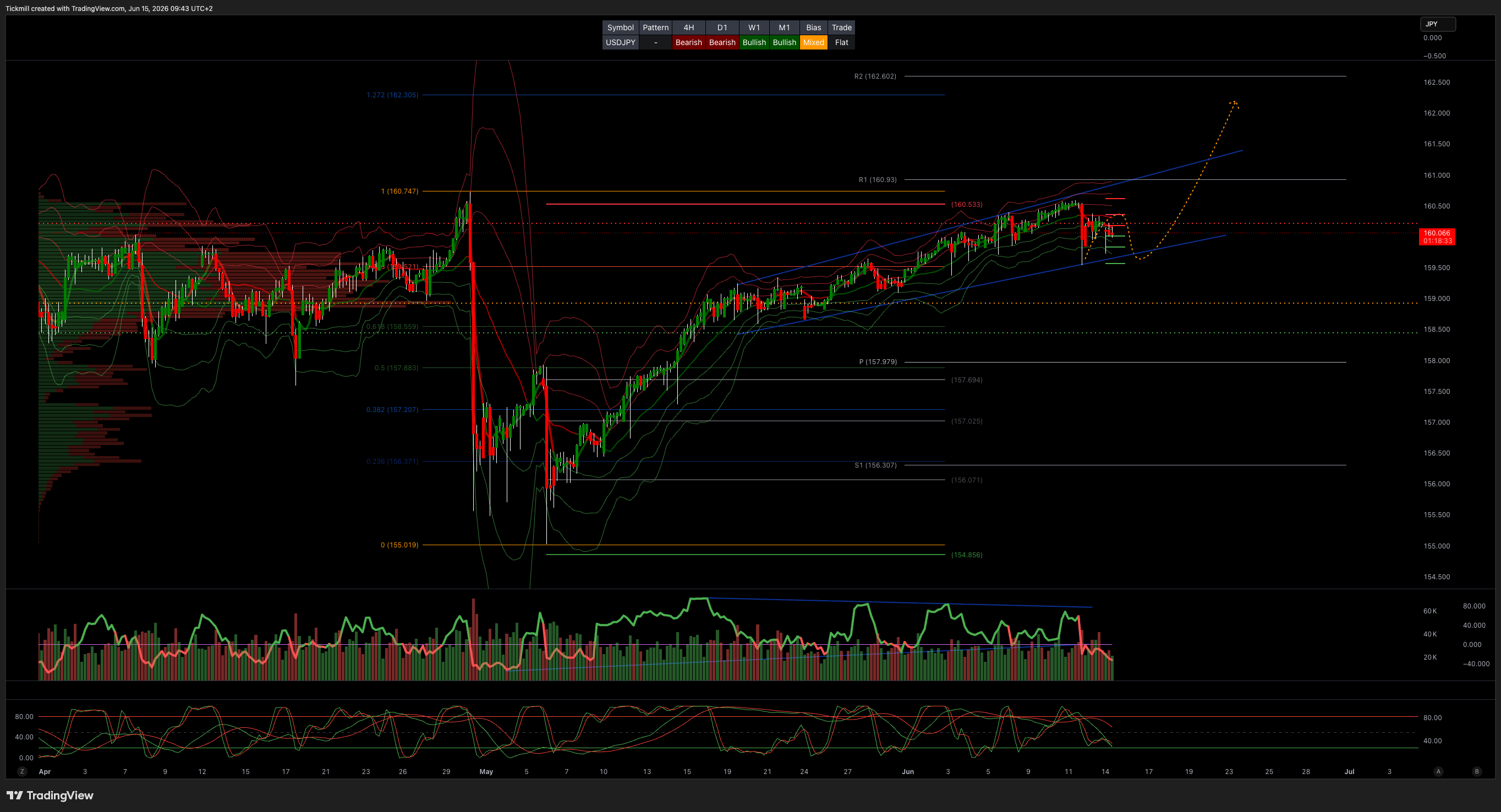
USDJPY
Daily VWAP Bearish
Weekly VWAP Bullish
Above 159.30 Target 162.20
Below 159Target 157.95
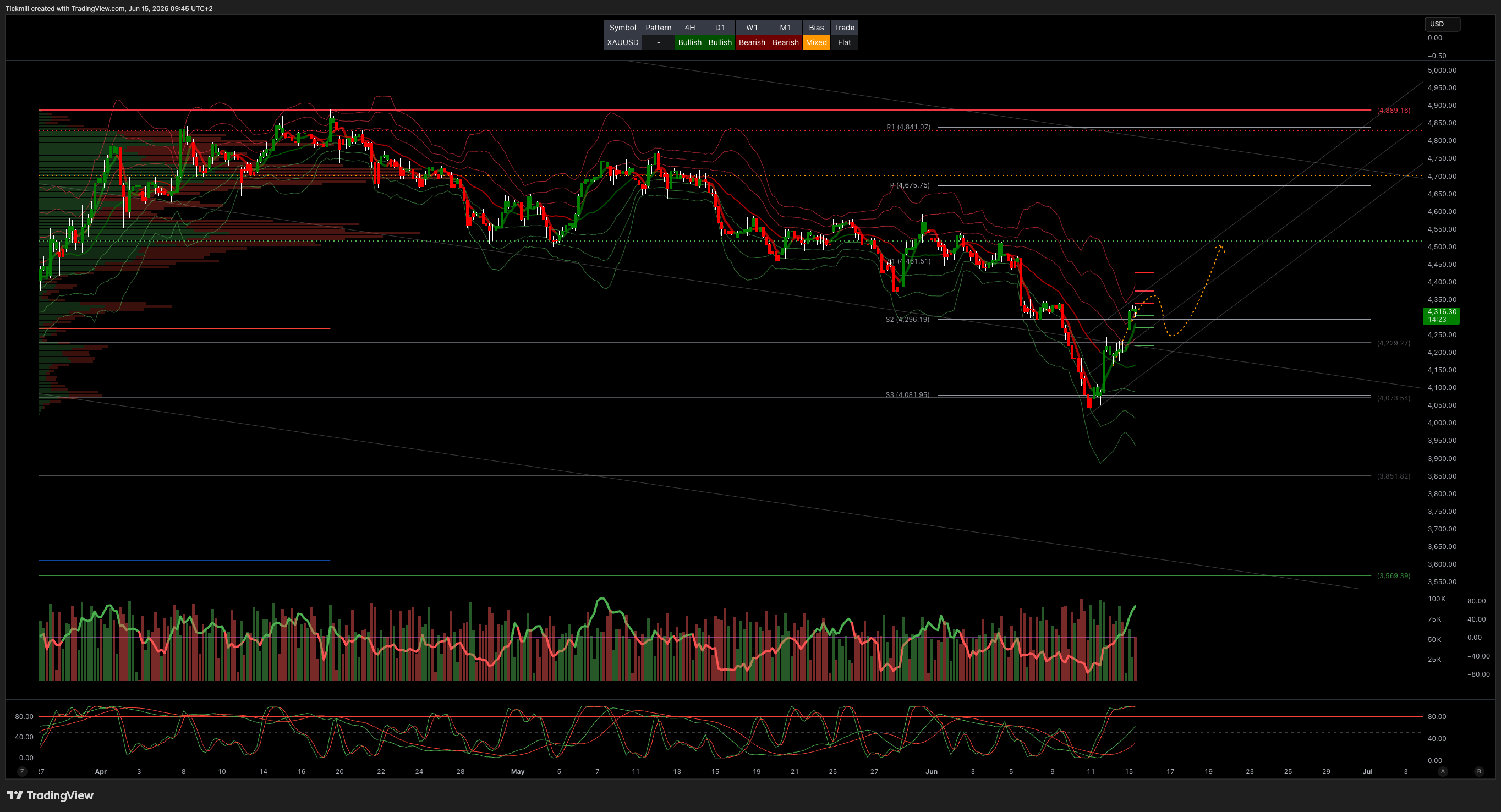
XAUUSD
Daily VWAP Bullish
Weekly VWAP Bearish
Above 4200 Target 4500
Below 4150 Target 3569
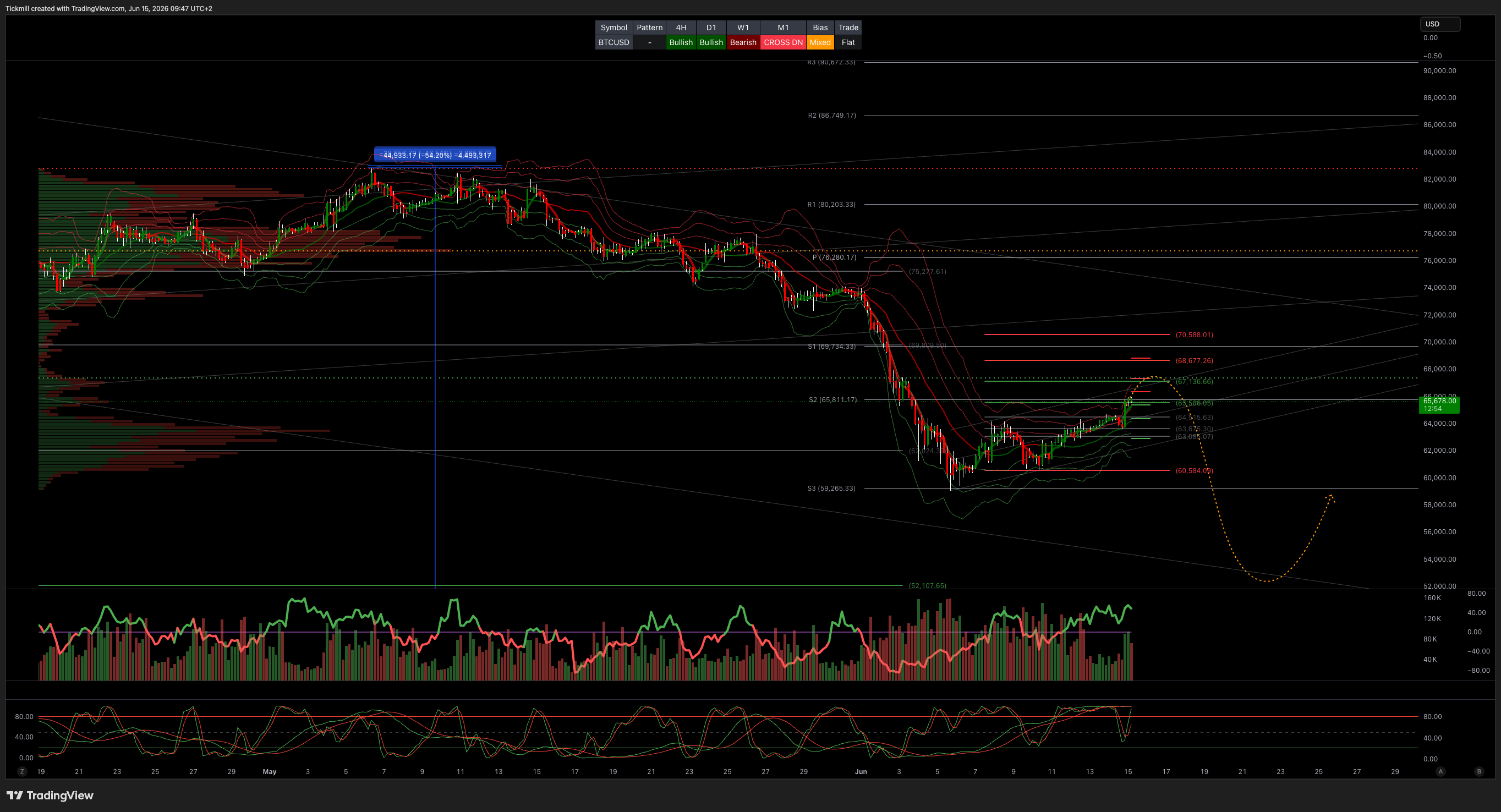
BTCUSD
Daily VWAP Bullish
Weekly VWAP Bearish
Above 67.5k Target 72k
Below 60k Target 52.2k

Comments
Log in or sign up to join the conversation.