


Markets have been handed a ceasefire-flavoured relief rally, but not a clean geopolitical all-clear. The US and Iran stepping back from immediate escalation has pulled Brent sharply lower, lifted bonds and equities, and taken some pressure off central-bank pricing. Yet the move is better described as a repricing of imminent escalation risk than a removal of the Middle East risk premium. Red Sea tensions, Hormuz uncertainty and the durability of the pause still matter.
Brent crude fell as much as 7.4%, briefly dipping below $90/bbl, before recovering toward the $92/bbl area. That still leaves prices almost 7% below Friday’s close, but also far above where they stood before the latest Middle East escalation. The global benchmark remains up more than 50% year-to-date, reflecting the cumulative impact of supply disruption fears, shipping risk and geopolitical premia. The reason for the relief is straightforward. The US halted nearly two weeks of strikes against Iran, and both sides appear to have chosen restraint for now. That has reduced the near-term probability of a direct escalation spiral. Markets were priced for worsening headlines into the weekend; they have instead received a pause. But the relief comes with three important qualifications. First, tensions between Saudi Arabia and the Houthis continue to threaten Red Sea oil traffic, particularly around the Bab el-Mandeb Strait. Second, there is no certainty that the US-Iran pause will prove durable. Third, a pause in strikes does not mean Strait of Hormuz traffic normalises, as Iran and Oman continue negotiations over a transit arrangement. The energy market has not gone back to normal; it has merely stepped back from the cliff edge.
That distinction explains the broader asset-price reaction. Treasuries rallied, with the 10-year yield down around 5bps to 4.63%, roughly 8bps below last week’s peak. European bond futures rose, and government debt across Asia Pacific also gained. Lower oil has reduced inflation anxiety and allowed duration to recover some ground. Equities have taken the hint. The MSCI Asia Pacific Index rose 0.5%, while Nasdaq 100 futures gained 1.2%, pointing to a recovery after last week’s chip-led selloff. European markets are also set for a firmer open. This is a classic relief move: lower oil, lower yields, softer Dollar, better risk appetite.The Dollar weakened against all its G10 peers as the safe-haven bid faded. The Yen strengthened to around 163.55 per Dollar, though that still leaves USD/JPY uncomfortably elevated and intervention risk alive. Gold rose around 1%, trading near $4,100/oz, which is an interesting combination alongside stronger equities. Investors are reducing immediate escalation hedges in oil but keeping some geopolitical insurance in precious metals.
The most eye-catching equity story came from China. CXMT, the Chinese chipmaker, surged 535% on its Shanghai debut, giving it an opening valuation of about 3.3tn yuan, or roughly $487bn. That makes it China’s largest onshore-listed firm and underscores how aggressively domestic investors are chasing national semiconductor champions tied to the AI theme. The symbolism is hard to miss. Last week, global investors were questioning whether AI capex could justify valuations. Today, Chinese investors are giving a domestic memory-chip leader a spectacular debut premium. That does not settle the AI return-on-investment debate, but it shows that the strategic bid for chip exposure remains powerful, especially where national industrial policy and AI infrastructure overlap. There was also notable action in Asian FX. The Singapore Dollar strengthened after officials delivered further monetary-policy tightening, reinforcing Singapore’s preference for exchange-rate management as an inflation-control tool. By contrast, the Indonesian Rupiah weakened, alongside local bonds and equities, after the unexpected resignation of Bank Indonesia Governor Warjiyo. That adds a domestic policy shock to an already fragile EM backdrop.
In the US, this week’s FOMC decision is the main event. Markets begin the week pricing roughly a 30% chance of a 25bp hike. That is down from closer to 40% late last week, but still well above the roughly 10% probability priced after the soft June CPI report. In other words, the oil pullback has reduced the pressure, but it has not restored the full post-CPI dovish mood. A hold still looks the most likely outcome, with rates maintained at 3.50%–3.75%. But the decision is unlikely to sound relaxed. A hold accompanied by formal hawkish dissent — potentially from Hammack and Logan — would match the market’s current pricing reasonably well. The Fed can acknowledge better inflation data while keeping the door open to action if energy prices rise again or inflation expectations deteriorate. The key point is that Fed pricing has become a high-beta play on oil. Last week’s soft CPI and PPI lowered expected tightening, but the move was quickly unwound as Brent surged. Now that crude has fallen, some of that pressure has eased. The asymmetry is important: markets have tended to react more aggressively to oil rising than to oil falling, because the inflation risks from a supply shock are easier to price than the disinflationary benefits of a temporary pause.
For the UK, the Bank of England faces a slightly different problem. Market-implied MPC pricing has also moved with oil, but it probably contains a large risk-premium component rather than a pure read on what investors think the Committee will do. In MPC language, the implied tightening looks more like risk premia than clean expected policy action. Bailey’s strategy has been clear. He wants to use the Lambda trade-off framework, accepting that an energy shock may mean inflation takes longer to return to target, rather than forcing the adjustment through weaker employment and activity. That is essentially a “look through, unless it spills over” approach. Despite the rebound in energy prices since the June meeting, it is hard to see Bailey and the core of the Committee abandoning that framework now.
The domestic side of the story still supports patience. Labour-market dynamics are providing some offsetting disinflation, wage growth is moderating, and recent CPI reports have surprised to the downside. That gives the moderates cover to argue that the external shock should not automatically trigger a hike.That said, oil and especially UK-relevant gas prices are a much bigger headache going into the July meeting than they were in mid-June. The hawks have an easy position. Pill and Greene can repeat their votes for a hike, effectively delivering a diplomatic “I told you so” after the energy move. The more interesting question is what the rest of the Committee does. If moderates are truly abandoning the look-through strategy and shifting toward the ECB-style “nip it in the bud” approach, they should hike now. If they still believe in the existing framework, they are better off holding now and reassessing in September. The worst option would be to signal a strong hawkish intent for September while leaving themselves hostage to seven weeks of potentially volatile energy prices. That argues for communication discipline.
The Committee can mark-to-market the oil shock, sound more alert to upside risks, and acknowledge that the balance of scenarios has moved away from the benign “A” outcome toward something closer to “B”. But it does not yet look as though the balance has moved decisively enough toward “C” to force Bailey and the moderates into an immediate hike. Expect the argument that elevated market rates have done some of the tightening for the MPC without the Bank needing to change policy itself. That logic gives the Committee a way to stay on hold while still claiming that financial conditions are responding to the inflation risk. A repeat of the previous 7-2 vote split is therefore plausible, with Bank Rate held at 3.75%. A 6-3 hold is also possible if Mann, who wavered last time and often brings less conventional reasoning, joins the hawks. Either way, the centre of gravity still points to no change this week, with a more cautious tone and a September reassessment. UK politics adds another layer for gilts. Press coverage suggests markets should be prepared for announcements this week on youth benefits reform, defence spending possibly linked to Ukraine, social-care funding and devolution. After last week’s sequence of small but under-detailed policy measures, investors will be sensitive to anything that looks like further fiscal loosening without clear funding. The amounts may matter less than the pattern.
Monday’s market message: this is a relief rally, not a resolution rally. Lower oil has given bonds and equities room to recover, weakened the Dollar and reduced the immediate pressure on central banks. But Brent around $92/bbl is still high, Red Sea risks remain live, Hormuz traffic is not normalised, and the durability of the US-Iran pause is untested. The Fed and BoE can probably hold this week, but neither can sound complacent. Risk assets have caught their breath; they have not been discharged from macro intensive care.
Overnight Headlines
US Pauses Iran Strikes As Oman Pursues Hormuz Transit Deal
Trump Pauses Iran Strikes As Officials Weigh Dwindling Air Defence Stocks
Netanyahu To Press Trump To Keep Watch On Iran’s Nuclear Aims
Oil Prices Fall As Iran And US Pause Strikes Over Hormuz Tensions
Fed Faces Growing Pressure To Hike Rates As Price Risks Rebound
Bond Traders On Edge As Risks Of Fed Rate Hike This Week Mount
BoE Expected To Hold Rates Despite Jump In Oil Prices
Singapore Tightens Monetary Policy Further On Price Pressures
BoJ Early Rate Rise Bets Increase As Yen Reaches Multidecade Low
China’s Industrial Profit Growth Slows To Weakest Pace This Year
North Korea Rejects Denuclearisation As Ukraine Warns Of Troops
Fortescue’s Forrest Calls For Fair China-Australia Talks On Ore
China Chipmaker MXMT Jumps 472% In Debut Hong Kong IPO
Samsung, SK And Nvidia Join $700B US-Korea AI Push
Nvidia In Talks With OpenAI To Guarantee $250B Financing For Data Centre
FX Options Expiries For 10am New York Cut
(1BLN+ represents larger expiries and is more magnetic when trading within the daily ATR.)
EUR/USD: 1.1400 (EU1.43b), 1.1360 (EU1.3b), 1.1375 (EU1.29b)
USD/JPY: 162.00 ($2.27b), 166.50 ($445m), 152.20 ($393.1m)
AUD/USD: 0.7030 (AUD598.5m), 0.6985 (AUD486.7m), 0.7120 (AUD348.9m)
USD/CAD: 1.3900 ($310.7m), 1.4135 ($302.1m)
GBP/USD: 1.4400 (GBP708.3m), 1.3300 (GBP602.8m), 1.3000 (GBP568.7m)
USD/BRL: 5.1000 ($544.4m), 5.1325 ($370m), 4.8220 ($340m)
EUR/GBP: 0.8550 (EU304.1m)
USD/MXN: 17.65 ($808.2m)
CFTC Positions as of 24/7/26
Equity fund speculators cut their S&P 500 CME net short position by a hefty 43,383 contracts, bringing it down to 316,072. Meanwhile, equity fund managers have also adjusted their stance, trimming the S&P 500 CME net long position by 14,710 contracts to a total of 926,413.
In the treasury futures arena, speculators are busy recalibrating their positions. They've reduced their net short position in CBOT US 5-year Treasury futures by 20,954 contracts, now standing at 1,273,329. On the flip side, they've ramped up their net short position in CBOT US 10-year Treasury futures by 48,031 contracts, pushing it to 879,706. The CBOT US 2-year Treasury futures saw a slight reduction as well, with speculators trimming their net short position by 2,880 contracts to 1,154,597. In a similar vein, the CBOT US UltraBond Treasury futures experienced a decrease in net short positions by 3,057 contracts, settling at 321,350. However, it's not all reductions; speculators have increased their net short position in CBOT US Treasury bonds futures by 7,734 contracts, now totaling 186,790.
Bitcoin is holding strong with a net long position of 3,054 contracts!
The Swiss franc is showing a net short position of -34,242 contracts. The British pound isn't faring much better with a net short position of -55,561 contracts. The euro follows suit with a net short position of -41,338 contracts, while the Japanese yen rounds out the list with a significant net short position of -152,125 contracts.
Technical & Trade Views
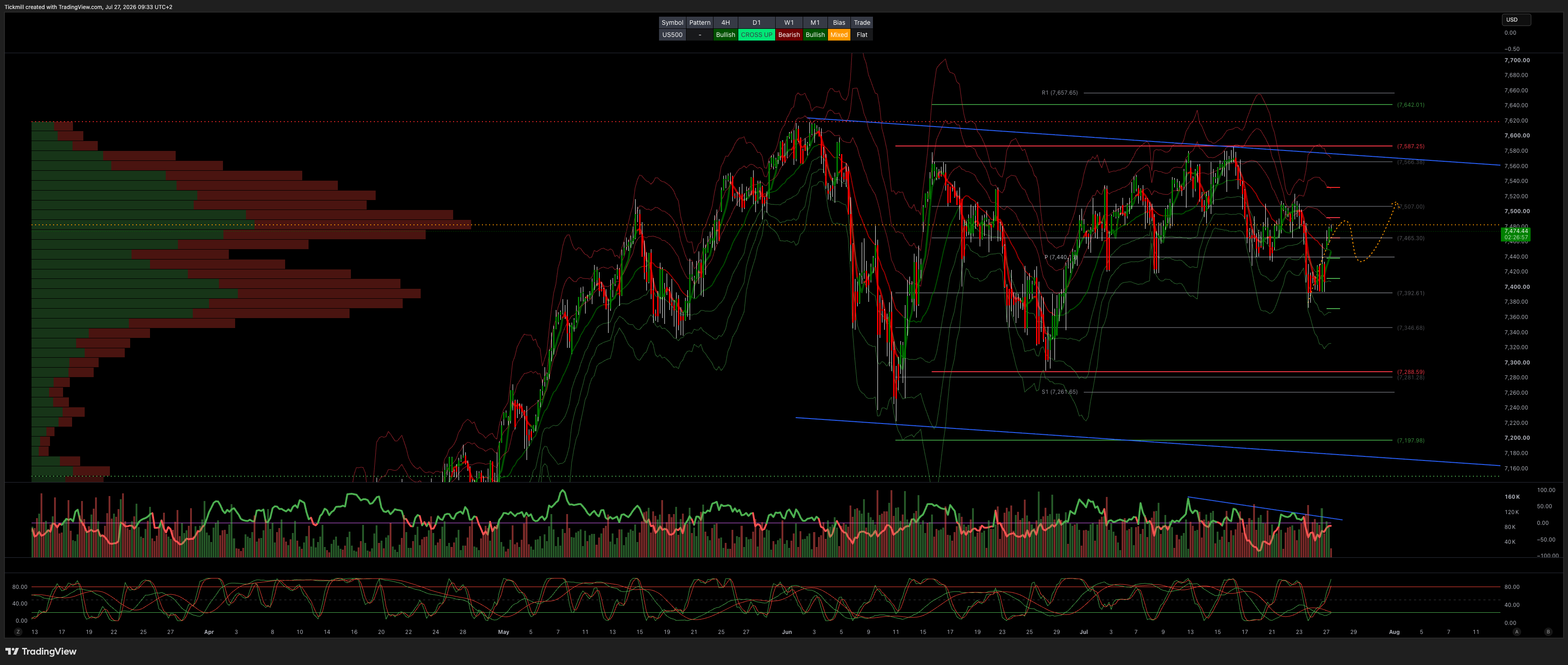
SP500 - 7450/40 weekly bull/bear level
Daily VWAP Bearish>Bullish
Weekly VWAP Bearish
Above 7390 Target 7560
Below 7380 Target 7280
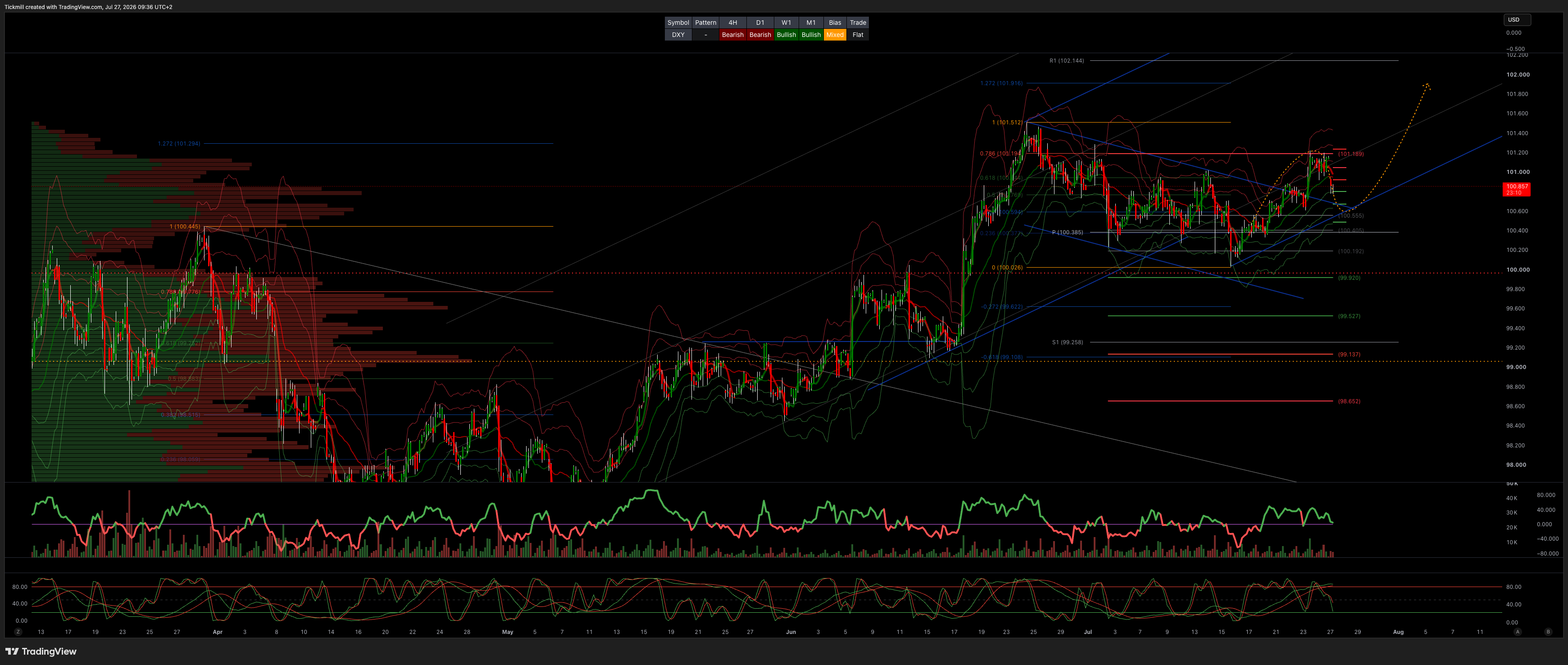
DXY - 100.5 weekly bull/bear level
Daily VWAP Bearish>Bullish
Weekly VWAP Bullish
Above 99.75 Target 102.50
Below 99.40 Target 98.40
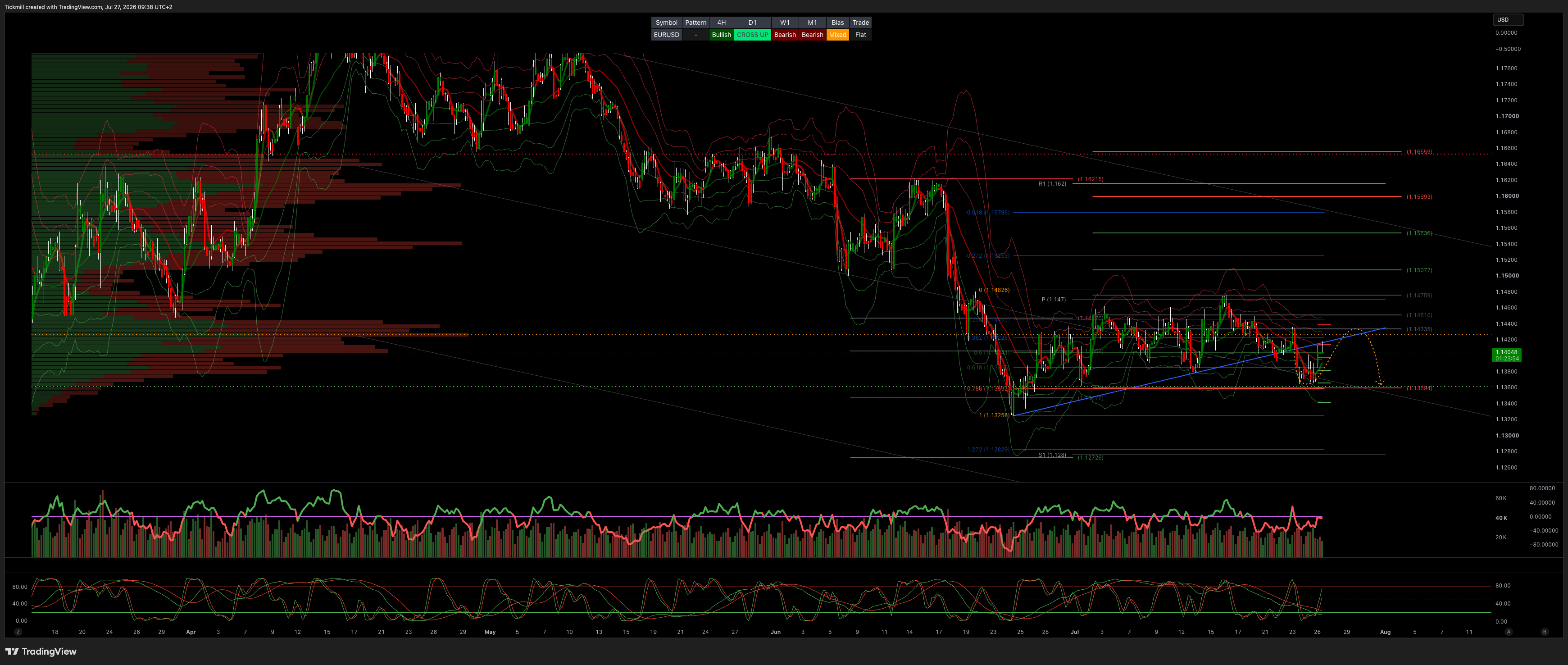
EURUSD - 1.1485 weekly bull/bear level
Daily VWAP Bearish>Bullish
Weekly VWAP Bearish
Above 1.1550 Target 1.1780
Below 1.1450 Target 1.1370
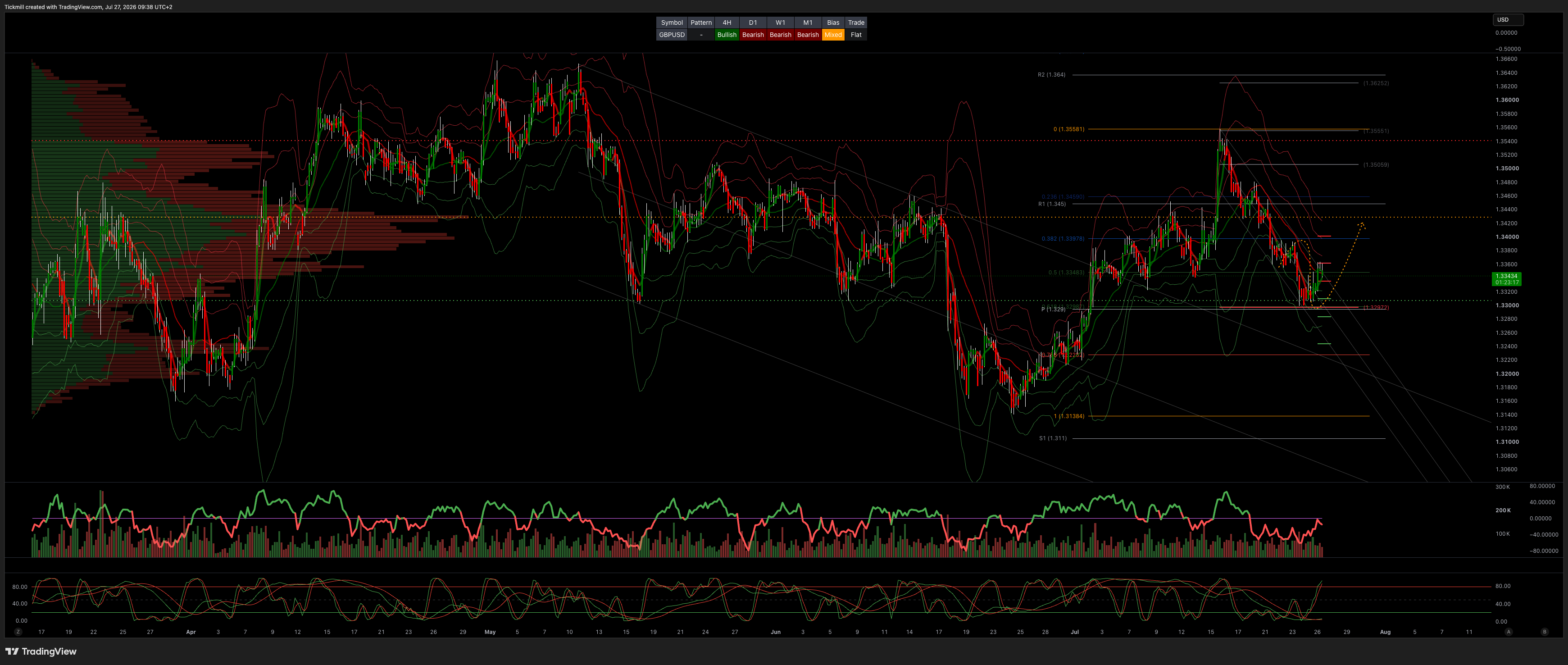
GBPUSD - 1.33 weekly bull/bear level
Daily VWAP Bearish
Weekly VWAP Bearish
Above 1.3450 Target 1.3640
Below 1.33 Target 1.3220
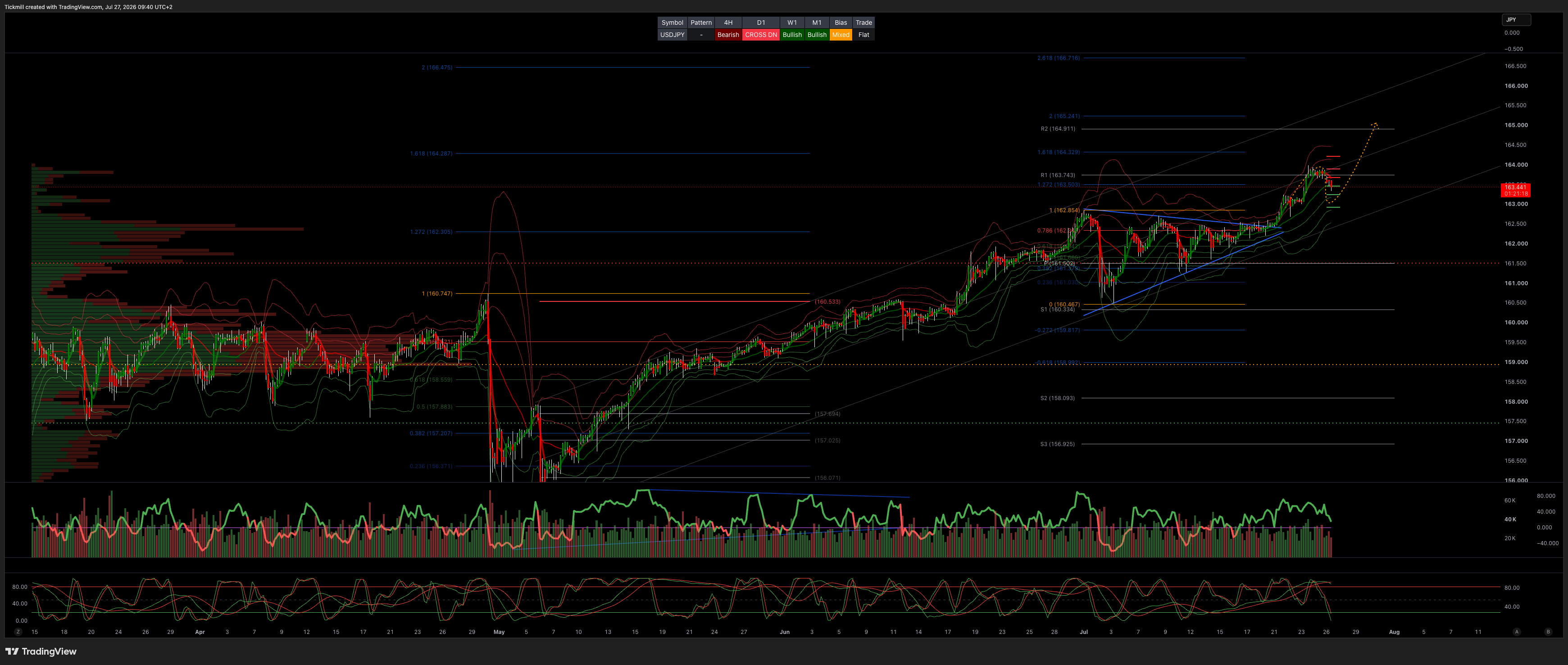
USDJPY - 162.85 weekly bull bear level
Daily VWAP Bullish>Bearish
Weekly VWAP Bullish
Above 162.85 Target 165
Below 161 Target 160.50
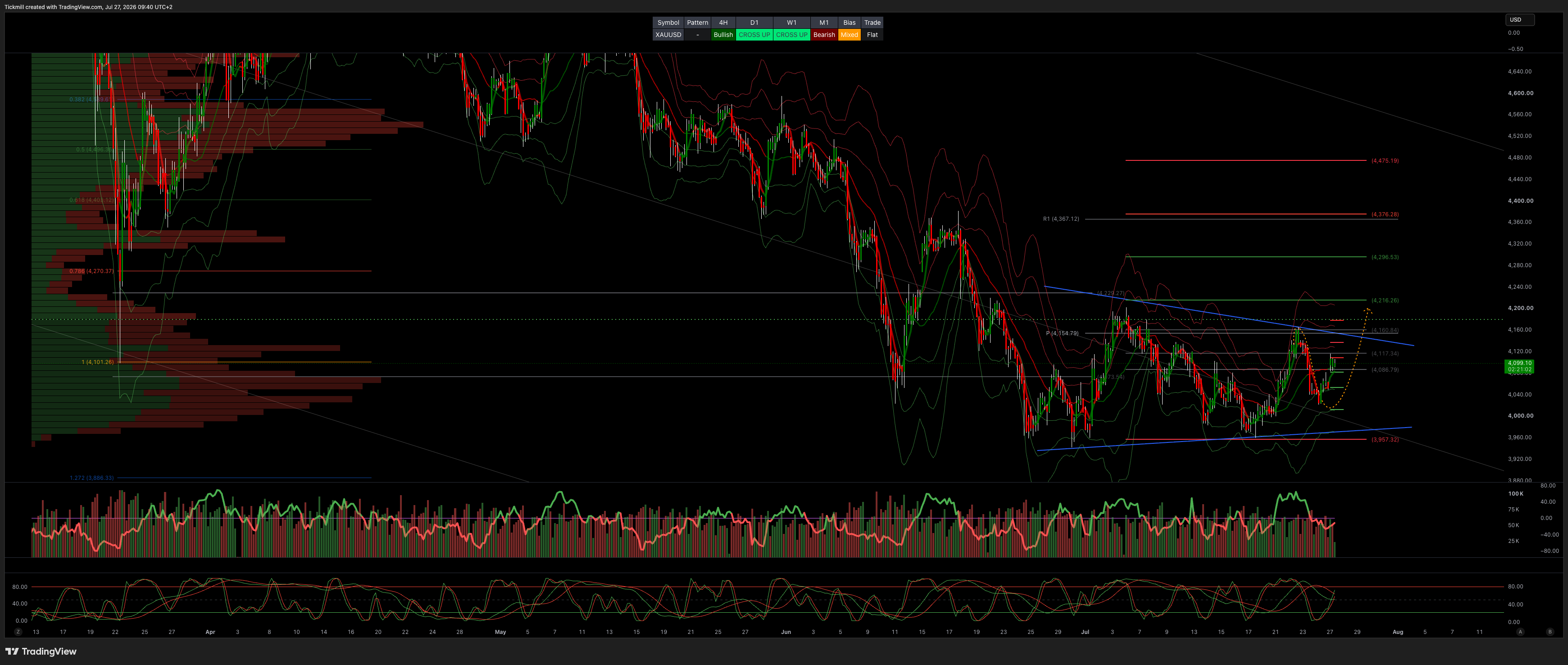
XAUUSD - 4100 weekly bull bear level
Daily VWAP Bearish>Bullish
Weekly VWAP Bearish>Bullish
Above 4200 Target 4500
Below 4100 Target 3569
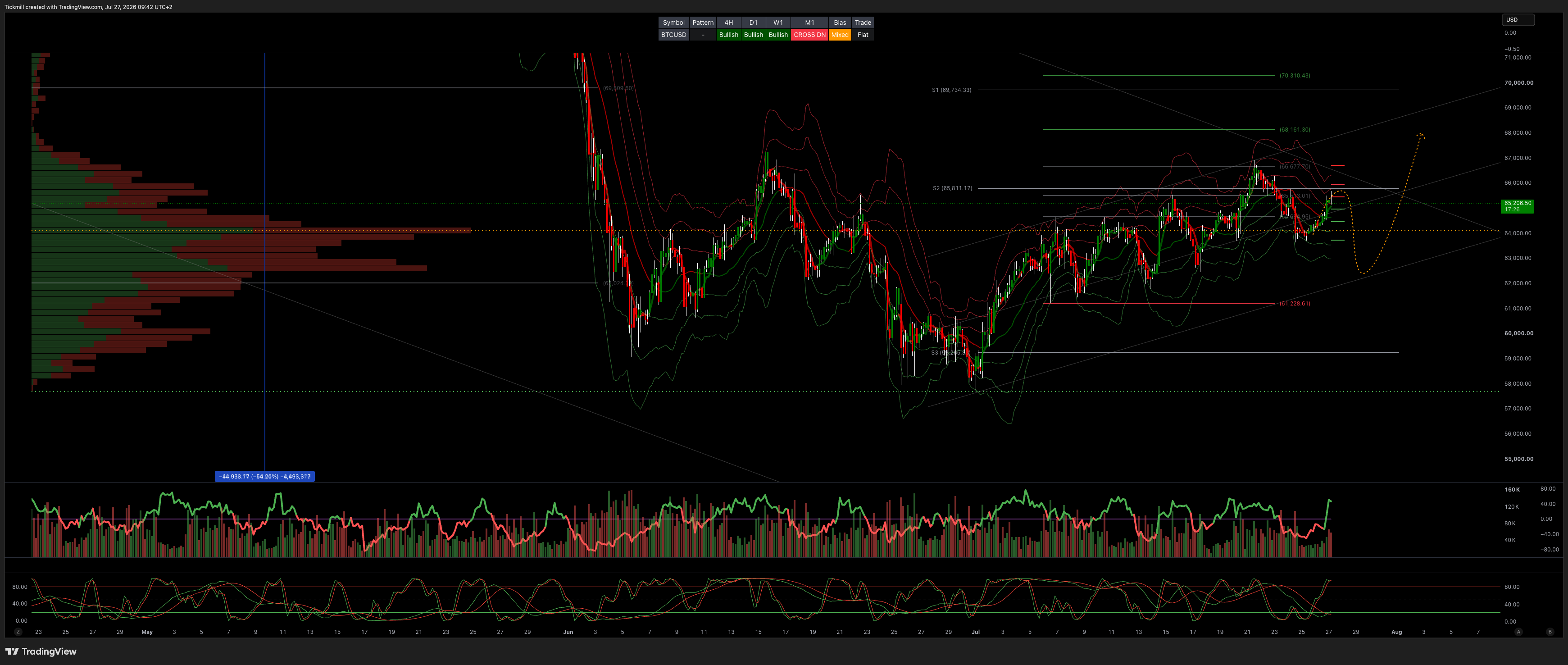
BTCUSD - 61k weekly bull bear level
Daily VWAP Bullish
Weekly VWAP Bullish
Above 62.5k Target 68.1k
Below 61k Target 52.2k


Comments
Log in or sign up to join the conversation.