

Traditional Markets
The first time Donald Trump met with Emmanuel Macron the two shared a special handshake that will be analyzed by political scientists for years to come. When they met two months later it seemed they simply couldn't let go of one another.
Though both of the above-linked videos are highly entertaining, the agenda for Macron's three-day visit to Washington is extremely serious.
The young French philosophy major will attempt to convince the reality star billionaire that trade wars are bad ideas and that Obama's deal with Iran is good. In short, he has his work cut out for him. In fact, he will be speaking directly with the world's biggest proponent of a wall.
None of this may actually matter to Wall Street, which is currently at the peak of earning season's euphoria. This week we'll get to peek under the hood of some of the biggest corporations in the world.

It's very rare for stocks to go down during earnings season but with the market action we've seen so far this year, it wouldn't surprise me.
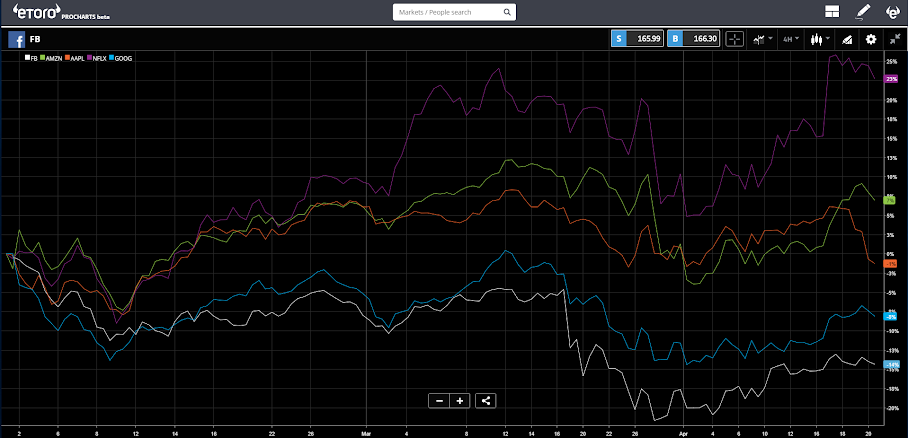
What is for sure is that stock traders are getting picky about what they hold. This chart shows that the famous FAANG stocks, which have been rising in unison for the last few years, have been showing some distinct syncopation since the market rout of February 2nd.
Yen Aggression
Speaking in an exclusive interview last night, the Bank of Japan's Governor Kuroda-San stated that they "must continue very strong accommodative monetary policy for some time."
Meaning, they are planning to maintain their aggressive stance towards weakening the Japanese Yen, possibly for years to come.
The BoJ will be holding a meeting and press conference this Friday, which is likely to reiterate their weak Yen policy and maintain their negative interest rates.
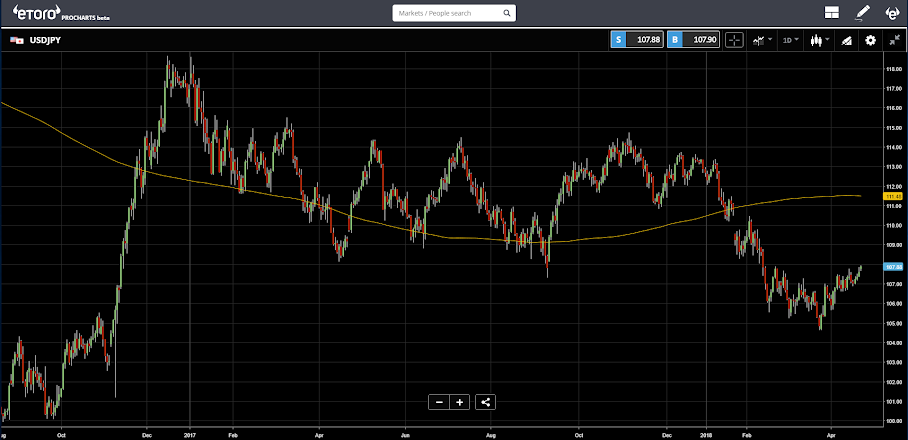
With the USDJPY so far below its yearly average (yellow), a move up to 111 may be imminent.
(Remember, an upward move on the chart shows the Dollar getting stronger against the Yen.)
Bitcoin's Bull Chart
The expectation of a weaker Yen, especially with the BoJ Governor deliberately trying to jawbone the currency, could have direct ramifications for Bitcoin.
Japanese savers are not very happy with the fact that their holdings in Yen are being marked for devaluation and with the cryptomarket's recent bounce off the lows, they may now be looking at some viable alternatives.
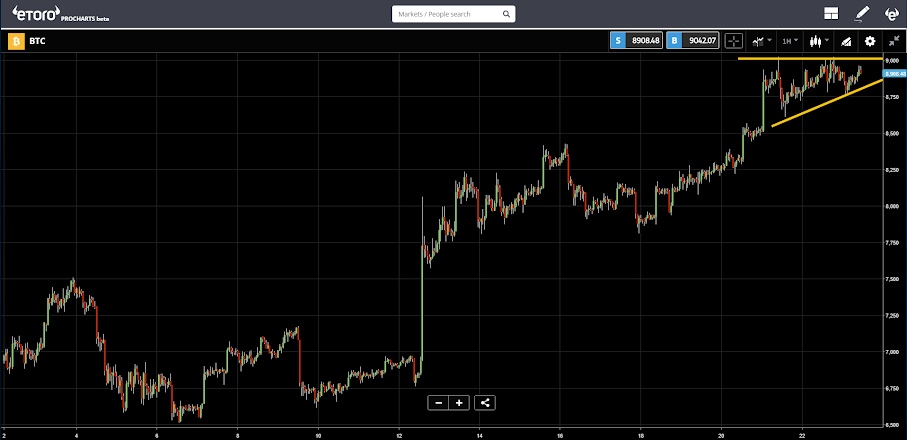
Here we can see Bitcoin's strong push off the long-term support of $6,500 and the subsequent rise. At the moment we can see some strong resistance at $9,000, a significant psychological barrier.
The yellow line here represents a classic ascending wedge, which is often called a breakout pattern. Let's hope it plays out.
What's even more impressive though is the rise in Bitcoin Cash...
BCH is up 81% in the last 7 days!!
This one slightly more difficult to explain but it does make some sense in the crypto-crazy world we live in.
First, let's talk about the fork. Bitcoin Cash is moving towards a hard-fork on May 15th. The planned fork that will increase the maximum block size from 8 MB to 32 MB and will also remove the SegWit protocol.
However, those looking to get a new coin or "dividend" out of this fork may be disappointed. If all goes smoothly, the new coin that is created from the fork will completely replace the old coin. Though there may be some who try to keep the old BCH alive, they will very likely be the minority. That said, there will be no free lunch, and no chain split unless things go terribly wrong.
For clients holding BCH in eToro, barring any unforeseen circumstances, your coins will move smoothly to the new 32 MB blockchain.
Still, many cryptotraders have the last few bitcoin forks permanently etched in their minds and associate hard forks with rising price and so the momentum is snowballing at the moment, especially in markets such as Japan and South Korea.
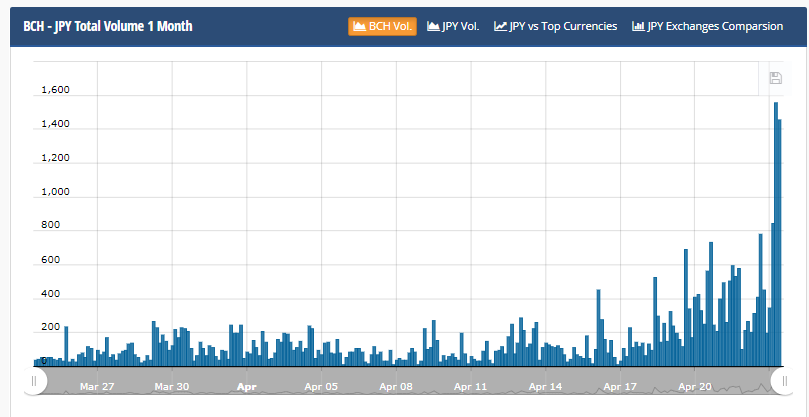
We can see a distinct spike in volumes for BCH on exchanges in both Japanese Yen...
... and Korean Won...
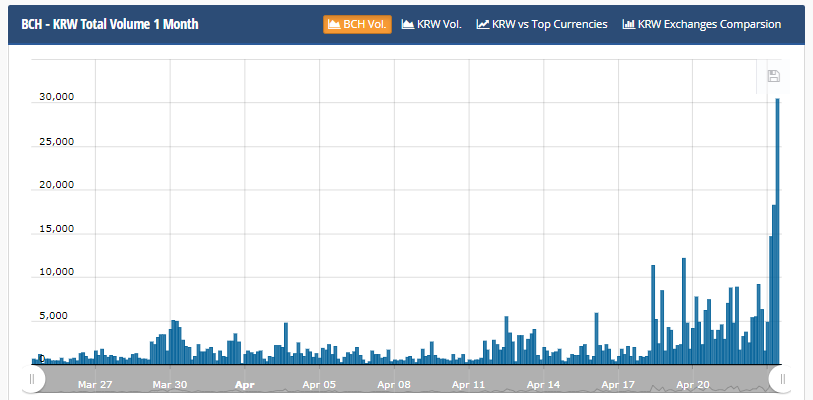
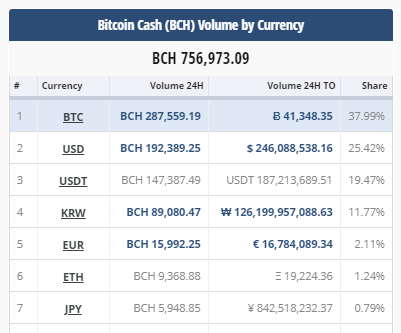
... whereas volumes in BTC have remained constant over the last few weeks. Japan is responsible for 60% of all Bitcoin transactions and the spikes shown above simply indicate a sudden rise in interest.
The proportional BCH volumes of both countries are still relatively small. As we can see, Japanese Yen makes up less than 1% of all BCH transactions.
Also, there seem to be some interesting updates coming out of India, which does indicate that the "crypto-ban" put in place by the RBI and finance ministry may end up being shot down by the high court. More on this in future updates.
Many thanks to everyone who is sending me great intel and excellent feedback. Keep up the great work!



Comments
Log in or sign up to join the conversation.