

The French-German yield spread widened further this morning, crude oil prices continued to rebound after yesterday’s sudden drop, and the tech sector uncertainty remained. Given these developments and concerns over stagflation at the forefront, the EUR/USD could be heading further lower in the near-term.
Markets unable to shake off macro concerns
European stocks and US index futures fell back after yesterday’s sharp recovery. Several of the broader risks weighing on equities and other risk assets remain unresolved. Energy prices are still on the rise on concerns over a renewed escalation in the Middle East, while lingering doubts over the economics and financing of the AI data-centre boom remain in focus. French bond spreads are also widening as investors become increasingly sceptical about the country’s ability to deliver meaningful fiscal consolidation.
Against that backdrop, it is difficult to make a convincing bullish case for equities or the EUR USD exchange rate at this stage. At the same time, the unresolved risks mean there is still a decent argument for keeping some exposure to the dollar. The next few days of earnings and geopolitical headlines could therefore prove important for determining whether the recent equity market rebound could falter again and whether that could give rise to fresh dollar demand amid increased haven flows.
US dollar could come back after recent weakness
With a relatively quieter economic calendar this week, energy remains the bigger driver for the EUR/USD and other currencies where the economy relies on energy imports. Oil prices are holding at elevated levels as traders continue to price the risk of renewed US or Israeli action against Iran ahead of the US midterm elections.
As long as energy prices remain high, there is less scope for Treasury yields to fall significantly, which in turn limits the downside for the dollar.
Spread between France-Germany yield widens further
French fiscal concerns provide another source of support for the dollar. With French spreads continuing to widen, now reaching a fresh multi-year high of 1.570%, investors are becoming less convinced that Paris can deliver a credible path towards fiscal consolidation.
For now, the balance of risks therefore still favors buying the dollar on dips, keeping the EUR/USD forecast bearish particularly as energy prices remain elevated and French political and fiscal tensions intensify.
German investor sentiment weakens
The economic backdrop is also becoming less supportive. Yesterday, the German ZEW sentiment fell more than expected to 28.1 from 34.7, suggesting that business optimism is beginning to reflect the combination of political uncertainty, high energy costs and weaker growth prospects.
Friday’s eurozone flash PMIs will offer another test, although a modest deterioration is unlikely to be enough on its own to trigger serious alarm.
For EUR/USD, the key point is that a period of consolidation after September’s sharp decline would not be surprising. But consolidation is not the same as a convincing recovery. With French fiscal risks, elevated energy prices and softer economic sentiment all weighing on the euro, the fundamental case for a sustained rebound remains weak.
EUR/USD technical analysis and key levels to watch
The EUR/USD has struggled to climb above the key short term resistance area between 1.1230 to 1.1250 zone. Here the pair has repeatedly found some offers. Yet, after the big falls, the downside has been contained in more recent days. The consolidation is hardly surprising but without a major fundamental shift, we could see the euro take another leg lower soon.
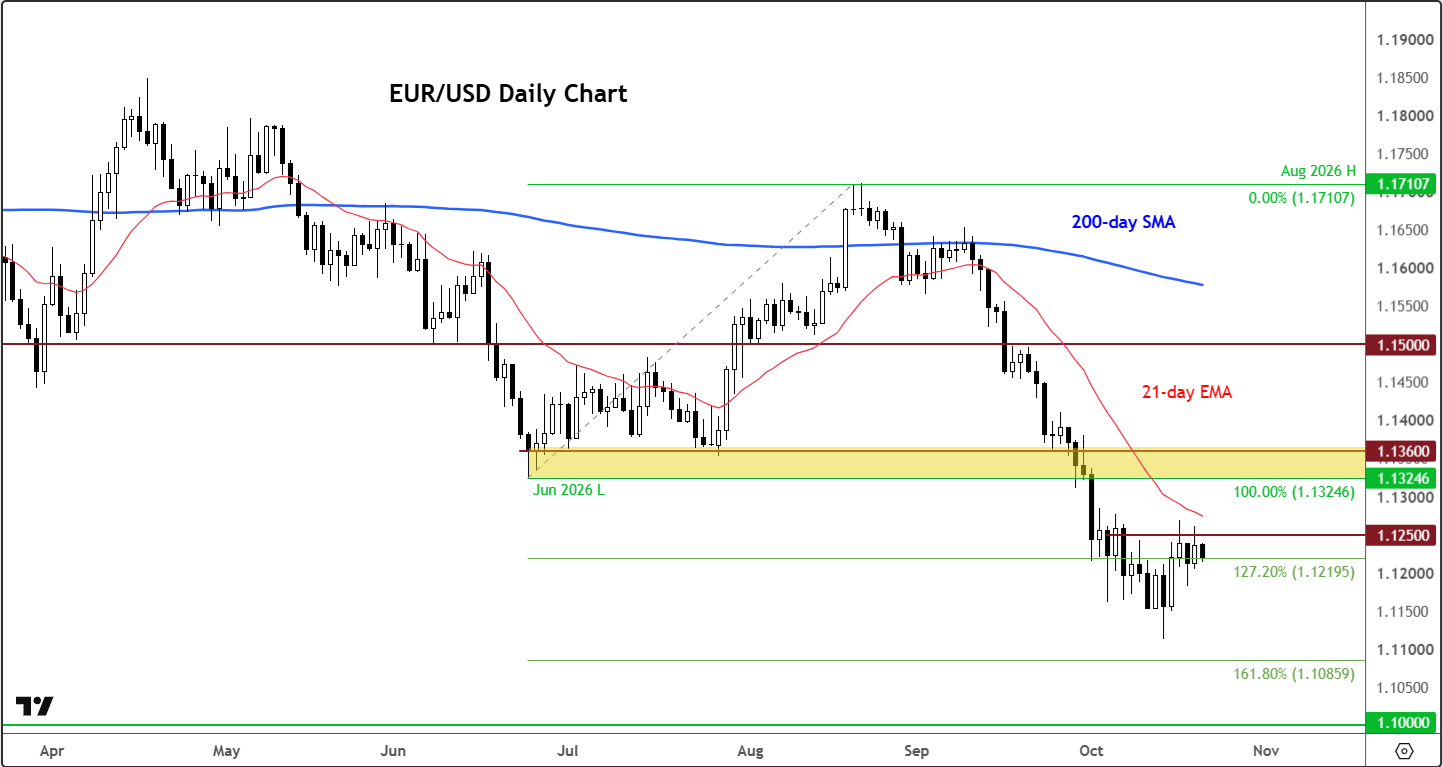
The above macro concerns and the trend break is leaving the pair vulnerable to another leg lower if the French or geopolitical backdrop deteriorates further. From here 1.1100 is the next downside target for the bears and then the psychological 1.10 handle thereafter.
A potential break above 1.1250 meanwhile could see the pair go for a test of the longer term resistance near 1.1325 to 1.1355.


Comments
Log in or sign up to join the conversation.