

Coronavirus: is it time to move on?
In recent weeks, it seems there has been a disturbing trend: an effort to play up coronavirus danger in order to score political points.
The narrative is a bit like this: "We can all point to the government's failings. After all, x."
The story is the same in the United States as it is in Israel (where I live). The run-of-the-mill people aren't good enough. They're lax. They aren't doing what is obviously right. The leadership isn't smart enough. We need to crack down more (or if the leadership is cracking down more, then we need to crack down less).
Whatever the government is doing is bad - so long as the government isn't in line with the staff at your newspaper of record.
The problem was that the metric for failure keeps changing. It was deaths, then serious cases, then positive tests, then positive test rates. It seems to be shifting ever further away from the core concerns: mortality and morbidity. And as the cries of outrage grew louder, the choke-hold on our economies grew stronger.
To borrow a phrase, it is a choke-hold that threatens the oppressed people of the world. In the developing world: food prices have skyrocketed, starvation has shot up and remittances have nearly vanished. Huge numbers will likely die (far more than will be killed by the coronavirus) by the economic bludgeon unintentionally wielded against the global poor.
As we are all aware, the cries of outrage have only grown louder in recent weeks. New data keeps coming in showing a massive rise in cases. That rise might be a simple result of additional testing. But even if it reflects a real rise in caseload, it seems the danger is continually receding.
One simple chart tells the story:
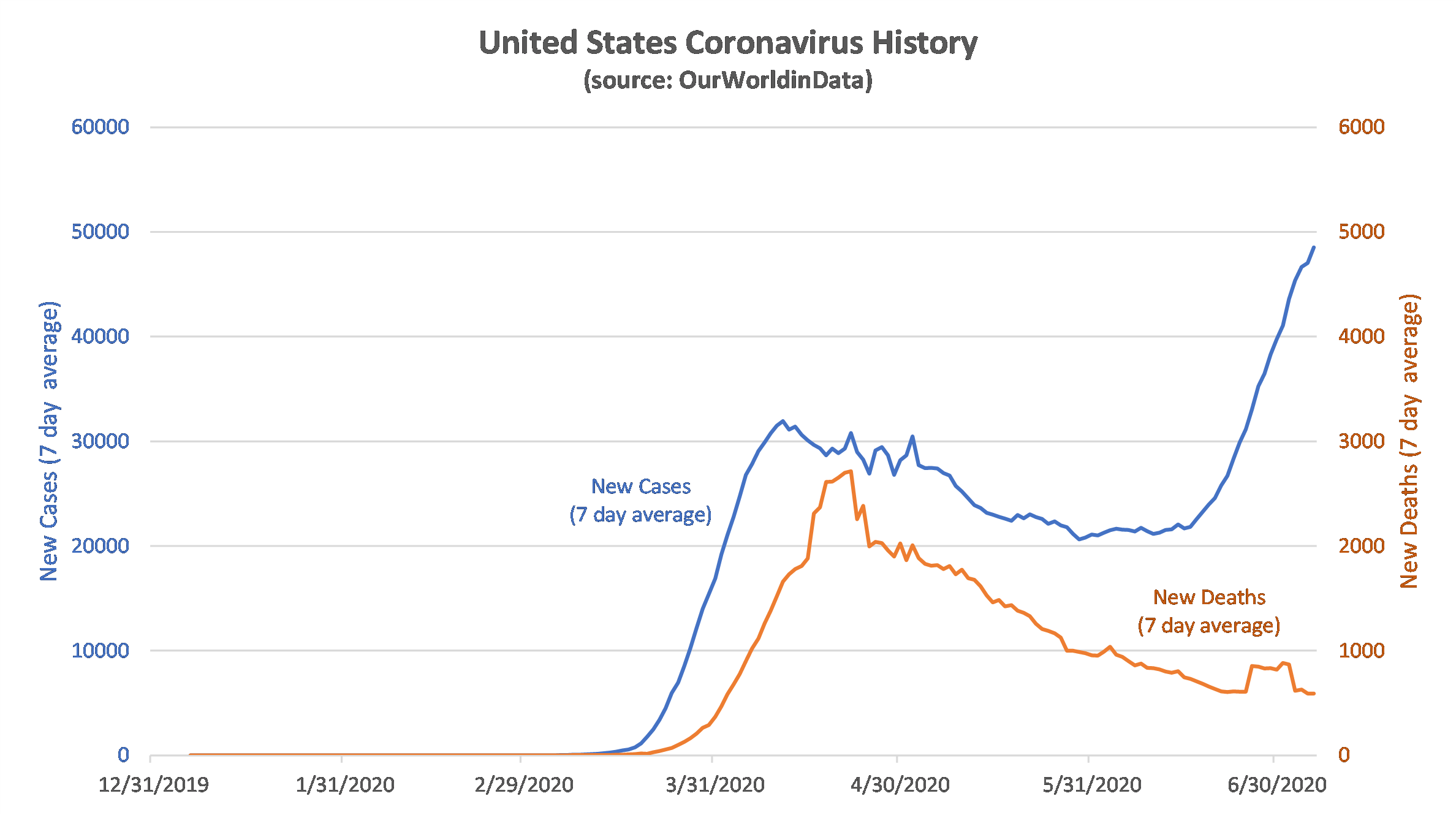
As you can see: in the 'first wave', deaths closely followed new cases. Nothing of the sort is happening now. It could be masks reducing virus load, a natural weakening in the virus, increased human immunity, or the organic discovery of improved treatment protocols.
Whatever the reasons, the above data should result in a change in policy.
If the rise in cases is simply a reflection of increased testing or reduced viral load due to masks, then there is no need to reimpose restrictions. What we have is working - death rates are falling. We should maintain the present course.
However, if the reduction in death rates is, a result of improved treatment, increased immunity, or a weakened virus then we should change course.
In fact, given that the virus is so far beyond the possibility of contract tracing, we should give up on suppression. Instead, we should:
- Hire large numbers of people to support an intense period of elder isolation (for those elders wishing to be isolated). 0.4% of Americans are in nursing homes, but they account for 40% of coronavirus deaths. They are at 100X of the risk. Our remaining PPP loan balance can provide $100,000 per person to provide protection for nursing home residents.
- Open the economy and allow the virus to rush through younger populations. We can use masks to limit viral load, but we should encourage exposure.
Death rates will increase (as will morbidity due to coronavirus' long-term effects). However, the indirect death rate (e.g. development world starvation, suicide, ill-health associated with unemployment, boredom-fueled murder) will fall and quite possibly millions of lives will be saved.
We must remember that economies also suffer from morbidity. Every month we extend our economic limp, we multiply the long-term effects of the virus. And every month we extend our economic limp, more lives in the developing world will be threatened by loss of resources and employment. As I detailed months ago in my video (Stop the Insanity) these deaths are very real.
Economics, though, are only the first-order impact of our virus shutdowns. We're already seeing the arrival of second-order impacts: Riots fueled by mass unemployment (even if collecting a paycheck), Chinese Communist Party aggression in Hong Kong and India (taking advantage of the moment), and the loss of industrial capacity in aerospace and energy. We can't predict what will come next.
There are concerns that total immunity will only last for a limited time. This only increases the need to open up our economies. A rapid onset of mass immunity will prevent the virus from spreading by presenting a limited variety of targets in any population. Put another way: if 25/30 people have recently had the virus, a new ill person will be hard-pressed to spread it before their own case is no longer contagious. However, if 25 people have had it, but only 5 recently, there is no benefit to be had.
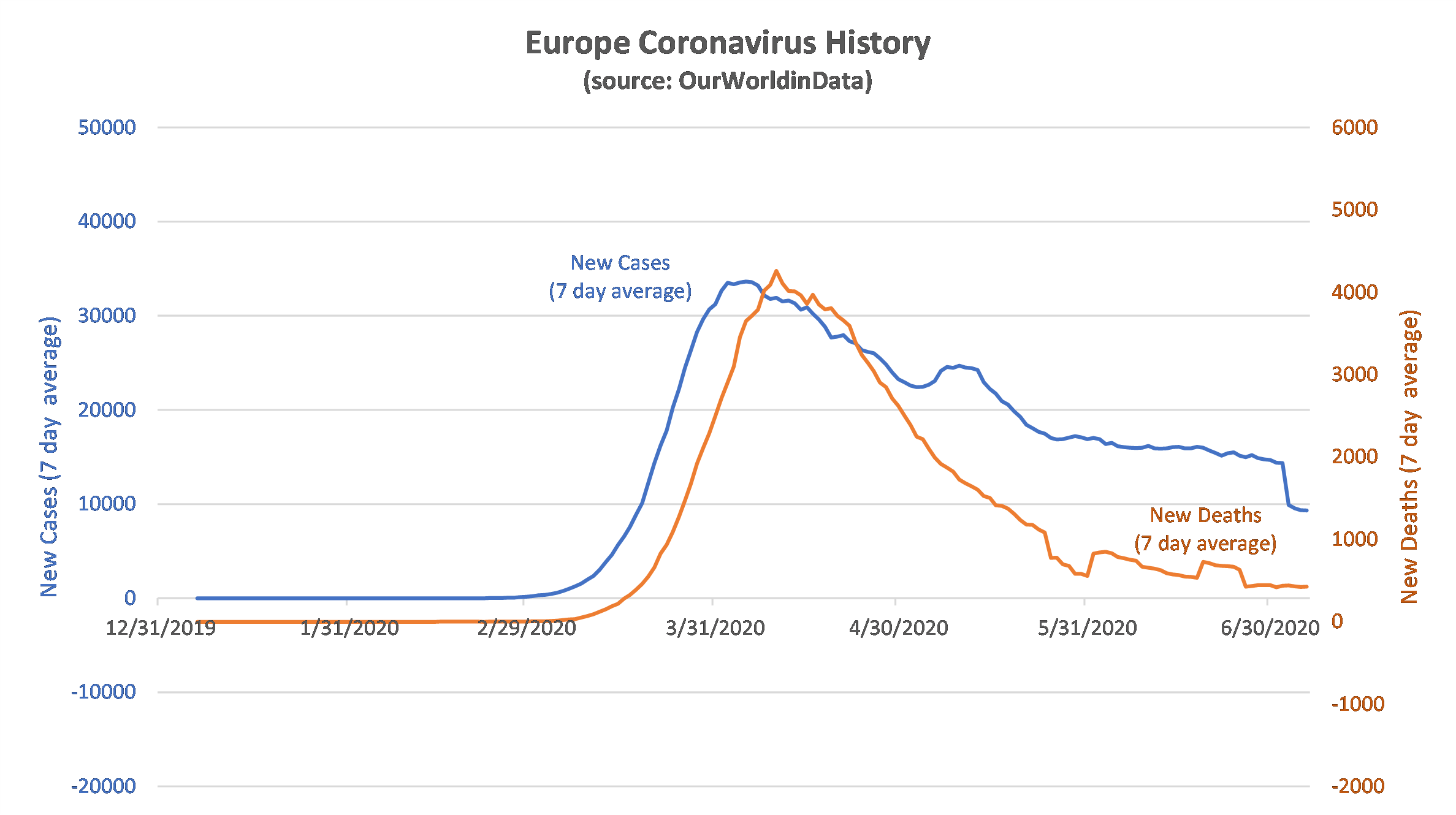
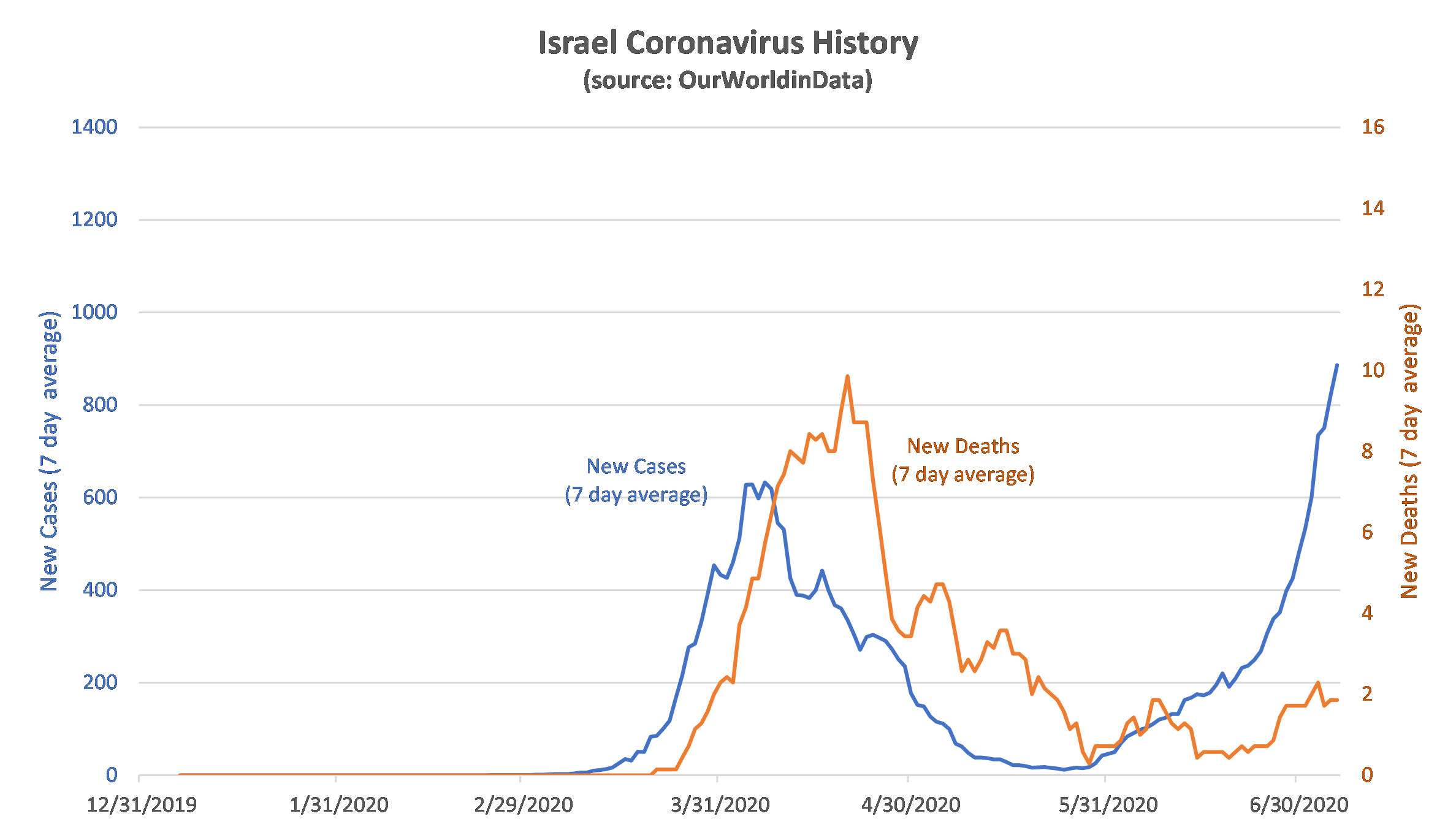
P.S. Here are other countries:



Comments
Log in or sign up to join the conversation.