

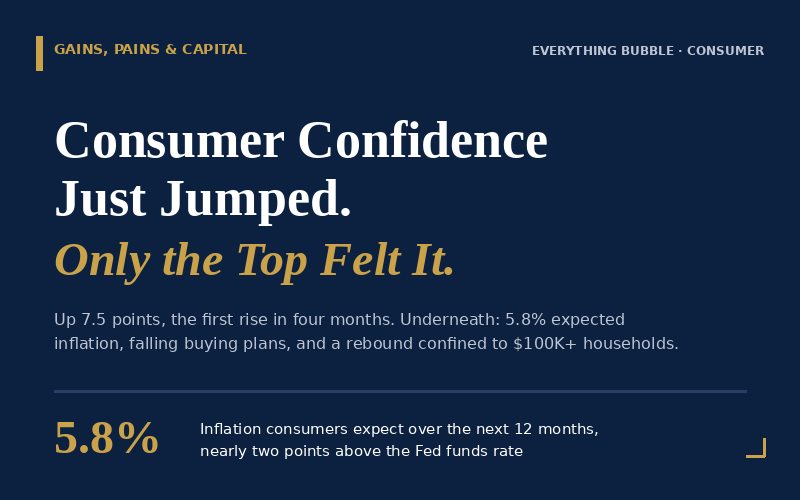
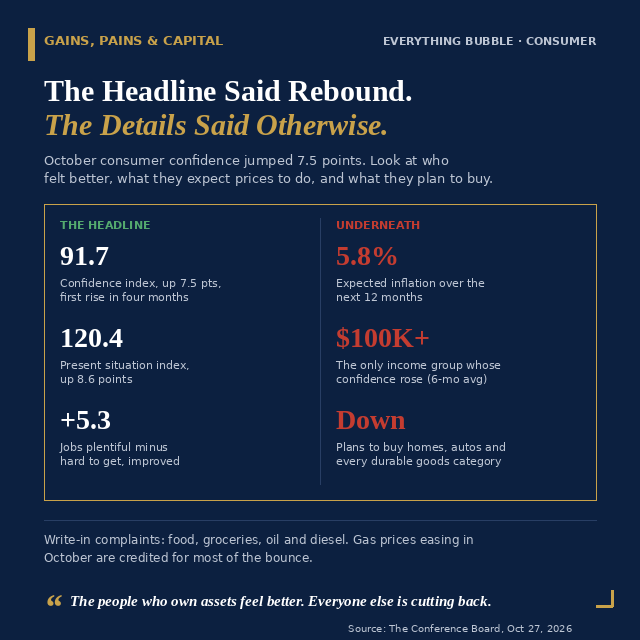
Yesterday the Conference Board reported that consumer confidence rose 7.5 points in October to 91.7. It was the first increase in four months, and it beat every forecast. The headlines called it a rebound. The Fed will probably cite it this afternoon as evidence the consumer is holding up.
Read the report instead of the headline and you get a very different picture. It is a picture I have been describing in these pages for a long time, and it is worth walking through, because it tells you more about where the economy is than the Fed statement will.
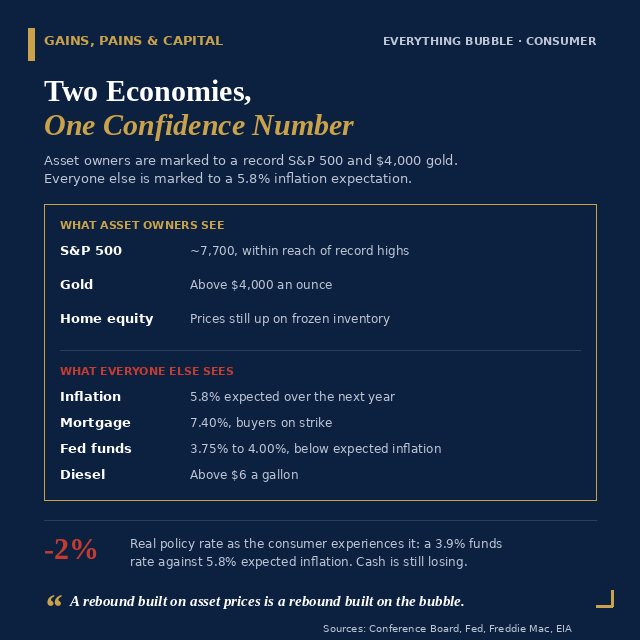
Start with inflation expectations. Consumers expect prices to rise 5.8% over the next twelve months. That number came down slightly from September, which is part of why the headline improved, but 5.8% is nearly two full points above the Fed funds rate. The Fed has hiked once this year and is expected to hold today at 3.75% to 4.00%. As far as the American consumer is concerned, the real policy rate is negative two percent. Cash in the bank is losing ground, and everybody knows it.
Now look at who actually got more confident. The Conference Board breaks the index out by income. On a six-month moving average, the only income group whose confidence rose was households earning $100,000 or more. Every group below that was flat or down. By age, only consumers under 35 improved. The rebound that produced the headline was concentrated in the people most likely to own stocks, and in the cohort most likely to have bought them recently.
Then look at what people plan to do with their money. Plans to buy a home fell. Plans to buy a car fell. Planned spending on durable goods fell in every single category, with phones, computers and tablets down more than a percent. Services spending plans were lower across the board, with one exception: movies, theater, concerts and sporting events. The vacation share slipped. Hotel and airfare plans moderated. The write-in complaints were about food, groceries, oil and diesel.
So here is what the October confidence report actually says. People feel better about the present, mostly because gasoline came down from September. They expect inflation near six percent. They are not planning to buy anything that costs money. And the only households whose mood improved are the ones with portfolios.
That is the Everything Bubble economy, described by the people living in it.
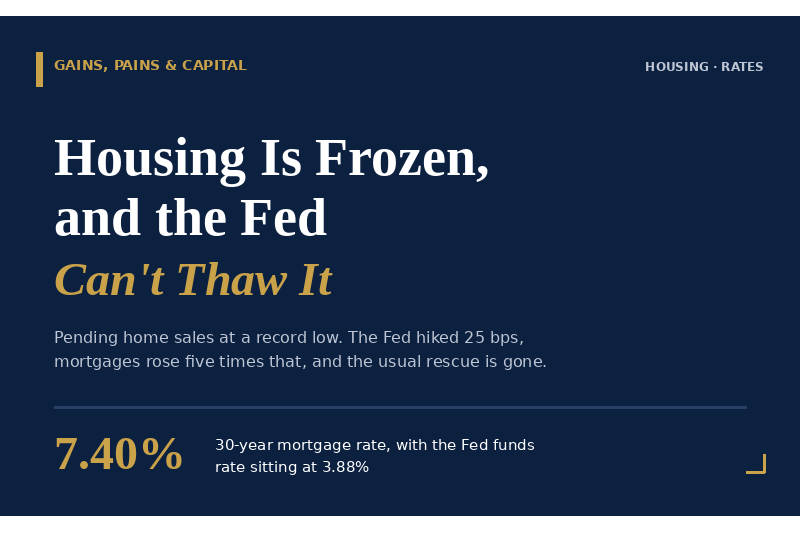
For fifteen years the mechanism has been the same. Central banks inflate asset prices, asset owners feel richer and spend, and that spending is counted as healthy consumer. The S&P 500 is sitting near 7,700, within reach of a record, in a week when the richest companies on earth are selling stock to fund capital spending their cash flow cannot cover. Gold is above $4,000. Home prices are still elevated because inventory is frozen, which I wrote about last week. If you own those things, October felt fine. The confidence number says so.
If you do not own those things, October was a month in which your groceries cost more, diesel stayed above six dollars, a mortgage cost 7.4%, and your savings earned less than the inflation you expect. The confidence number says that too. It just says it in the parts of the report nobody reads.
Why does this matter for how you invest? Three reasons.
First, a confidence rebound built on asset prices is only as durable as the asset prices. The last three times the index moved like this on a stock market high rather than on wages, the move reversed within two quarters. The expectations index, which measures how people feel about six months from now, is at 72.6. Anything under 80 has historically signaled a recession ahead. It has been under 80 for most of the year.
Second, the buying plans tell you the goods economy is weakening under the headline. Whirlpool reported yesterday that North American appliance sales fell 8% and it is pushing through a 7% price increase anyway. That is the combination you get when volume falls, and costs rise: fewer units at higher prices. It is stagflation at the level of the washing machine, and it matches exactly what the Conference Board’s respondents said they plan to do.
Third, and most important, a consumer who expects 5.8% inflation and a Fed holding at 3.9% is a consumer who has been told, in effect, that the central bank will not protect the value of their cash. That is the message the market has been acting on all year, and it is why the assets that have worked are the ones that cannot be printed. The confidence report is a survey of 3,000 households saying the same thing the gold price has been saying since January.
The Fed will hold this afternoon. The statement will note that consumer sentiment improved. Both of those things will be technically true. Neither of them describes the economy the people in that survey are living in.


Comments
Log in or sign up to join the conversation.