


The S&P 500 is weighted by market capitalization, meaning larger companies make up a greater share of the index. Today, the 10 largest stocks account for nearly 40% of the index, while the remaining 490 companies represent the other 60%. This concentration has led some investors to favor equal-weight strategies, where every company has the same allocation regardless of size. Historically, equal-weight indices have performed well during periods of elevated volatility, such as the aftermath of the 2000 dot-com bust and the 2008 financial crisis. However, during extended bull markets driven by large-cap leaders, market-cap-weighted indices have generally delivered stronger returns.
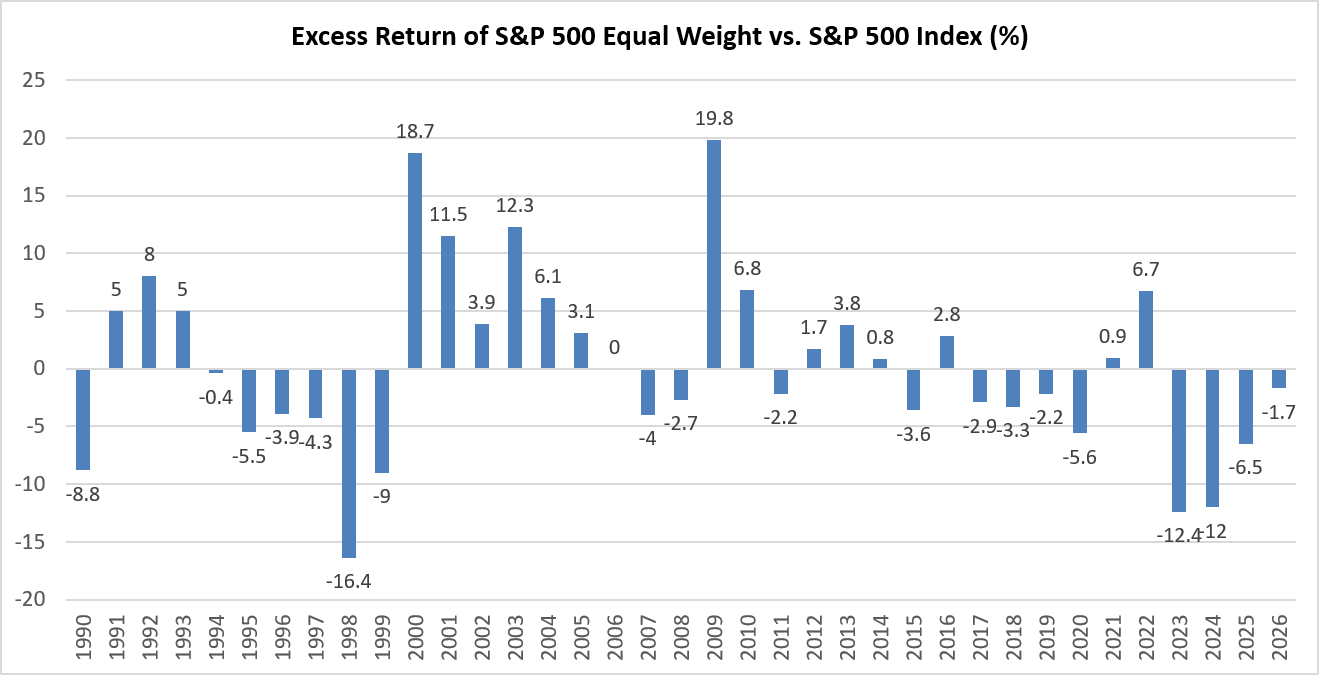
Source: Bloomberg, First Trust, The Business Week Graphic; 5/29/2026
This graph was produced by Lucas Juery, CFA, CFPⓇ and is not intended to provide financial advice.


Comments
Log in or sign up to join the conversation.