

The S&P 500 Index reached its lowest closing low of the year at 6,343.72 on March 30th. This decline had the index down just over -9% from its January 27th high. Over the last two weeks though, the S&P 500 Index is up over 3% in both weeks for a return over 7% since the March 30th low. On a year-to-date basis the Index is down only -.42% and our Spring 2026 newsletter includes commentary on investors 'feeling' the decline is much greater than it is.
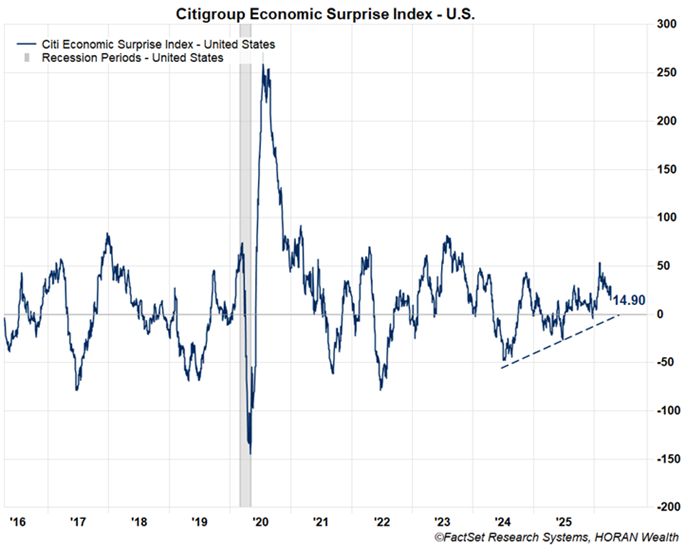
It is often said perception is reality but from an economic perspective the economic data is being reported better than expectations with the Citigroup Economic Surprise Index continuing to trend higher, now in positive territory. From an employment perspective, last week's nonfarm payrolls report showed the economy added 178 thousand jobs versus expectations of 60 thousand. All is not bad on the employment front. Are there areas showing weakness, yes, but broadly the labor market appears to be improving along with broader economic data.
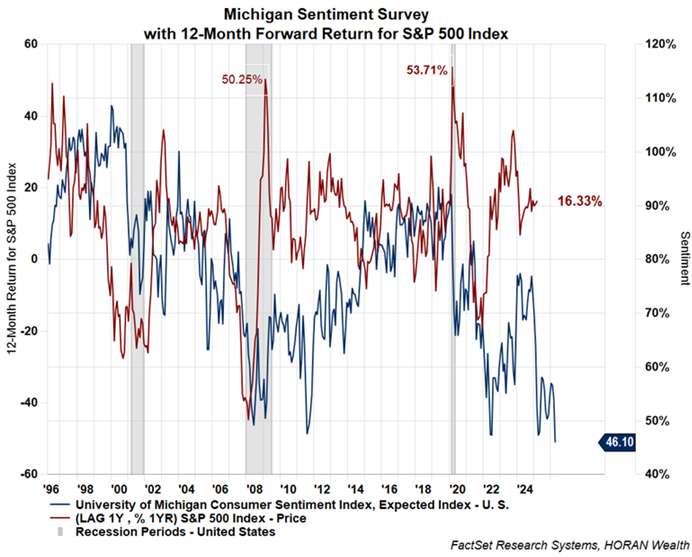
An area receiving a lot of attention is the conflict in the Middle East (ME.) The conflict has had a direct impact on oil prices with one result being consumers are paying higher prices for energy and gasoline. Higher energy/gasoline prices do have a direct impact on discretionary consumer spending. Additionally, the ME conflict and higher energy prices are leading to lower individual confidence and sentiment levels. One measure that received a great deal of attention Friday was the record low reported for the Michigan Consumer Sentiment Index. As the below chart shows though, when the sentiment measure is near a low like the recent report, this tends to occur at equity market low points. The maroon line on the chart shows the subsequent 12-month price return for the S&P 500.
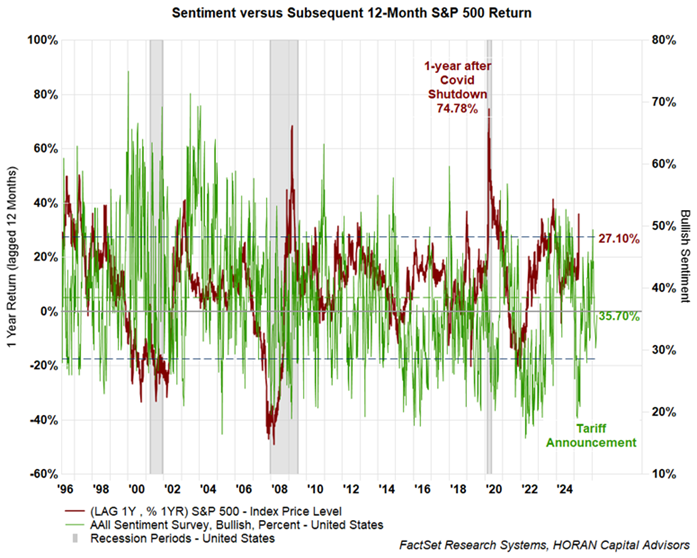
Similar positive return outcomes are seen with other sentiment measures as they tend to serve as contrarian measures at their extremes. Below is the American Association of Individual Investors Sentiment Survey's recent bullish sentiment along with the 12-month forward return for the S&P 500 Index. As with the Michigan Consumer Sentiment chart above, low levels of individual investor bullishness are associated with better stock market returns in the year ahead period.
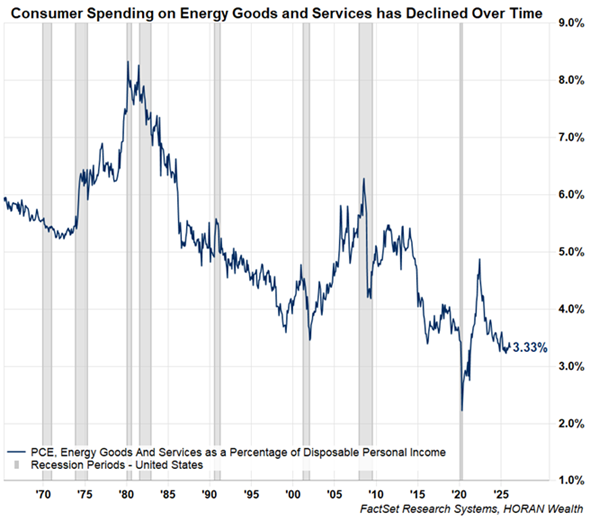
The situation in the Middle East is a fluid one. At the time of this writing, the U.S. has announced they are blockading the Strait of Hormuz. This will likely put upward pressure on crude prices, yet not much crude oil has been transported through the Strait prior to this announced blockade. In looking for a near term positive around the oil situation, consumers in the U.S. spend less of their disposable income on energy goods and services today, 3.3%, versus 6.3% 15 years ago.
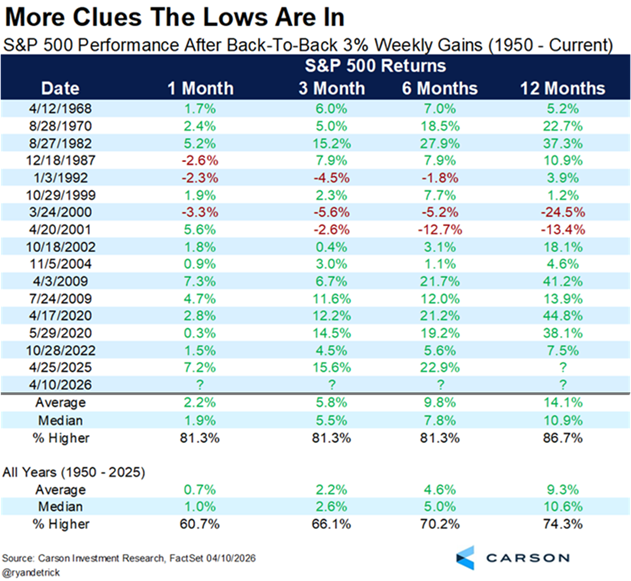
For investors, the conflict in the Middle East will continue to influence the market and sentiment. However, if sentiment is strongly negative, like some measures suggest at this point in time, the market can climb the proverbial wall of worry. As noted earlier the S&P 500 Index is coming off back-to-back 3%+ weekly gains. As the below table from Carson Research shows, historically, future returns have been strong when this type of market actions occurs.
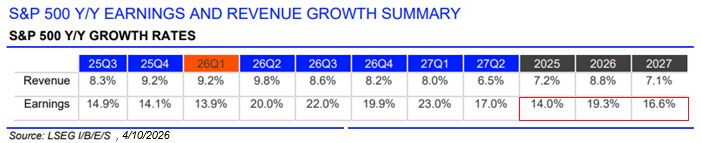
And lastly, as the below table shows, S&P 500 earnings and revenue growth expectations continue to improve. For the week of April 13th, 28 S&P 500 companies are expected to report earnings with a majority, 20 companies, falling into the financial sector. overtime, stocks prices tend to follow earnings and high teens earnings growth is currently expected.

Comments
Log in or sign up to join the conversation.