


Brent crude settled at $92.17 a barrel after the Trump administration announced a possible expansion of secondary sanctions against countries doing business with Iran. The pullback did little to ease the broader unease: crude remains close enough to that level to keep headline inflation and interest-rate expectations elevated.
The S&P 500 fell 21.51 points, or 0.28%, to 7,652.86, and the Nasdaq Composite dropped 200.26 points, or 0.76%, to 25,980.19 on August 24, dragged lower by chip stocks even as the Dow Jones Industrial Average gained 140.15 points to 53,417.16 on strength in financials.
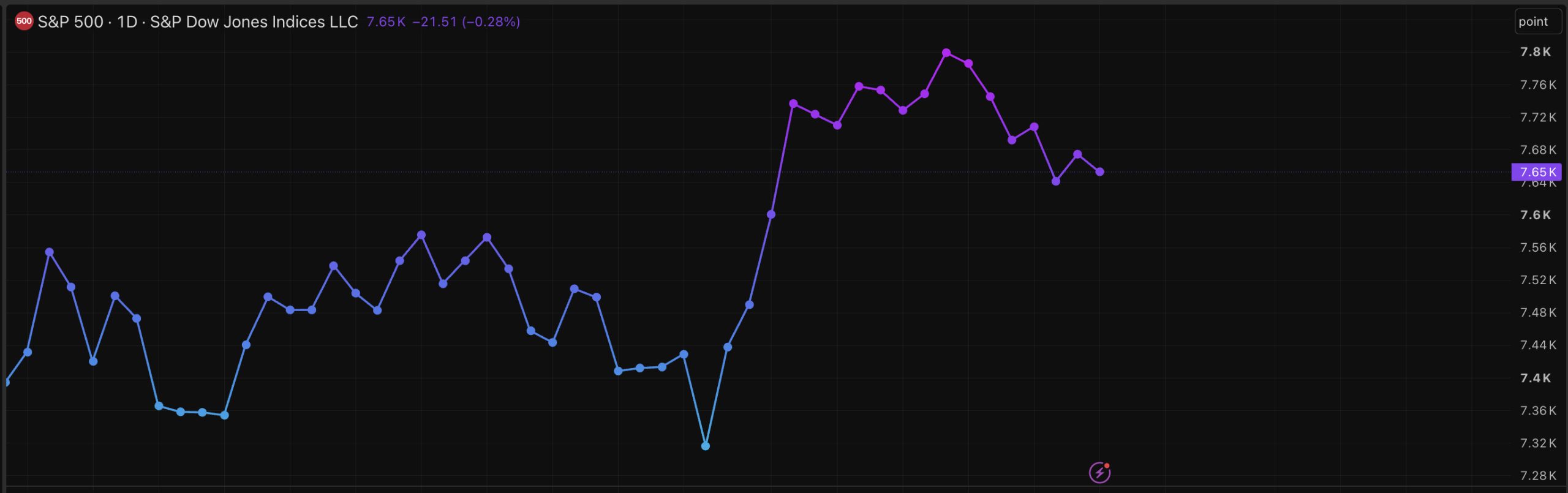
S&P 500, Tradingview
Nvidia (Nasdaq: NVDA) fell 2.9%, Micron Technology (Nasdaq: MU) slid 5.8%, and Broadcom (Nasdaq: AVGO) dropped 2.6%, pressuring the Philadelphia SE Semiconductor Index. Bitcoin (BTC.X)’s price action was not reported alongside these moves, but its behavior through prior Iran-related escalations suggests markets continue to treat the token as a high-beta risk asset rather than an automatic geopolitical hedge.
Iran Oil Risk and Inflation: How Brent Crude Oil Near $92 Reaches Asian Equity and Crypto Pricing
The transmission mechanism starts with Washington’s pressure campaign. Treasury officials on August 24 signaled a broader scope for secondary sanctions on entities doing business with Iran, an escalation the administration billed as an “economic D-Day.”
This ambiguity is itself a pricing input: oil traders are left holding a geopolitical risk premium without a clear catalyst to resolve it either toward de-escalation or a harder supply shock.
Crude oil actually fell more than 2% on August 24 and continued lower into August 25, with Brent slipping to $91.27 and WTI to $84.25, as ING commodity strategists described the market treating the sanctions push as “marginal rather than market-moving.”
Tim Waterer, chief market analyst at KCM, cautioned that Iran still retains the ability to respond by disrupting shipping, which keeps a residual premium in the price even as headline crude retreats. An oil tanker was struck and disabled by an unidentified projectile near Oman on August 25, according to the United Kingdom Maritime Trade Operations, underscoring that the physical-disruption tail risk has not disappeared even as the sanctions track dominates headlines for now, per Reuters.
For oil-importing economies across Asia, a Brent crude oil price anchored near $90-$92 rather than the $70s keeps headline inflation stickier than central banks would prefer. It’s narrowing the room for rate cuts and supporting a firmer dollar.
The U.S. 10-year Treasury yield fell 3.79 basis points to 4.7% on August 24, while the 30-year slipped to 5.2276%, but both remain historically elevated, and the dollar index rose 0.2% to 99.01 the same day. Higher real yields raise the opportunity cost of holding non-yielding or speculative assets, a dynamic that touches gold, tech valuations, and Bitcoin simultaneously rather than any single market in isolation.
Nvidia Earnings and Valuation Risk: Bitcoin as a High-Beta Risk Asset
Nvidia’s results, due this week, arrive at a moment when the market has little tolerance for an in-line quarter. Richard Reyle, chief investment officer at Questar Capital Partners, said Nvidia needs to impress in order to keep one leg of the stock market stable, while Warsh needs to provide clarity on interest rates to keep the other leg stable. That framing captures the dual dependency: Nvidia’s guidance has to clear an already-elevated bar at the same time bond yields are being reset by fiscal and inflation concerns.
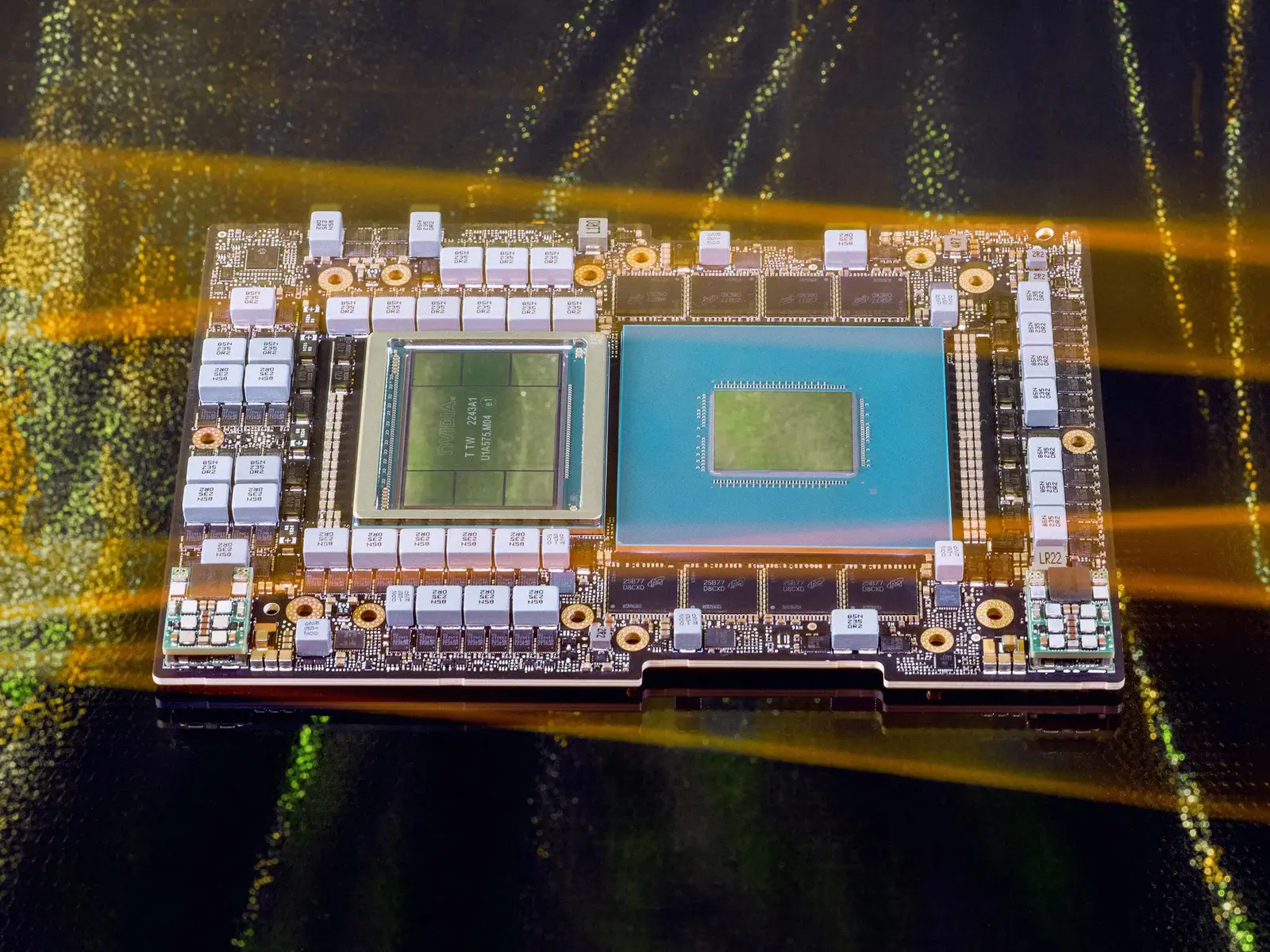
An Nvidia H100 Tensor Core GPU, used for powering large-scale AI models.
Semiconductor names have already priced in some of that anxiety. Micron’s 5.8% slide and Broadcom’s 2.6% drop on August 24 pulled the Philadelphia SE Semiconductor Index lower alongside Nvidia’s 2.9% decline, and the S&P 500 Information Technology index underperformed the broader index that session.
Ohsung Kwon, chief equity strategist at Wells Fargo, said the bigger worry is the hawkish rhetoric starting to emerge from politicians on AI and data centers, adding that his desk has been flagging that as a significant risk heading into the midterms.
Bitcoin does not trade in a vacuum from the Nasdaq. When technology shares de-rate on rising real yields, digital-asset desks have repeatedly observed spillover into crypto risk budgets, since both sit at the high-beta end of institutional portfolios and both compete for the same marginal liquidity.
Rising Treasury yields tend to stall crypto rallies for the same reason they compress tech multiples: a higher discount rate reduces the present value of any asset whose upside is concentrated in future adoption rather than current cash flow.
The Iran conflict complicates the usual safe-haven narrative around Bitcoin. Unlike gold, which climbed to a more-than-three-month high of $4,647.29 an ounce in spot terms on August 24 as a weaker dollar and Treasury buyback speculation drew technical buyers, Bitcoin has shown no comparable pattern of catching a geopolitical-hedge bid during this specific escalation.
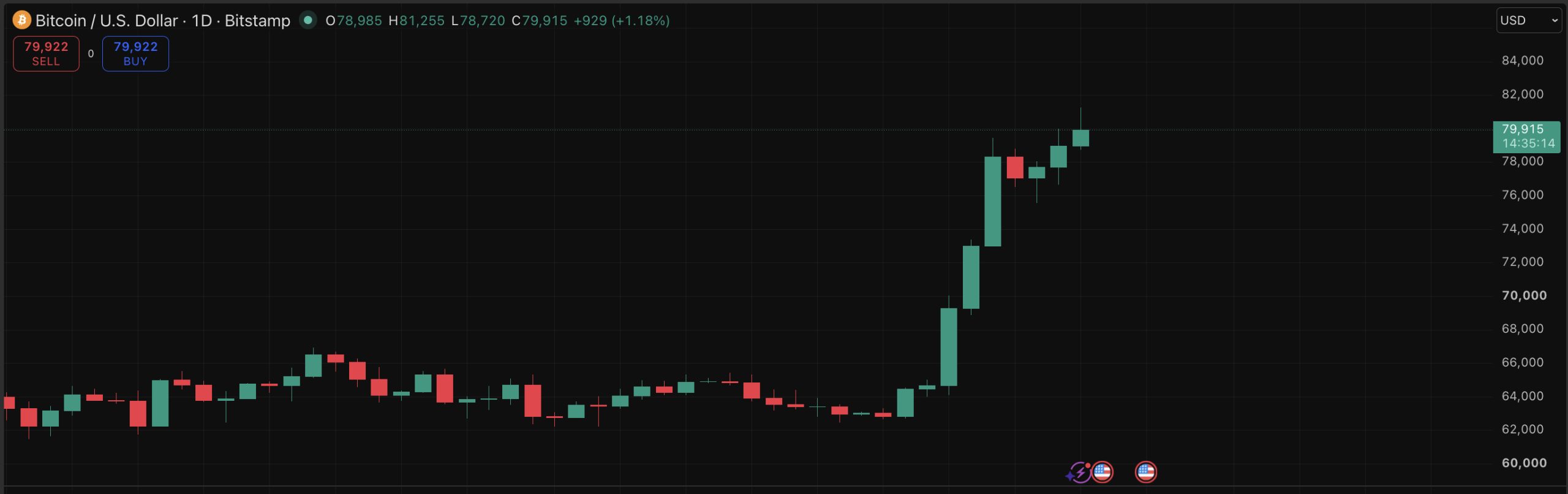
BTC USD, Tradingview
If Nvidia disappoints and yields stay elevated into the PCE report and Warsh’s Jackson Hole remarks, the same de-risking flows that hit chip stocks and the broader Nasdaq on August 24 would plausibly extend into Bitcoin, particularly if spot ETF demand cools alongside weaker tech sentiment.
Conversely, a dovish Warsh tone or a benign PCE print could ease the yield pressure driving all three markets, giving Bitcoin room to decouple from the tech-led selling even without any change in the underlying Iran risk.

Comments
Log in or sign up to join the conversation.