
The latest Decision Maker Panel, which surveys UK Chief Financial Officers (CFOs), is the latest indication that inflation is unlikely to take off in response to higher energy prices. We expect the Bank to keep rates on hold in June.
The latest Bank of England survey of UK corporates really questions the need to hike interest rates right now. Here's what it shows in four charts...
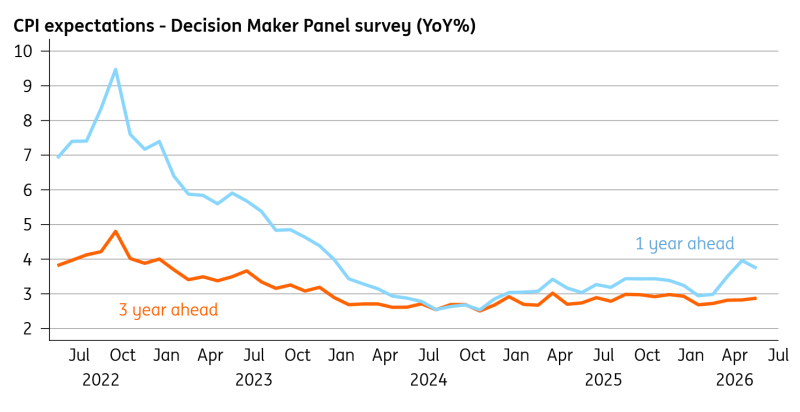
CPI expectations were down in May
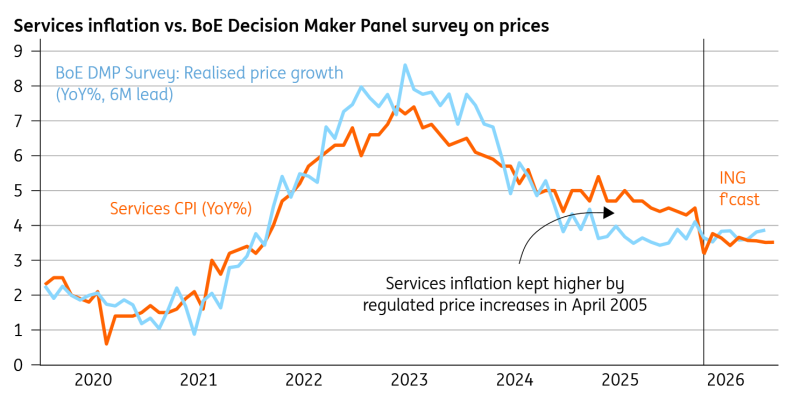
Realised price growth points to stable services inflation
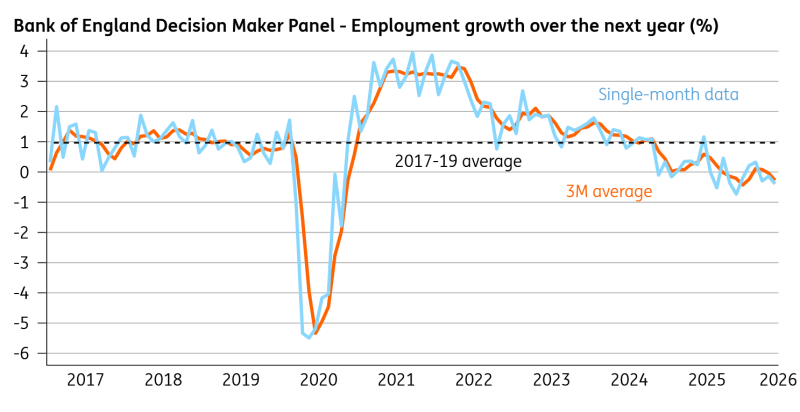
Employment growth is still negative according to firms
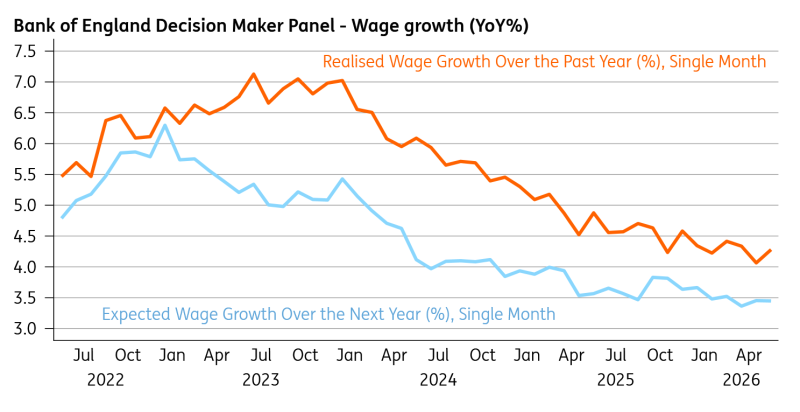
Expected wage growth isn't rising despite higher oil prices
In short, one-year-ahead CPI expectations are down, though that could be because inflation itself fell in April. And the Bank can take comfort from the fact that corporates aren't changing their assessment of where inflation will be in three years' time.
Ask the question slightly differently, and the survey shows firms aren't dramatically raising their assessment of how quickly they'll raise their own prices. "Expected price growth" is up to 4%, a bit higher than pre-war (though again down on April). It chimes with another part of the survey, which finds that 57% of firms reckon prices will be higher because of what energy is doing – but a greater proportion (68%) expect their profit margins to be lower.
It's a reminder that firms don't enjoy the pricing power they had in the aftermath of Covid-19 and during the last energy shock. The scope for higher oil prices to trigger so-called "second-round" effects on inflation is much more limited. And based on what firms are saying about their "realised" price decisions, we'd expect services inflation to stay below 4% this year.
That has implications for hiring and wages. The survey shows firms are still shedding workers, just as the official payrolls data has consistently shown over the past 12-18 months. Just 8% of companies report that it's "much harder" than usual to hire right now, compared to over 60% in 2022. The result is that expected pay growth has fallen since the war in Iran began and sits at a post-2022 low of 3.4%. The official data on wage growth has also sunk over recent months.
This all helps cement another "on hold" decision from the Bank of England later this month. We know officials put a lot of faith in this survey. And it also questions the need to hike interest rates in general. That said, a July hike is possible if energy flows through the Strait of Hormuz show little improvement by then – especially if prices (particularly for natural gas) start to take off in a more meaningful way.
Comments
Log in or sign up to join the conversation.