
· Target Date Funds (TDFs) maintain high risk allocations near retirement, with 85% in risky assets despite current stock market threats. Baby boomers in TDFs are in serious danger but won’t know it until the stock market crashes.
· TDFs rebalance by buying into weakness, which is the opposite of Portfolio Insurance. Buying into weakness buoys up the market.
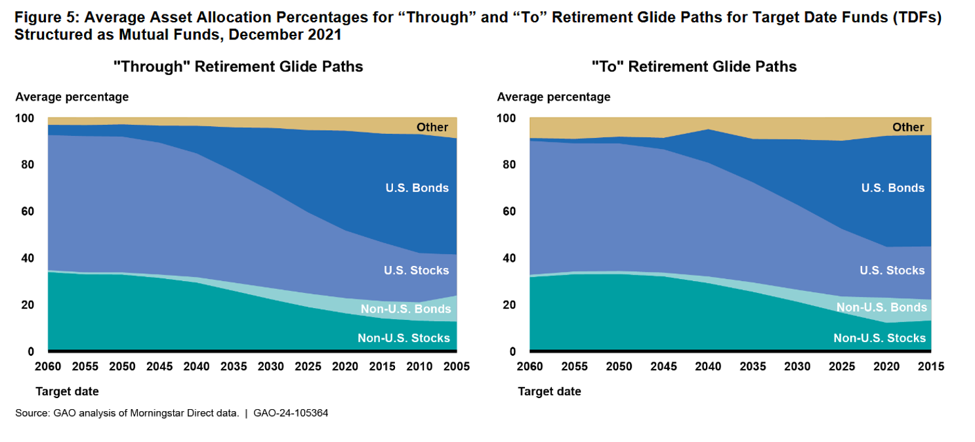
· Academic theory and current risk management argue for low risk near retirement, but TDFs do not align with these recommendations because they follow their risky glidepaths regardless of the economy.
· Baby boomers should exit their TDFs now because they are in the Retirement Risk Zone when losses can devastate rest of life.
Participants – especially baby boomers -- in target date funds (TDFs) are playing a dangerous game with their retirement savings, but they don’t know it. Despite participant beliefs to the contrary, they are taking a lot of risk as they approach retirement. Fortunately, risk has been rewarded for the past 18 years, but that will stop.
It will take a crash to shock people into reality, but then it will be too late.
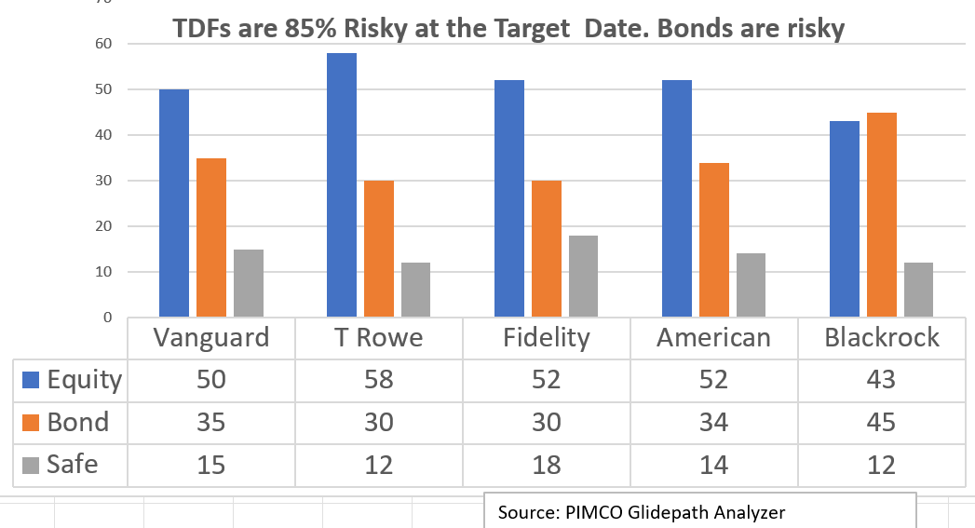
TDFs are designed to stay their course (glidepath) regardless of economic conditions and that might be okay if the course was safe, but it’s not. Most TDFs are way too risky for those near retirement, with 85% in risky assets – 55% equities plus 30% long-term bonds. This is the same mix that lost more than 30% in 2008,and it will be the mix that loses again when the stock market crashes.
The Flashing Red Stoplight is a set of current warning signs like all-time stock market highs, skyrocketing national debt, high consumer debt, inflation, wars, and troubling economic indicators like low consumer confidence. Investors face a difficult choice: ride the momentum or prepare for a potential pullback.
This choice has been made for millions of TDF investors. It’s to stay the course regardless. Dumb money? Let’s take a close look.
High risk and risky rebalancing
Regardless of stock market behavior, the leading TDFs are invested as follows at their target date:
Be aware that TDFs have to buy more stocks in declining stock markets in order to adhere to their glidepaths, and they need to sell stocks in rising markets. This is exactly the opposite of Portfolio Insurance that gained popularity in the 1980s; sometimes called “dynamic hedging”, it sold stocks in declining markets to minimize losses.
TDF rebalancing stabilizes the stock market by buying into weakness regardless of the economy. TDFs are part of the reason that the stock market has consistently risen over the past 18 years. It’s more than just coincidental that TDFs were jump started for 401(k) plans by the Pension Protection Act of 2006, 20 years ago.
But trading is just part of the problem. The risk target near retirement is higher than theory and higher than current risk management recommendations.
Recommended risk near retirement: Theory
The problem with risk in TDFs is nuanced because their glidepaths do in fact reduce risk through time, but this reduction is far from adequate – and not even close to the academic theory near retirement that they say they follow.
Here are the main academic articles that integrate human capital with financial capital to establish lifetime investing paths. Because financial capital grows as human capital fades, financial capital needs to become safer through time to preserve overall risk, taking the view that the risk of human capital is fairly constant through time.
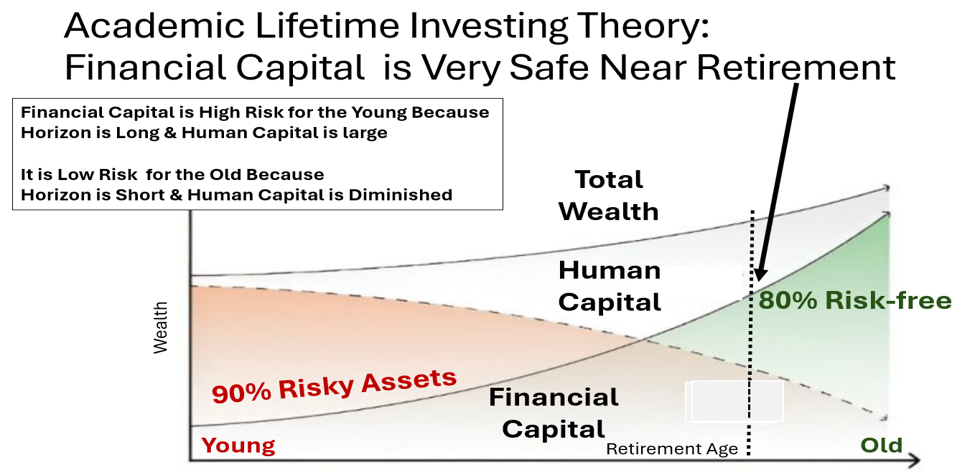
Theory is 80% risk-free near retirement while practice is 85% risky – a huge disparity.
Recommended risk near retirement: Current Risk Management
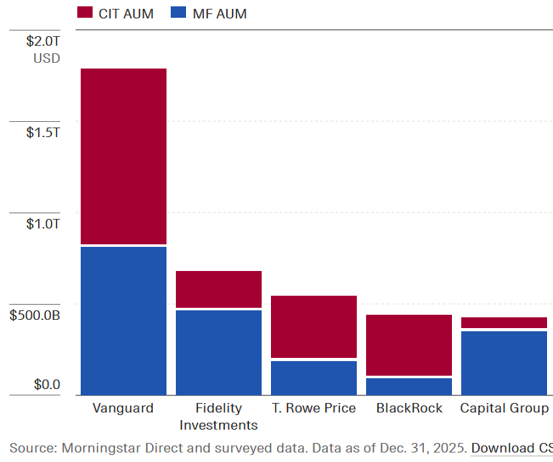
With $2 Trillion under management in TDFs, Vanguard is the King with 40% of all TDF assets – Vanguard is an oligarch. This highly respected asset manager is currently recommending a 30/70 stock/bond allocation, much safer than the traditional 60/40 mix. Vanguard is concerned about current market conditions, but its TDFs remain 55/35/15 stocks/bonds/cash near retirement. (see graph above). Note the inconsistency. Safety is recommended unless you’re in a TDF.
Conclusion
When (not if) the stock market crashes, all investors will suffer, but those near retirement will suffer most because they are in the Retirement Risk Zone when Sequence of Return Risk devastates lives that are too short to recover. Baby boomers are in the Retirement Risk Zone. They are not protected in TDFs, so they need to get out NOW, period.



Comments
Log in or sign up to join the conversation.