

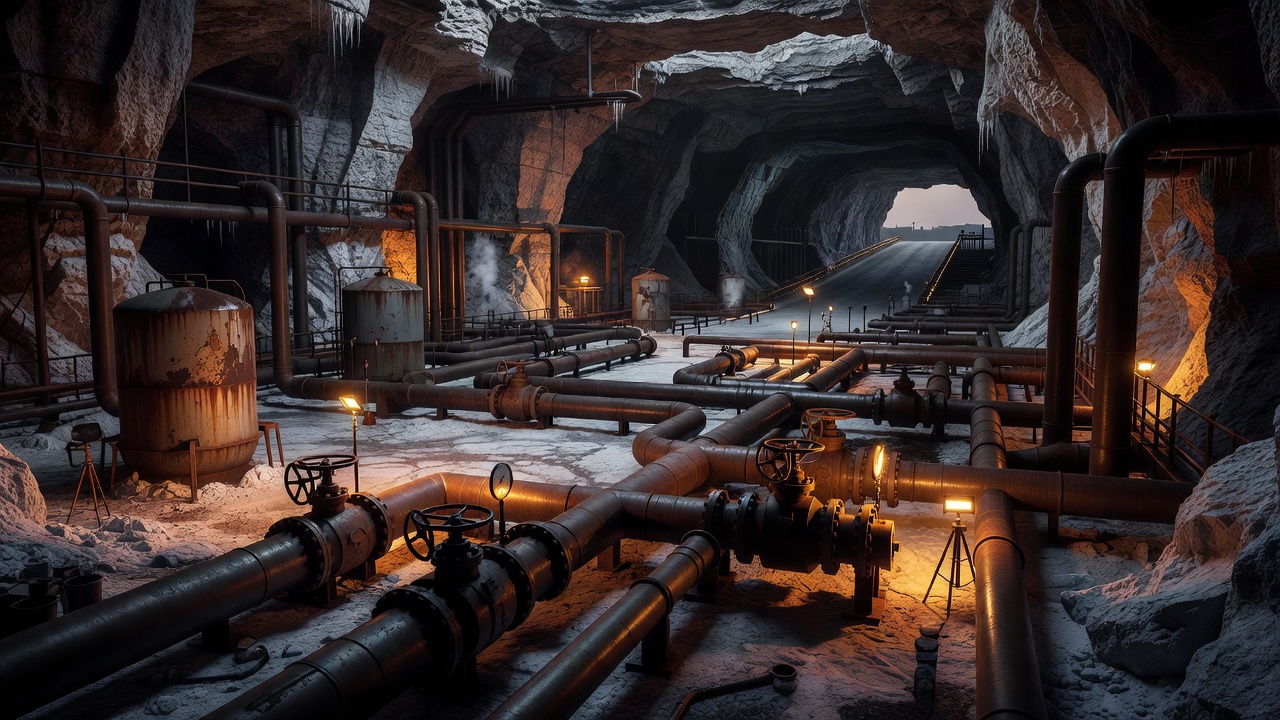
Washington still talks about the Strategic Petroleum Reserve like it is a full basement freezer.
The weekly tank reading says otherwise. As of the week ending October 9, the U.S. Strategic Petroleum Reserve held about 283 million barrels of crude. That is the lowest level since the early 1980s fill, roughly 40% of authorized storage, and more than 60% below the old peak near 727 million barrels.
My take is simple. The emergency vault is no longer deep insurance. It is a thin backstop still being offered into a live supply crisis, while oil sits back near war prices and the old dollar-for-oil security bargain frays at the edges. That is the map I care about for energy stocks and for anyone who buys gallons, not cargoes.
The vault got spent for a reason
This is not a mysterious leak.
After the U.S.-Iran fight shut down normal tanker traffic through the Strait of Hormuz in late February, Washington lined up with the International Energy Agency on a giant emergency action. The United States committed about 172 million barrels as its share of a roughly 400 million barrel global release. Measured draws since then have already cut the SPR by on the order of 130 million-plus barrels from the mid-415 million range it held before the war stretch.
The tool of choice has been exchanges. Companies borrow crude now and promise to return barrels later, often with a premium. On paper that sounds clever. In the tank it still leaves fewer emergency barrels today.
Friday's news fit the pattern. The Department of Energy put out a request for proposals to exchange up to another 17 million barrels, part of the last batch from that spring commitment. Take the full amount before repayments show up and you are staring at something like the mid-260s, right in the zone operators treat as a practical floor for managing salt caverns. Commercial tanks are not a free substitute either. Private inventories have been drawing while Gulf production took hurricane hits and refiners ran harder.
Why crude still collects rent
Brent crude settled near $110 a barrel on Friday. West Texas Intermediate cleared about $101. Those are not "peace is back" prices.
Hormuz still sits under navy escorts, ship-to-ship workarounds, insurance fear, and attack risk. Export volumes have clawed back at times on bypass routes. Markets still reprice every missile rumor aimed at ports and pipelines. Strategic releases can soften a spike. They cannot invent a new oil field.
Aramco already told the world the commercial inventory cushion is worn down and that a full rebuild can take years after the strait fully reopens. The SPR story is the American version of the same problem. We spent the public tank to buy time. Time is not the same thing as spare barrels sitting ready for the next shock.
The petrodollar is the quiet second front
For fifty years the core bargain was blunt. Gulf oil got priced and cleared mostly in dollars. Oil money recycled into U.S. assets. Washington supplied security.
That system is under stress. The Iran war has strained the security side of the deal. Gulf states are talking more openly with other partners. China has spent years building yuan settlement paths, swaps, and payment rails for oil buyers who want options outside the pure dollar loop. None of that means the dollar dies next Tuesday. It does mean the automatic demand for dollars and Treasuries that used to ride every barrel is less automatic than the textbooks still claim.
When oil stays expensive and the old recycling machine gets noisier, hard cash flow from real energy production matters more than soft promises about emergency stockpiles.
Who actually benefits while the buffer is thin
I am not handing out tickets. I am naming the seats on the right side of a thin-SPR, expensive-oil map.
Exxon Mobil (XOM) and Chevron (CVX) are the plain English core of the energy fund. They produce at scale on the safer side of the Gulf chokepoint risk and throw off cash when crude holds up.
ConocoPhillips (COP) is the cleaner upstream coupon. More torque to the barrel when the market is short inventory and long geopolitics.
Valero (VLO) and Marathon Petroleum (MPC) matter when the pain shows up in products. War markets scramble diesel and gasoline spreads, not only crude. Complex U.S. refiners with domestic feedstock can make serious money while the world fights over molecules.
What would change my mind is sustained Hormuz normalization, real SPR repayments that stick, and crude back in a pre-war comfort zone without another inventory raid. Until then, treat every "we are releasing more oil" headline as proof the cushion is still doing emergency work.
Bottom Line
America's strategic oil vault is near a four-decade low, still being offered into a Hormuz-era shortage, while crude holds near $100-plus and the old petrodollar security bargain gets louder cracks. Releases buy time. They do not rebuild the tank. The energy story that survives the next headline is U.S. production and refining cash flow sitting on secure barrels while the public insurance policy runs thin.



Comments
Log in or sign up to join the conversation.