

Having kids changes the way you think about getting sick.
Before my daughters were born, a fever or an infection didn’t seem like a big deal. At worst, I went to the doctor, got some medicine and expected to feel better in a few days.
But when it’s your child who’s sick, it feels different.
Suddenly, you want to know exactly what’s wrong. You want to know how you’re going to fix it. And most of all, you want to hear that everything is going to be OK.
Fortunately, modern medicine can usually give parents that reassurance.
But there’s a problem that’s been getting worse in hospitals and doctors’ offices around the world.
Some of the medicines we’ve relied on for generations are starting to lose their ability to fight bacterial infections.
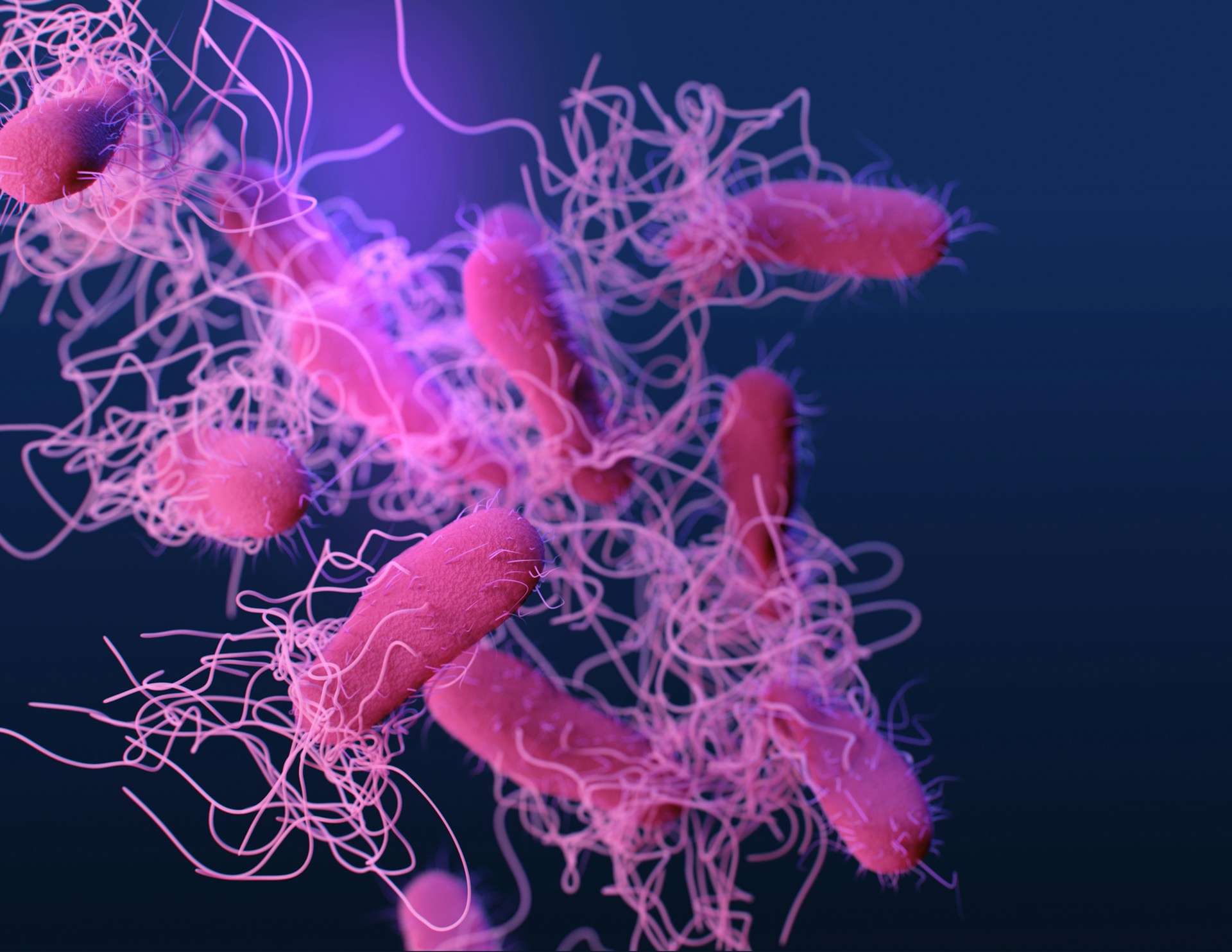
Bacteria are evolving. And our antibiotics aren’t keeping up.
But artificial intelligence might have found a new way to fight back.
A New Kind of Antibiotic
Antibiotics are one of the great inventions of modern medicine.
Before they became widely available, something as simple as an infected cut could kill you.
Today, we take these drugs for granted. They treat everything from urinary tract infections to pneumonia.
But antibiotics have a weakness.
Bacteria evolve.
When an antibiotic kills most of the bacteria causing an infection, a few may survive because of genetic differences that make the drug less effective against them.
Those survivors reproduce. And over time, this can create strains the original antibiotic can no longer kill.
That’s antibiotic resistance.
Scientists can respond by developing new antibiotics. But eventually, bacteria can evolve around those too.
So researchers at Stanford decided to try something different.
Instead of designing another drug that attacks bacteria in the usual way, they turned to a defense system that’s already inside your body.
Peptides.
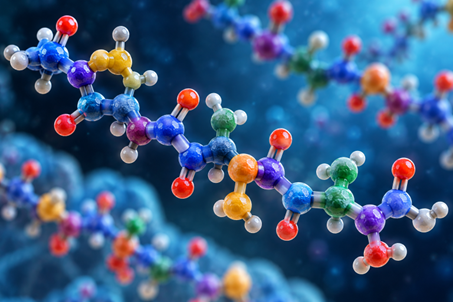
These are small molecules made from amino acids, the same building blocks your body uses to make proteins.
Some peptides are remarkably good at killing bacteria. And they do it in a pretty brutal way.
Many traditional antibiotics work by interfering with something the bacteria need to survive. They might block an important protein or prevent the bacteria from building their cell walls.
Peptides can attack more directly.
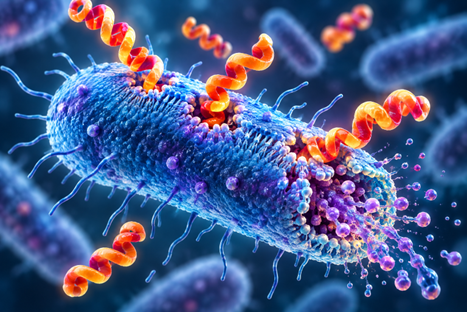
They can damage the membrane surrounding a bacterium, essentially punching holes in its outer layer until the cell falls apart.
That can make it harder for bacteria to fight back.
A bacterium might evolve a way around a drug that blocks one particular chemical pathway. But changing the basic structure of its outer membrane is a much bigger challenge.
Unfortunately, peptides have problems of their own.
They’re expensive to manufacture and tend to break down quickly.
So Stanford researchers went looking for something that could kill bacteria in a similar way without those drawbacks.
And they turned to AI for help.
The researchers focused on polymers, which are large molecules made from smaller pieces linked together in a chain.
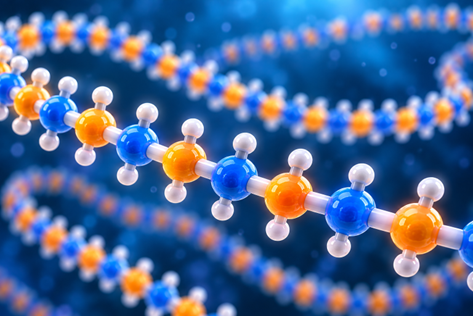
Plastic is a polymer, and so is nylon.
Polymers can be built in an enormous number of ways. Change the pieces or their arrangement, and you can create a different molecule.
The Stanford team created a virtual library containing 1.7 million possible polymers.
But testing all of them in a laboratory would be practically impossible. Even if researchers could somehow test 100 different polymers every day, it would take more than 46 years to get through the entire list.
So they trained AI to help narrow it down.
There was just one problem.
AI learns from data. And while scientists have lots of information about bacteria-killing peptides, there isn’t nearly as much data about bacteria-killing polymers.
But the researchers found a clever workaround.
They first taught the AI what makes certain peptides effective against bacteria. Then they asked it to look for those same traits among the 1.7 million polymers.
Think of it like teaching someone what makes a good running shoe, then asking them to search a warehouse for shoes with similar characteristics.
They don’t need to look the same. They just need to work the same way.
And the researchers didn’t simply trust the AI’s first answers. They tested polymers the AI models disagreed about, then fed the results back into the system so it could make better predictions.
Eventually, the AI narrowed 1.7 million possibilities down to just 10 candidates. Scientists then made all 10 and tested them against E. coli.
And every single one performed better than expected.
In fact, Stanford’s researchers described the 10 candidates as among the most potent antimicrobial polymers reported to date.
And thanks to AI, they didn’t have to physically make and test 1.7 million possibilities to find the 10 that worked.
Here’s My Take
Last Friday, I showed you how AI went exploring through DNA and discovered something scientists didn’t know existed. Then I showed you how AI helped design a new medicine that might affect how we age.
Now we’re seeing it search through 1.7 million possibilities to find potential new weapons against antibiotic-resistant bacteria.
That’s an exciting change in how science gets done.
Up until now, a big limit to scientific discovery has been how many ideas we could reasonably test.
But AI is starting to remove that constraint.
And as it keeps improving, some of AI’s most valuable discoveries might come from places we never had enough time to look.

Comments
Log in or sign up to join the conversation.