


THE ECHOES OF DOT-COM
The following headline caught our collective attention. In short, you’ll soon be able to trade Nasdaq stocks for 23 hours a day, 5 days a week.

The pointy shoes say this is to “broaden investor access and expand wealth-building opportunities” for folks.
Come to think of it, there’s a reason casinos are open 24 hours a day (and it’s not to give every gambler a fair shot at “wealth-building opportunities” at the slot machines). Rather, because the house does better the longer you’re allowed to sit at the table.
If you were around during the dot-com bubble, you might remember virtually identical headlines…
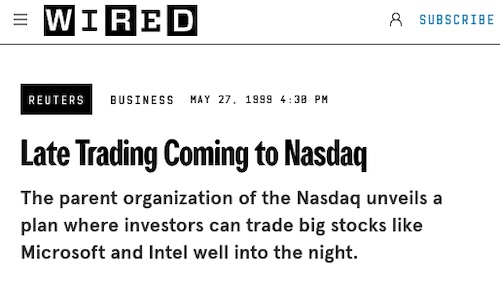
Note the date (May 1999). The Nasdaq peaked less than a year later and proceeded to drop nearly 80%.
Are we saying we’re in store for an 80% drop in growth stocks? No. But exchanges seem to roll out these retail-courting, “democratising” features at a very particular point in the cycle — right when the majority is already fully invested into the story… and the only way it keeps running is if new money keeps showing up.
Don’t hold your breath waiting for round-the-clock trading for gold miners, offshore drilling stocks, or other out-of-favor assets.
AI: IT’S STIFF DRINK TIME!
For some more substance (backed with charts and numbers), our friend George Gammon recorded an entire video taking apart the entire AI bubble… and the systemic risk that comes with Big Tech companies now spending trillions (yes, trillions) of dollars — much of it conveniently kept off their balance sheets — to try and somehow make the entire thing make sense.
George likens these companies to someone earning $500,000/year but spending like a drunken sailor (and burning through savings), while at the same time taking on a new 20-year, $10,000/month apartment lease they haven’t even started paying for (under the guise of “investing in themselves”).
It’s exactly the kind of stuff you see in the late stages of a credit cycle.
Pour yourself a stiff drink, and watch the entire video here.
TICKING THE BOX
On the back of the private equity deals we’ve been running through the Mavericks Project (think undervalued prime farmland, real estate in one of the biggest — and fastest growing — oil and gas fields on the planet, etc.), we’ve been getting a lot of questions from readers about the whole “accredited investor” requirement, which prompted a “rant” from our very own Lucas that we thought was worth sharing (though it goes well beyond just accredited investor rules).
Good question… hard to answer. Will try to give principles.
The issue is “legibility”.
You want to own things without the government knowing. It is your legal right, and gives you optionality in the event the govt oversteps to the point of you being willing to “break the law” in the future (in the event the law becomes immoral).
If you’re in Australia, you can buy gold with cash from a dealer without the need for providing ID let alone KYC etc., if the transaction is under $5k.
Most dealers will let you walk in and out as many times as you like and treat you as a new customer for every anonymous transaction, because they understand this well.
That’s something practical, though not the same thing as what’s discussed on the vid in terms of an investment for cashflows etc
If you want to hold things offshore, then you’d probably have to physically go offshore.
Don’t use an Australian credit card to buy and vault gold offshore, because of legibility again – the point of risk in our brave new world is the transaction, not where the assets happen to be.
Finally; the rules about accredited investors are there to protect you. Any business that you are engaging with will likely not care whether or not you are an “accredited investor”, they will just care that you ticked the box so they don’t get in trouble. from regulators if/when they get audited.
Likewise, the regulators are not concerned with individuals claiming they are accredited investors, they’re concern is with companies taking advantage of “non accredited” individuals.
At Glenorchy Capital, for instance, we find it absurd that someone should have to tell us their income or net worth. What business is it of ours? We accept whatever they tell us, because we have the box ticked & are therefore compliant.
Stepping back, why should anyone not be allowed to invest in something based on an arbitrary number calculated by some govt department?
The whole thing is preposterous.
Scams exist – from the phone call you get on a friday night from a basement in Bangladesh to Bernie fricking Madoff to SpaceX IPO.
I am now ranting.
The point is, it’s going to be increasingly difficult to take measures to protect oneself / family AND be 100% above board.
It’s the nature of the beast. Ask anyone from a country where an economy has collapsed. The citizenry do whatever they have to to get by, they don’t care about “rules” because they know that for the most part, they are there solely to enrich the state (or its politicians at least).
You can take measures today, and you should take advantage of it while the windows like investing offshore, or the gold bought in cash example, still remain available.
WEEKLY HUMOUR
A few reader submissions to close off this issue on a lighter note. First, a Venn diagram from Insider member Evan. What a time to be alive!

And this one from member boqurant:

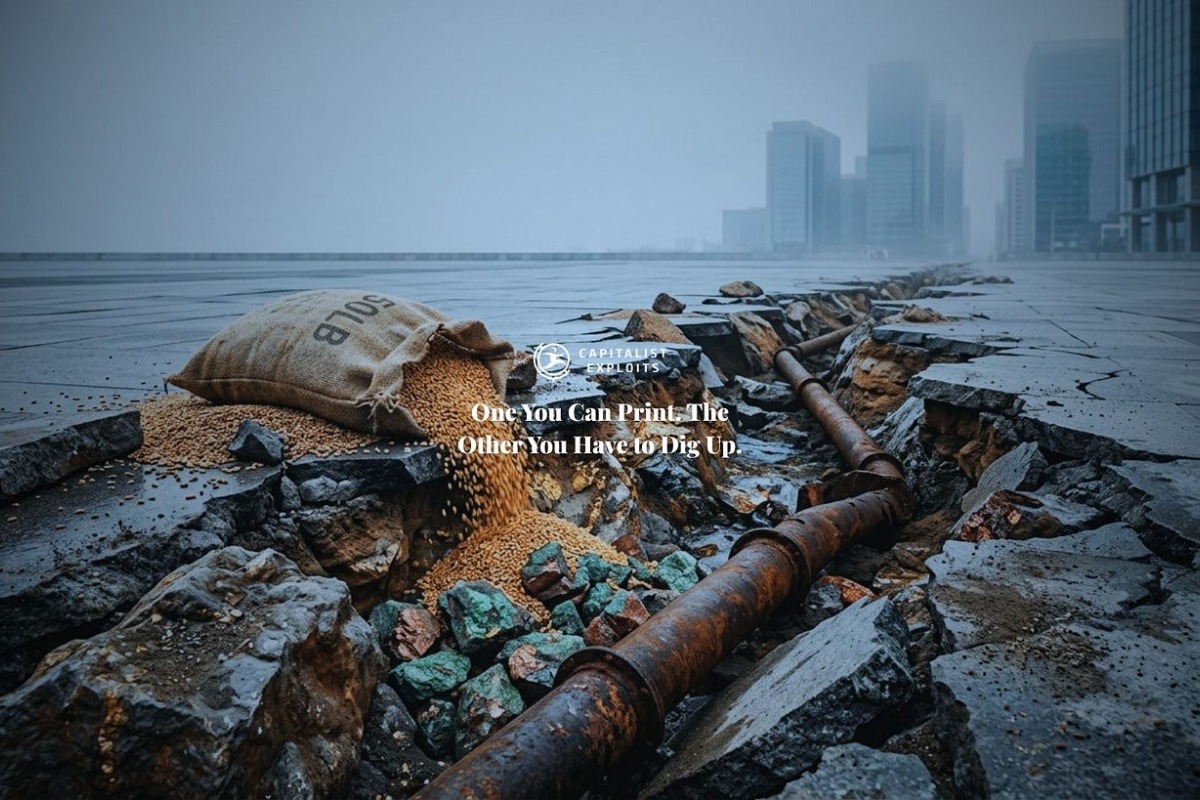
Turns out, the printing shop in question is capable of handling large volume printing jobs… and in fact excels at them.
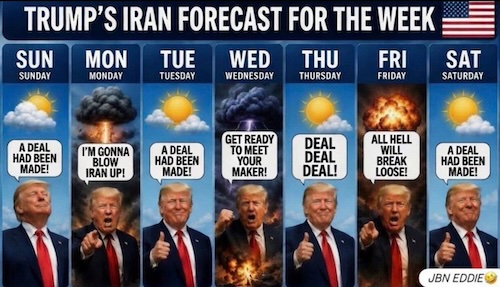
And last one, courtesy of Dancebuff. One might be inclined to say there are only two certainties in life: that death comes for us all, and that a new Iran deal will be struck come Sunday.

Comments
Log in or sign up to join the conversation.