

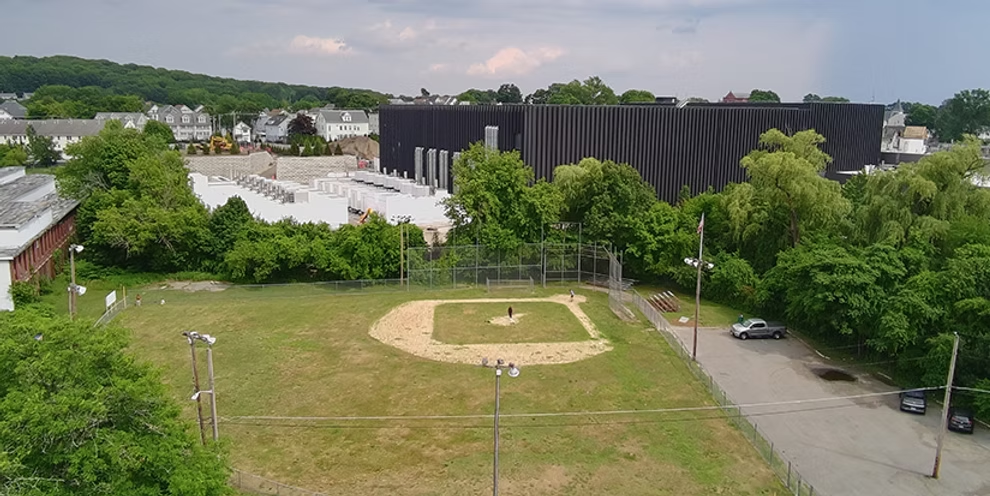
Artificial intelligence is the topic of the day. It seems everyone has an opinion but not much actual factual knowledge. I’ve been dragging emails and research into my AI folder for a very long time. Today (and next week) I review those emails, as we are going to look at the reasons there is so much opposition to AI data centers. Some of it is because of the hype that the AI hyperscalers offer in their fantastic views of the future. They breathlessly tell us how much AI is going to be doing for us and to us. They see a future where AI and robots do everything. (I’m looking at you, Sam Altman, Peter Diamandis and Elon Musk.) “We are moving to a post-work future.” They see the world evolving into some Star Trek-like world of abundance, where whatever work we do is because we want to do it.
Then there are the naysayers who believe that we are moving into a Blade Runner existence, where a few elite live incredible lives and the rest of us are scraping by. The pessimistic case about any new technology is always the easiest to make and it’s almost always wrong. But it shapes opinion.
In my opinion, neither scenario is realistic. One of our essential human qualities is our adaptability. AI is just another tool, like electricity or cars or the Internet. It’s up to us to decide what we do with it. AI is the platform, not the artist.
All that being said, there is an enormous amount of angst. This week we will look at the actual pushback on the infrastructure surrounding AI, and next week we will look at whether AI in fact is going to kill jobs or create jobs (Hint: it will do both. Just like steam engines and automobiles.)
Here’s the problem. Seventy-one percent of Americans say they oppose a new data center being built anywhere near them. That’s a supermajority, and it now runs higher than the share of Americans who oppose a nuclear plant in their backyard. If you have followed my writing for any length of time, you know I am generally allergic to consensus opinions, especially ones formed faster than the facts that are supposed to support them. So, let's look at what is driving that 71%, because when I dug into the underlying data, I found a gap between the sentiment and the substance that is almost as wide as the "power gap" I'm about to show you.
The two objections I read most often, data centers are draining our water supplies dry, and data centers are going to wreck the power grid and spike everyone's electric bill, turn out to be a mix of real-but-manageable engineering problems and outright misinformation. Let's take them one at a time, and then next week we'll tackle the third objection, the one that scares people most: that AI and the data centers powering it are coming for their jobs.
The Water Math Doesn't Support the Panic
Start with water, because it's the objection I see repeated most confidently and understood least well.
The best current estimate is that U.S. data centers directly consumed roughly 17 billion gallons of water on-site in 2023 for cooling. Add the indirect water used to generate the electricity that powers them, power plants are themselves thirsty, particularly thermal ones, and you get to a total footprint of somewhere around 228 billion gallons a year. That sounds like a lot, doesn’t it?
Now compare that to golf. America's golf courses consume something like 425 to 493 billion gallons of irrigation water every year, depending on whose evaporation assumptions you use. Run the numbers every way analysts have tried — counting only direct water, or including the water embedded in the electricity each industry consumes — and golf comes out using anywhere from 24 to over 100 times more water than data centers, depending on the framing. I don't say this to pick on golf, which I enjoy as much as the next person. I say it because a hobby practiced at roughly 16,000 courses across the country, one almost nobody is protesting at the county zoning board, uses dramatically more water than the industry currently at the center of every "water crisis" op-ed.
And golf itself is a rounding error next to irrigated agriculture, which consumes something on the order of 73 billion gallons a day, 27 trillion gallons a year, across the United States. Data centers, at the highest estimate of 228 billion gallons annually, amount to well under 1% of that.
There's also a useful way to think about value per gallon. By one estimate, data centers generate roughly 92 cents of economic output for every gallon of water consumed, versus roughly 8 cents for golf — better than an 11-to-1 advantage. I'd stack up a lot of American industries against that ratio.
None of this means water use is irrelevant, or that every data center is a good neighbor on this score — some, particularly in drought-stressed regions like the Southwest, deserve real scrutiny about site selection and sourcing. But the technology is also moving fast in the right direction. Direct-to-chip liquid cooling (coming soon to a data center near you) can cut a facility's water needs by up to 95% compared to older evaporative systems. Immersion cooling — submerging servers in a non-conductive fluid — eliminates evaporative water loss almost entirely. And a growing number of new builds use closed-loop systems that recycle the same water indefinitely rather than continuously drawing fresh supply. The industry most likely to fix its own water footprint quickly is one with $50 billion facilities and shareholders who read utility bills. If you want to worry about American water use, I would point you toward almonds, alfalfa, and fairways long before I'd point you toward server farms.
Sidebar: large corporate California farmers (including George Soros) grow alfalfa which is extraordinarily water intensive. They then put that alfalfa into otherwise empty containers and ship them back to China, where China uses it to feed their cattle. While exact figures will vary by year and source, estimates suggest California ships 70-100 billion gallons of water per year in the form of alfalfa. This is enough to supply a year’s water for about a million households. That is several times the direct use of AI data centers.
Don’t get me started on almonds. A single almond takes 1.1 gallons to produce. The next time you snack on almonds realize you are consuming 20 gallons of water. California uses over 1.6 Trillion gallons of water annually to grow almonds. That is 13% of California’s water usage. A typical airline first-class cabin will use 320 gallons of water or more serving almonds. Not to mention the other nuts. Literally, cry me a river about data centers’ usage of water.
Technology is fixing the data center water usage. It is not fixing almonds or alfalfa or any of the other things we want and use.
The Grid Problem Is Real — But It Isn't What You've Been Told
The power story is more nuanced, and I want to give the skeptics their due here, because they're not entirely wrong.
It is true that data center electricity demand is growing at a pace the American grid was not built to handle. The Electric Power Research Institute (EPRI) projects data centers could rise from about 4% of total U.S. electricity consumption in 2023 to as much as 20% by 2035. It is also true that connecting new large loads to the grid has become painfully slow — what took about 15 months two decades ago can now mean a multi-year wait, and in parts of Texas, ERCOT's (the Electricity Reliability Council of Texas) own interconnection queue, some new requests aren't expected to get power until 2031 or 2032. As one energy analyst put it, "poles and wires have not become an exponential technology" — unlike chips, the physical grid doesn't get cheaper and faster on a predictable curve. That's the legitimate and very relevant core of the "grid" objection.
Where the popular narrative goes wrong is in assuming the industry is simply going to grab power off the shared grid and let residential ratepayers eat the consequences, with no adaptation. That's not what's happening on the ground.
First, a large and growing share of new data center capacity isn't drawing from the public grid at all. Developers are increasingly generating power behind the meter, on-site, precisely to route around interconnection queues, which can be years. States like Florida and Georgia currently have more grid capacity than people assume, and Texas has been able to supply grid power to data centers even as it builds out enormous behind-the-meter generation in parallel. Where new gas turbines are unavailable — and large 400-megawatt turbines are essentially sold out seven years into the future — operators are turning to repurposed jet engines (Boom Supersonic, the supersonic aviation company, now builds turbines for data centers) and Caterpillar (CAT) reciprocating engines, the same technology used in backup generators, just deployed at scale.
Second, utilities and grid operators are actively redesigning the rules to speed up connection rather than slow it down. ERCOT passed a rule in June 2026 allowing data centers to accept "interruptible" status, agreeing to be curtailed when the grid is stressed, in exchange for a dramatically faster interconnection timeline, cutting the wait from five-to-seven years down to twelve-to-eighteen months. FERC (Federal Energy Regulatory Commission) has sent letters encouraging six other regional grids to adopt similar rules. This is exactly the kind of market-based adaptation you'd expect capital to produce when it runs into a bottleneck, and tens of gigawatts of projects are already lining up to use it.
Third, and this is the part that gets lost in most of the coverage, nuclear power is experiencing a genuine renaissance because of data center demand, not despite it. Microsoft (MSFT) has already signed a power purchase agreement tied to restarting a reactor at Three Mile Island. France, for comparison, generates about 80% of its electricity from nuclear and exports the surplus to the rest of Europe — proof the model works at scale when a country commits to it. (The US is woefully behind.)
Small modular reactors and fully factory-built reactors are still a few years from commercial scale, but as one energy forecaster put it, "AI data centers might be the best thing that's ever happened to the nuclear industry" — because for the first time in decades, there is a large, creditworthy buyer willing to sign long-term contracts for firm, round-the-clock, carbon-free power.
But Will It Raise My Electric Bill?
This is the question underneath the question, and it deserves a straight answer, not a talking point from either side. The answer is nuanced and depends on the locality.
Senator Elizabeth Warren made headlines this year claiming residential electricity bills near data centers had risen "as much as 267%" over five years. PolitiFact rated that claim Mostly False: the 267% figure was a cherry-picked wholesale price, not what anyone actually pays, and wholesale costs make up only 30–50% of a typical residential bill, the rest is transmission, distribution, and taxes, which don't move with data center demand. Nationally, residential electricity prices did rise about 42% over five years (think rising oil and natural gas prices), and in some data-center-heavy regions, Washington, D.C. (94%), Maryland (74%), the increase was steeper.
But a rigorous 2026 study from the energy consultancy E3 found something that should surprise anyone who's absorbed the "data centers are hiking your bill" narrative uncritically: states with the largest data center load growth, like Texas and Virginia, saw the smallest electricity rate increases, while states with declining load growth, like California and New York, saw the largest.
That’s economics 101. As noted above, the infrastructure to deliver electricity is a huge sunk capital cost. The first watt of electricity costs a great deal to deliver. Spread that over gigawatts and the price per watt falls. If some states build huge power infrastructure to deliver electricity, and then demand falls because your population and business decreases, you still have to charge for that infrastructure to deliver the electricity. Yes, rising demand can, and often will, also increase cost in the short term, but over time? Not so much. One of the main culprits is inflation, which is not a data center problem.
In the mid-Atlantic PJM market, E3 attributed only about half of recent capacity price increases to load growth at all — the rest came from power plant retirements, market design changes, and supply-side constraints that predate the AI boom. And in Virginia — the current data center capital of the world (soon to be Texas), with more capacity than any other state — E3 found no evidence of a historical cost shift from data centers onto residential customers. If anything, the analysis found individual large data center accounts generating millions of dollars in net surplus revenue for their utilities, money that helps hold down costs for everyone else on the system.
None of that means every data center deal is priced fairly, or that every state's rate design gets the incentives right, some clearly don't, and that's a legitimate area for regulators and legislators to keep pushing on. But the evidence does not support the blanket claim that data centers are quietly picking the pockets of ordinary electricity customers nationwide. The states building the most data centers are, on average, seeing the least rate pain, the opposite of what the popular narrative would predict.
The AI Bottom Line
The grid genuinely needs to grow faster than American infrastructure has grown in decades, and that is a real, difficult, and worthwhile policy challenge, one I'd rather see us solve with faster permitting, smarter interconnection rules, and more nuclear than with a moratorium on the industry that's currently the largest source of private capital investment in the country, not to mention the driving technology of the future.
But "data centers are draining the aquifers and blowing up your power bill" is not what the data shows. On water, they're a rounding error next to golf and agriculture, and the technology is getting more efficient by the year. On power, the bottleneck is real, but it's the poles and permitting, not some unsolvable physical limit — and the regions leaning hardest into data centers are, so far, not the ones paying the highest price for it.
Next week, in Part 2, we'll take on the objection that worries people most: jobs. Is AI actually taking them, is it creating them, and what does the data, as opposed to the headlines, actually say?
At the end of the letter I provide sources for some of the data above.
Sources: EPRI, "Powering Intelligence" (2026); Mark P. Mills, "The Rise of AI: A Reality Check on Energy and Economic Impacts," National Center for Energy Analytics (November 2025); Ramez Naam via Peter Diamandis, "Moonshots" newsletter (2026); water-use analysis via napkinquest/AKCP data center water footprint research (2026); E3, "Understanding the Drivers of Rising Electricity Rates and the Role of Data Centers" (2026); PolitiFact fact-check of Sen. Elizabeth Warren (June 2026); Gallup; Pew Research Center.


Comments
Log in or sign up to join the conversation.