

In recent years, Minneapolis enacted a set of reforms making it easier to build multifamily housing. Tim Peach directed me to a blog post written by Matthew Maltman, which suggests the effects have been fairly dramatic:
(Click on image to enlarge)
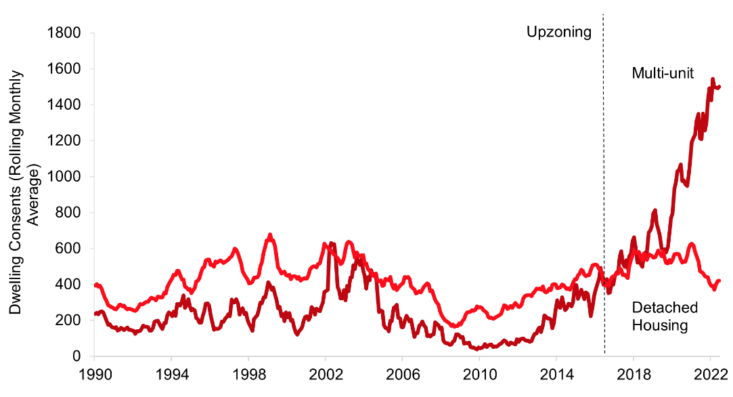
Scott Alexander recently suggested that building more housing might actually boost housing prices, by making cities more dense. In a previous post, I used cross sectional evidence to cast doubt on that claim. Maltman’s post provides time series evidence that rents in Minneapolis have risen by substantially less than in other midwestern cities:
(Click on image to enlarge)
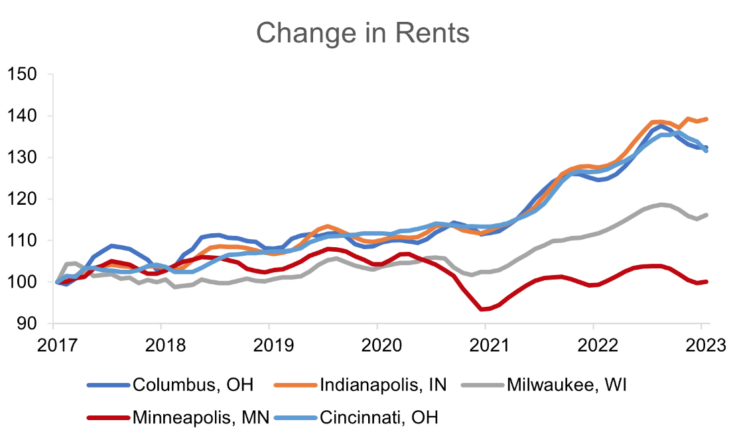
Another graph shows declining homelessness in Minneapolis, at a time homelessness was rising in comparable cities.
In contrast, housing construction plunged soon after St. Paul voters enacted rent control in 2021:
When it comes to construction of duplexes, triplexes and other forms of multi-family housing, St. Paul’s building permits plummeted by 48% last year [2022] compared with the year before, according to HUD, the federal department of Housing and Urban Development.
Scott Alexander is correct that bigger cities are often more expensive. (Not always; compare Houston and Austin.) When a city grows rapidly because of a rapid increase in the number of people who wish to live there, housing costs often rise. Austin is a good example. But when the housing stock rises due to regulatory changes making it easier to build, housing prices tend to fall.
More By This Author:
The Actual Phillips Curve
The Future Is 1962
Cochrane On Nominal GDP Targeting



Comments
Log in or sign up to join the conversation.