

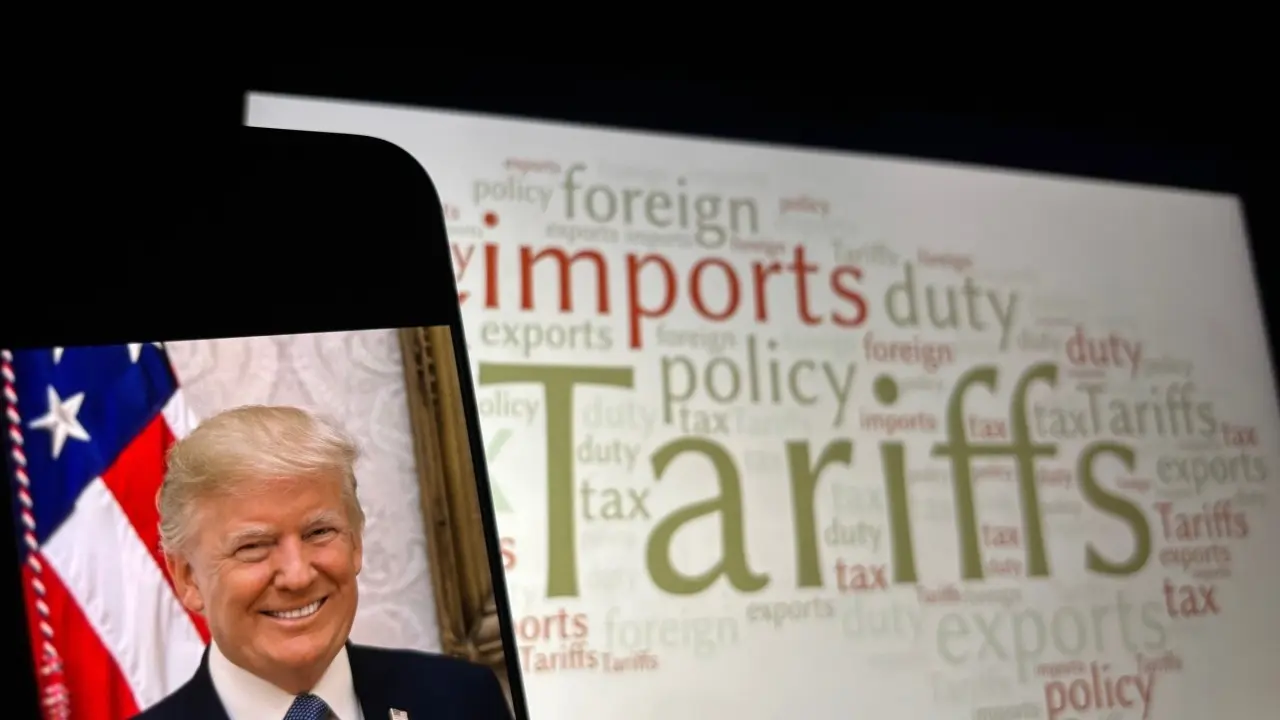
Just when it seemed the summer break was within reach, a new round of trade tensions is already looming. August is increasingly shaping up to be another summer month dominated by trade disputes and tariff headlines
Trade tensions are back. While markets have been focusing on the war in the Middle East and the renewed rise in energy prices, the last two weeks have again been very busy on trade and tariffs, even by the standards of last year. Here is the latest state of play:
Canada gets hit hardest. On 20 July, US President Donald Trump signed three proclamations imposing 50% tariffs on Canadian goods under Section 338, citing discriminatory treatment of US exports, effective 19 August, with carve-outs for energy, potash, critical minerals, fish, and goods already under Section 232. Section 338 (which dates from the Smoot-Hawley era in the 1930s) is a new legal frontier and, so far, has been untested in court.
The new tariffs on Canadian imports are another sign that the North American trade pact is now formally on its way out. Trump's decision not to extend the United States-Mexico-Canada Agreement on 1 July triggered a 10-year wind-down process. That mechanism is doing exactly what it was designed to do: create negotiating leverage. This week, US and Mexican officials launched a third round of bilateral talks in Mexico City, focusing on technical issues related to steel, aluminium, automobiles and labour standards. For now, it appears that Washington is seeking to negotiate a bilateral successor agreement with Mexico while increasingly treating Canada as an adversary.
There are also clear efforts to respond to the Supreme Court's February ruling that struck down tariffs imposed under the International Emergency Economic Powers Act (IEEPA). The administration’s emergency fix was to invoke Section 122 of the Trade Act of 1974: a temporary balance-of-payments surcharge that Congress capped at 15% and limited to 150 days. As a result, it will automatically expire at 12:01 a.m. on 24 July, exactly 150 days after it came into effect.
That was always scaffolding, never the building. The permanent replacement began to take shape on 12 March, when the US Trade Representative launched Section 301 investigations into forced labour as part of an explicit strategy to rebuild the tariffs struck down by the Supreme Court. The Section 301 action covers roughly 60 economies – about 99% of US import value – in two tiers: 10% tariffs on 14 economies including the EU, UK, Canada and Mexico, and 12.5% on 46 others, including China, Vietnam, India and Japan. Unlike Section 122, Section 301 has no statutory rate cap and no built-in expiry date. These tariff rates are probably low enough for most US trading partners not to oppose them. The European Commission, for example, has already signalled that these duties are unjustified but that it would accept them as long as they stay under the 15% Turnberry cap. Pragmatism dressed as principle, or principle dressed as pragmatism?
There has been trade policy as theatre, with NATO as the stage. Trade policy has also become political theatre, with NATO serving as the stage. At the NATO summit on 8 July, Trump said he wanted to “cut off all trade with Spain, including visits", describing the country as “a terrible partner in NATO” that neither contributes nor pays its fair share. Why does this mainly fall under the label ‘theatre’? Well first, trade policy is an exclusive EU competence and there is no legal instrument for tariffing one member state out of the single market. Anything targeting “Spanish” goods would hit EU goods and collide head-on with the Turnberry framework the US government itself signed. Second, the arithmetic argues against it: the US runs a goods surplus with Spain (roughly $26 billion in exports against $21 billion in imports), so an embargo would hurt American exporters more than Spanish ones. And third, the threat already served its purpose: within a day, Trump claimed Spain had “come back all the way” and agreed to pay more after the embargo threat. Whether Madrid actually conceded anything is disputed, but the pattern is the recognisable one: maximal threat, declared victory, quiet de-escalation.
New tariff woes: disturbing but not disruptive
All of these developments suggest that trade policy is once again moving to the forefront of market attention. However, maybe even more so than last year, the headlines are proving more disruptive than the reality. Admittedly, this latest bout of tariff brinkmanship comes at a time when the global economy is in a weaker position than it was on Liberation Day, not least because of higher energy prices. At the same time, however, the last 12 months have shown that US tariff announcements tend to be far more dramatic than their eventual implementation. The world has also adjusted to at least some degree of higher trade barriers. As a result, while a fresh round of tariff threats may disrupt the summer lull, it's unlikely to have the same disruptive power as it did last year. For Europe, at least, the drought and exceptionally low water levels in key waterways may ultimately prove more disruptive than the latest tariff woes.


Comments
Log in or sign up to join the conversation.