

The battle to tame inflation is expected to suffer another setback in Wednesday’s consumer inflation report for September. Higher energy costs are a key factor, and the escalating conflict in the Middle East suggests that near-term relief is unlikely.
After several years of relative calm following a 2022 ceasefire, fighting between Yemen’s Iran-aligned Houthi movement and Saudi Arabia has intensified sharply in recent weeks. The Iran-backed Houthi militia on Sunday launched an attack on the Saudi capital’s airport, highlighting a dangerous escalation in regional tensions. The renewed violence raises concerns about a return to full-scale war, threatens energy exports from the region, and risks drawing additional powers deeper into the conflict.
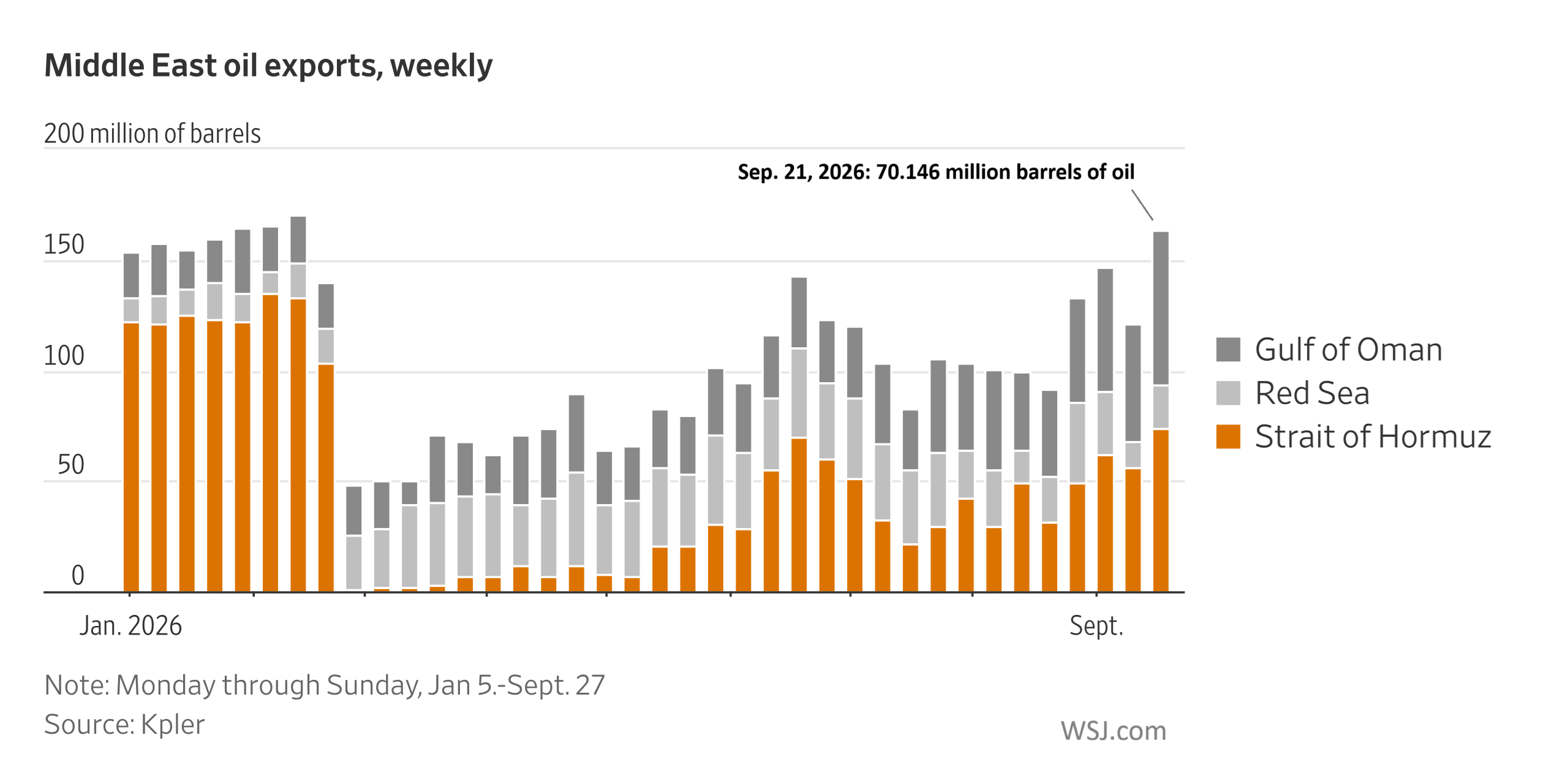
The expansion of fighting comes as oil exports through the Gulf of Hormuz have rebounded, recently running close to levels seen before the U.S. and Israel attacked Iran on Feb. 28, reports The Wall Street Journal. The latest attack on Saudi Arabia is a reminder that the return to a state of relative calm and visibility for the energy industry in the Middle East remains precarious at best.
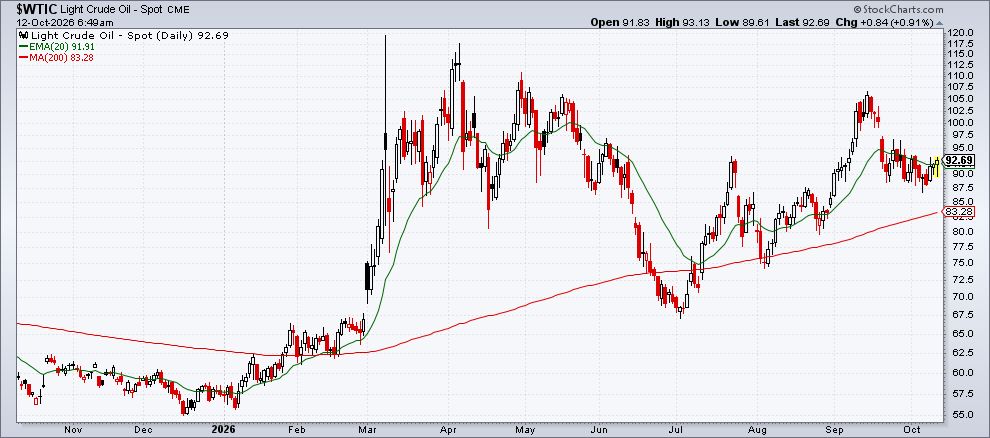
Despite a pullback from recent highs, oil prices remain elevated, and the latest attack on Saudi Arabia underscores the Middle East’s ongoing vulnerability to supply disruptions.
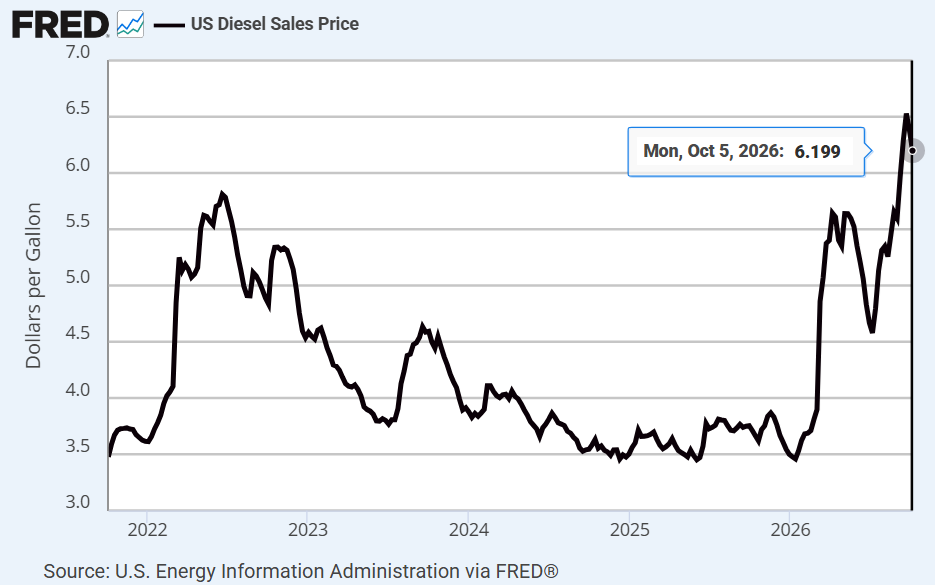
A more immediate inflation risk is linked to refining capacity. With refineries running near full utilization, disruptions can quickly tighten gasoline and diesel supplies, keeping fuel prices elevated even when crude oil prices are stable. Rising diesel prices are especially important because diesel powers much of the transportation and industrial economy, raising shipping costs and adding inflation pressure across a broad range of goods.
The price of diesel has pulled back after reaching a record high in mid-September, but it remains near a historic peak. The longer diesel prices stay elevated, the greater the risk that higher transportation costs filter through to a wider range of goods and services.
The energy-driven risks are expected to come into sharp focus again with Wednesday’s consumer inflation report. The consensus forecast calls for headline consumer inflation, measured by the Consumer Price Index (CPI), to rise 3.6% from a year earlier in September. Although that would remain below the recent peak of 4.2% in May, it would reinforce the view that the summer’s brief disinflation trend has faded and price pressures are reaccelerating.
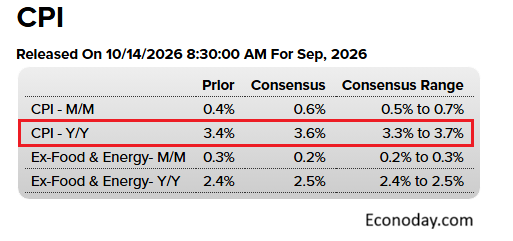
A more troubling sign is the expectation that core CPI, which excludes food and energy, will also edge higher. The consensus forecast calls for a 2.5% year-over-year increase, up slightly from August’s 2.4% rise. If correct, it would mark the first acceleration in the annual core inflation rate since May.
Adding to concerns in energy markets, President Donald Trump said the U.S. may join Saudi Arabia’s retaliation against Tehran-backed Houthi forces following a deadly attack on Riyadh’s main airport, a move that could deepen U.S. involvement in the widening conflict with Iran.
Asked on Saturday about the possibility of a new phase of U.S. attacks, he told reporters: “We may. We’re going to look at it. We just found out about the recent attack. So, we’ll make a decision. We move very quickly.”
It’s not yet obvious that any of this will persuade the Federal Reserve to raise interest rates at its Oct. 28 policy meeting. Fed funds futures currently imply roughly an 81% probability that the central bank leaves its target range unchanged after last month’s 1/4-point hike.
Meanwhile, the policy-sensitive U.S. 2-year Treasury yield has eased this month after surging in September.
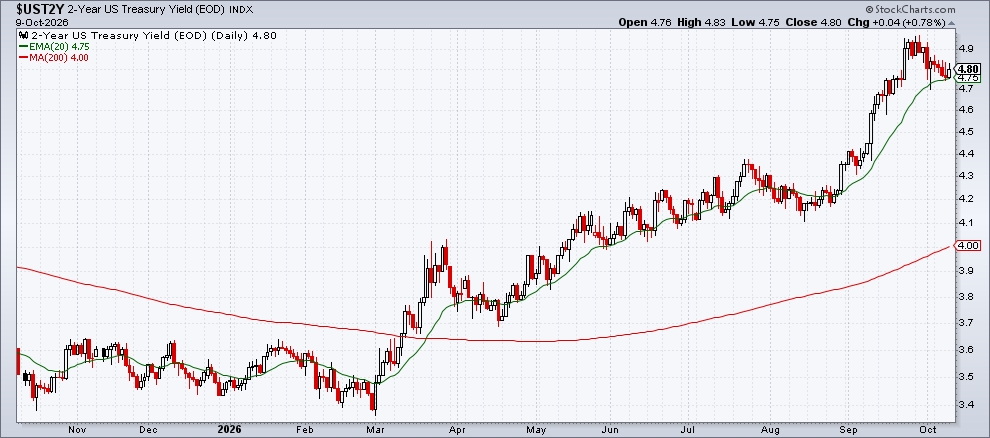
At 4.80% on Friday’s close, the 2-year yield suggests bond investors had begun dialing back inflation concerns at the margin. Whether that optimism holds now depends on two near-term catalysts: developments in the Middle East and Wednesday’s CPI report. Depending on the numbers and the headlines, investors may quickly return to the view that inflation is proving stickier than expected and that interest rates could remain higher for longer. For now, the market is balancing hopes that the worst of the inflation scare has passed against the risk that rising energy costs reignite price pressures just as confidence in disinflation was beginning to build.
Comments
Log in or sign up to join the conversation.