

The average tax refund for 2025 is expected to be approximately 16% higher than in 2024, driven in part by provisions from the “Big Beautiful Bill” tax cuts. This increase in refunds could provide consumers with additional disposable income, potentially boosting short-term spending. However, the extent to which these funds translate into consumption will depend on broader economic conditions. Some households may choose to save or pay down debt rather than spend, especially in an environment of elevated interest rates and lingering economic uncertainty.
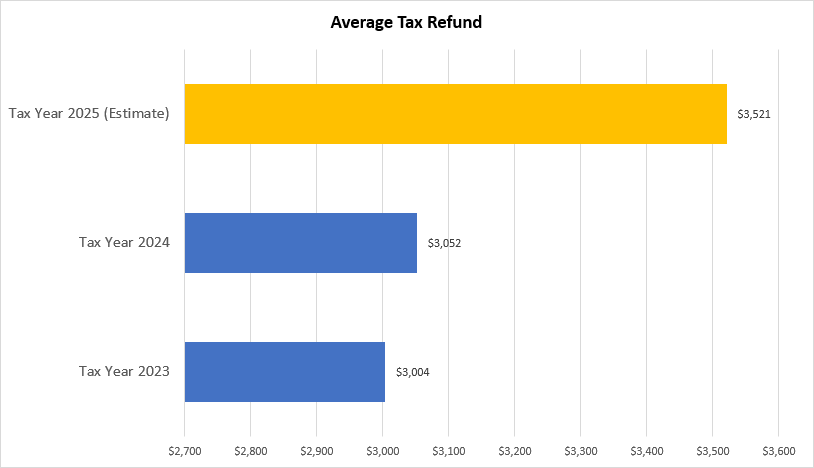
Source: Tax Foundation, CNBC, Internal Revenue Service, "Filing season statistics for week ending Oct. 17, 2025"; Christian Floro, "Dissecting the OBBBA: A front-loaded fiscal boost.", The Business Week Graphic
This graph was produced by Lucas Juery, CFA, CFPⓇ and is not intended to provide financial advice.


Comments
Log in or sign up to join the conversation.