

Image source: Pexels.com
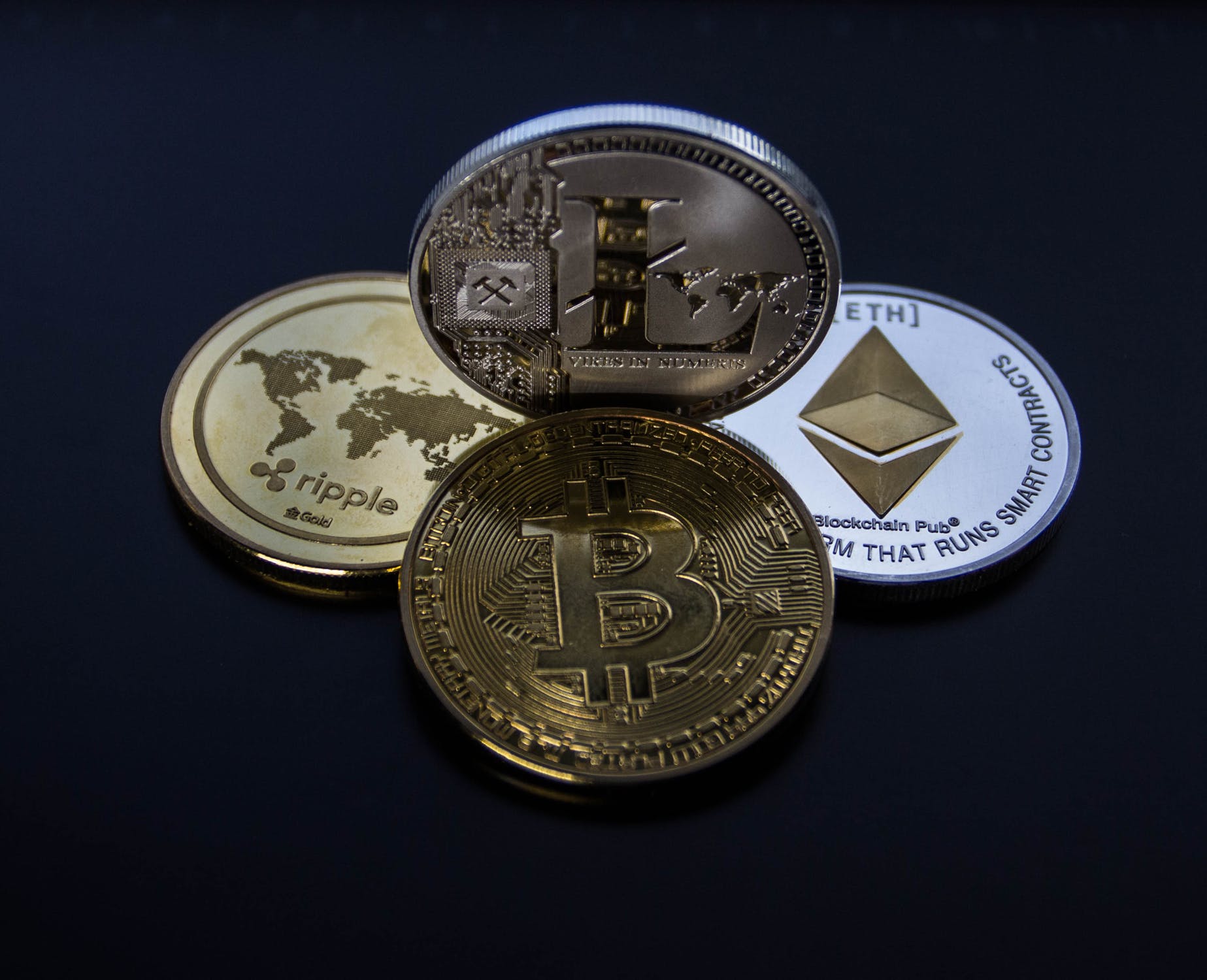
Many people today still have a habit of equating cryptocurrency with bitcoin. It’s an understandable impulse in some respects. Bitcoin was the first cryptocurrency, and is still the best known and most valuable one by a significant margin. It’s also the one you’re most likely to be able to spend, if you want to use cryptocurrency as functional money, simply because it’s more widely accepted by businesses than most of its counterparts. Nevertheless, there are still a lot of counterparts, and some of them have grown significantly more relevant over the years.
Previously, in the beginners’ guide to crypto investing, we listed some of the other cryptocurrencies on the market. Here, we’ll expand on five in particular that are worth knowing about in 2020 if you’re looking to become more informed about cryptocurrency.
1. Ethereum
Ethereum (ETH-X) is an interesting alternative due to the fact that it’s viewed by many as one of bitcoin’s (BITCOMP) most powerful rivals – yet it’s functionally quite different. Whereas bitcoin is plainly a cryptocurrency, Ethereum is a network unto itself — a blockchain that is designed not just for the transfer of digital currency, but also for the building of decentralized apps.
What makes Ethereum stand out, as one write-up on the network put it, is the smart contract functionality that is facilitated by these decentralized apps. Basically, users can write functions into Ethereum that dictate the exchange of goods, such that funds are only transferred when a given function is completed, and so on. Ethereum’s lofty potential is generally based on the notion that these smart contracts could come to redefine how transactions occur in various industries, such as healthcare, finance, law, and others. That said, Ethereum (or technically the actual coin in the network, Ether) is also one of the more valuable, tradable cryptocurrencies today.
2. Litecoin
While Ethereum differs from bitcoin in all of the ways just outlined, litecoin (LTC-X) is largely a bitcoin clone. Some tech-savvy crypto enthusiasts might balk at that description, and it’s true that there are some differences — generally meant to make litecoin transactions quicker and more convenient than those conducted with bitcoin. However, for the average person looking to buy, store, or use cryptocurrency, litecoin is functionally a smaller, less valuable version of bitcoin. Nevertheless, it’s a long-established cryptocurrency, and still one of the more valuable altcoins (meaning any cryptos that aren’t bitcoin) on the market.
3. Ripple
Ripple (XRP-X) is a fascinating altcoin, in that it’s become one people talk about a great deal despite the fact that it has a very low value. Coming into the current year, XRP was often discussed as one of the cryptocurrencies most worth considering for investment, with recent Ripple trader activity suggesting that this enthusiasm hasn’t waned, as significantly more investors are looking to buy than sell.
Interest in this cryptocurrency, then, appears to stem more from function than raw, current value. Somewhat like Ethereum, Ripple was designed as a network to serve a variety of different purposes. It facilitates monetary transfers between parties, including banks — quickly, simply, and with a near-negligible cost — even if those parties are using different cryptocurrencies or fiat money. This is done by way of XRP, which is the actual token designed alongside Ripple. XRP effectively ferries transactions back and forth; in an exchange, one party’s assets purchase a given amount of XRP, which is then exchanged for the appropriate value of whatever asset the receiving party is dealing in.
4. EOS
EOS (EOS-X) is another altcoin we mentioned in our aforementioned beginners’ guide to crypto investment, and is also another one that was generating a fair amount of buzz heading into 2020. It’s a relatively easy one to explain, because it is essentially meant to be a better version of Ethereum. Whether or not it can live up to that intention remains to be seen, but EOS is designed as a blockchain network meant for decentralized app construction. Where it differs from Ethereum, in theory, is that it can allegedly conduct millions of transactions at a time, and it is meant to be easier to use. In effect, a fully realized EOS system would allow even relative beginners to build in their own functions. The EOS coin, meanwhile, is for all intents and purposes a right of passage. Network users must hold some amount of the coin in order to operate.
5. Tether
Tether (USDT-X) has emerged in the last year or so as one of the most prominent altcoins on the market, though there is still some debate as to how valuable it might ultimately be, or even how legitimate it is. Its purpose is relatively simple: to establish a cryptocurrency tied directly to the value of the U.S. dollar. This is what’s become known as a “stablecoin,” and it’s meant to provide the security and convenience of cryptocurrency without any of the volatility.
The problem is that Tether hasn’t been entirely reliable so far in its relationship with the dollar. For instance, in April of 2019 it was announced that the currency was only backed 74% by cash, despite the idea being that it would be fully linked to the dollar. More recently, however, there have been indications that it is closer to full backing again. These fluctuations have led to some mistrust of Tether specifically. However, it remains a pioneer where the stablecoin concept is concerned, and is the de facto leader of what is now a sort of emerging sub-class of cryptocurrencies. There are now numerous stablecoins tied to a variety of currencies and assets around the world.
So there you have them! There are plenty more cryptocurrencies on the market than just these, and seemingly more sprouting up on a near-daily basis. If you're just now starting to explore this space, however, these are certainly some of the most relevant bitcoin alternatives as of today.


Comments
Log in or sign up to join the conversation.