

A Bankrate study shows owning a home costs over $21,000 a year in hidden expenses.

Please consider the Bankrate study, Owning a home costs over $21,000 a year in hidden expenses
It all begins with the cost of acquiring a place. As of April 2025, the median home price stood at a near-record $437,942, according to real estate platform Redfin, up 44 percent from 2020.
Unfortunately, American incomes aren’t keeping pace with residential real estate costs. A recent analysis by home improvement site Fixr found that, over the last quarter-century, housing prices have increased 197 percent, while the median household income has only increased by 40 percent.
But buying is just the beginning: The squeeze on wallets intensifies after one becomes a homeowner. Higher home values mean bigger property taxes and homeowners insurance policies (and premiums). And in the last five years, inflation has also been rearing its ugly head in the rising cost of everything, including construction/home improvement materials, goods and services – and labor.
That’s why consumers are particularly feeling the pain in the form of home maintenance costs – the highest of our hidden expenses at $8,808 a year. That’s almost two times the cost of utilities/energy ($4,494), double the cost of property taxes ($4,316), four times the cost of home insurance ($2,267) and six times the cost of internet/cable ($1,515).
By far, the single most expensive homeownership cost is maintenance: routine upkeep and minor fixes to a property. The impact of general inflation on the expenses has been significant, as we noted earlier. Beyond Bankrate’s calculations, there are reasons why these costs are rising, and are likely to continue to increase too – namely, the nation’s aging housing stock. The median age of an American home is over 40 years old. Small wonder that in 2023, the average maintenance spending per homeowner for houses built before 1980 climbed 76 percent, notes the Joint Center for Housing Studies at Harvard University.
According to real estate data analyst Cotality, property taxes for single-family residences have risen an average 27 percent from 2019 to 2024. And once they go up, they often lag in going down, even if housing prices soften.
Rivaling the rise in property taxes is that of residential utilities: electric and gas bills, increasing to the tune of nearly 30 percent since 2021 and almost 40 percent since 2019, respectively, according to the U.S. Energy Administration. Largely due to rising transmission and distribution costs, those increases are outpacing the general inflation rate.
Also outpacing inflation: the notorious rise in homeowners insurance premiums, which have grown by 24 percent nationwide from 2021 to 2024. Again, some of the increase reflects rising home prices – the more valuable a property, the more it costs to insure it – but the growing frequency of extreme weather events and natural disasters has played a major part as well.
Key Points
- The average annual cost of owning and maintaining a single-family home in the U.S is more than $21,000 a year, according to a new Bankrate study.
- Hawaii and California top the list of states with the highest homeownership costs (over $30,000 annually); West Virginia and Mississippi are the lowest, at less than $15,000 a year.
- East and West Coast homeowners tend to pay more in hidden costs than those in the South and Midwest.
- Home maintenance alone averages more than $8,800 a year, accounting for the largest chunk of hidden homeownership costs.
Homeowners Insurance
From Google AI: Homeowners insurance has increased significantly since 2020, with some estimates showing a nearly 70% increase nationally over the past five years (2020-2025) and a 24% increase over the past three years (2022-2025).
Property Taxes
From Google AI: Property prices have increased by approximately 47% to 55% since the beginning of 2020, with the most recent data showing a 54.9% increase nationally between Q1 2020 and Q1 2025. Individual market increases vary, with some areas seeing greater appreciation and others showing more moderate gains.
Utilities
From Google AI: Since 2020, utility prices have increased significantly, with some sources citing a 41% jump in total household utility costs and a 40% increase in electricity prices according to the Bureau of Labor Statistics
Sales Price
In February 2020, the national median sale price for all home types was $293,700,from Redfin’s report from March 2020.
In April of 2025 it was $437,942.
Maintenance
Bankrate estimated home maintenance costs at 2 percent of the median sale price for single-family homes in each state. Bankrate accessed Redfin’s national and statewide February median sale price data for single-family homes on April 8, 2025.
Changes Since 2020
- Property Taxes: +47%
- Homeowners’ Insurance: 48.0% Zillow, 70.0% others
- Utilities: 41% BLS
BLS Excusions
| Excluded Cost | Why BLS Ignores It | Real Impact | CPI Treatment |
|---|---|---|---|
| Property Taxes | Considered a capital expense | Up 54.9% Crushes budgets in many states | Ignored |
| Homeowners Insurance | BLS only counts insurance of contents | Up 48-70% since 2020. Doubled in Florida, Texas Oklahoma | ~0.4%CPI weight. Absurd vs reality |
| Maintenance Repairs |
Major items are considered a capital expense | The #1 source of homeowner regret | Only small items counted |
Those three items alone average $15,391 per year in April of 2025 . Yet together they have less than 1.2% direct weight in the CPI basket.
That’s why the official inflation number feels so disconnected from what homeowners actually pay.
American Dream or Nightmare?
Homeownership is sold as the ultimate American Dream—stability, equity, a place to call your own. But once the keys are in hand, the hidden costs pile up fast, often blindsiding new owners and fueling regret.
According to Bankrate’s 2025 Hidden Costs of Homeownership Study, these non-mortgage expenses for a typical single-family home average $21,400 annually, outpacing wage growth and general inflation.
The Bureau of Labor Statistics’ (BLS) Consumer Price Index (CPI), the go-to inflation gauge, largely ignores these costs. CPI’s shelter component (35% of the index) relies on Owners’ Equivalent Rent (OER), a hypothetical “what if you rented your own home?” metric that excludes property taxes, full homeowners insurance, and most maintenance as “capital” (investment-like) expenses.
Only utilities (6–7% of CPI) and a sliver of insurance (0.4%) get direct play.
CPI Result
The CPI understates homeowner inflation by ignoring major costs.
BLS explicitly states: “Most maintenance… [is] part of the cost of the capital good and… not treated as consumption items.”
Routine services (e.g., hiring a plumber for a minor leak) get partial capture elsewhere in CPI, while major repairs/improvements (e.g., HVAC replacement) are fully ignored.
Regrets
Bankrate’s 2025 Homeowner Regrets Survey found 45% of owners have at least one regret, with 42% citing these hidden costs as “more expensive than expected”—the #1 gripe.
| Regret Category | Percentage (Among Those with Regrets) | Percent of All Homeowners | Key Quote/Notes from Bankrate |
|---|---|---|---|
| Maintenance & Hidden Costs Too Expensive | 42% | ~19% | #1 regret “Unforeseen upkeep and ongoing financial burden” |
| Home Too Small | 21% | ~9% | Common for growing families; millennials cite this most (25%). |
| Mortgage Too High / Wrong Rate | 19% | ~9% | Affordability trap—28% of buyers in Bankrate’s separate poll. |
| Home Too Big | 11% | ~5% | Empty-nesters’ gripe; boomers at 15%. |
| Neighborhood Not Ideal | 10% | ~5% | Schools/commute surprises; urban owners higher. |
| Wouldn’t Buy Again (Overall) | 17% (of all owners) | 17% | 70% would rebuy. Shows mixed feelings, with costs as the sour note. |
Poor Measures of Inflation
Realistically, the CPI is a very poor measure of inflation.
Alternate measures like Truflation are also a joke because they are based on more timely measures of the same garbage.
Truflation measures of rent are more timely than BLS data, but their alleged “market-based” numbers are ridiculous because few move annually and Truflation only captures new leases.
Economists do not factor in home prices or the true annual expenses at all. This is on the basis that homes are a capital expense.
The Big Economic Lie
The CPI misses 80–90% of the $8,808 median annual maintenance hit.
For median homeowners (~$97K income), that’s ~9% of after-tax pay untracked in “shelter” inflation, fueling the 42% regret rate on upkeep surprises.
And the BLS ignored property taxes and homeowner’s insurance too.
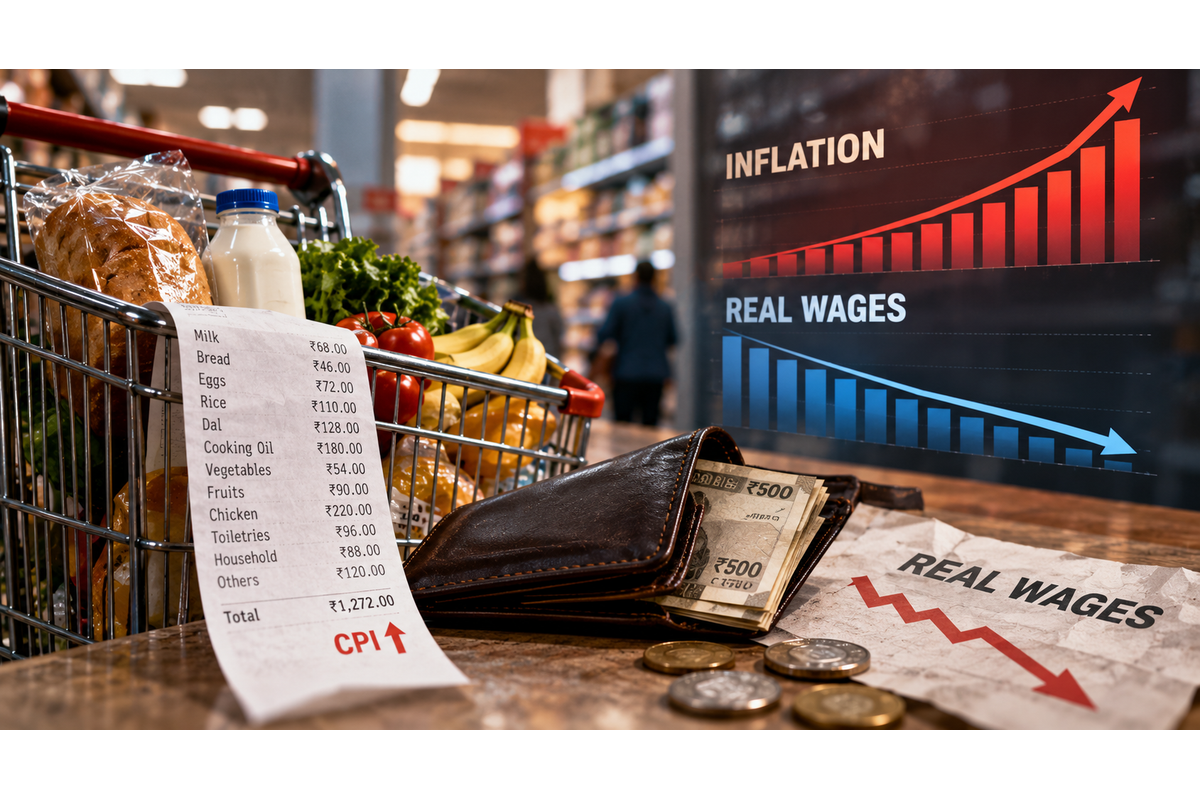
Reports that “real wages are up” are a total fabrication of reality.
Most economists don’t get this because they are trained to be stupid. They make it seem like real annual expenses don’t matter because they are a “capital expense”.
It’s as if only consumer inflation matters, which is of course idiotic. And the Fed acts on the same idiotic belief.
What’s Needed
We need a True Inflation Index (TII) that measures all paid prices, not hypothetical nonsense.
The Truflation index purports to be this measure, but fails miserably. It’s more timely, but it’s more timely BS with the same BLS flaws and some new flaws on rent measurement.
The irony in most alternate measures is they go further in understating the CPI because homeowners pay a mortgage and not rent.
OER is a joke, not because it’s an inaccurate measure of what a house would rent for, but because it ignores the true costs of home ownership.
And it’s not just shelter. The CPI measure of food is also nonsense.
BLS Food Weights vs Reality
| Category | BLS Weight (%) | USDA Weight (%) | Gap (Points) | Impact |
|---|---|---|---|---|
| Food at Home | 8.043 | 5.68 | +2.36 | Overweights groceries |
| Food Away from Home | 5.64 | 8.01 | -2.37 | Underweights pricier eats and ignores tips and taxes. |
| Total Food | 13.691 | 13.691 | 0 | Result: CPI food up 2.2% YoY Sep ’25; real blended ~3.1% per USDA trends. |
Note: I set the USDA total weight at 13.69%, then revised food at home and food away from home based on USDA numbers.
For discussion of the above table, please see Where Do You Spend Money on Food? How Screwed Up Are the BLS Weights?
Does the BLS match your budget?
Inflation Matters
Politicians and most economists live in ivory towers. They do not understand why consumers feel miserable.
But consumers feel miserable because real word expenses are far outpacing income gains.
Inflation matters and it shows up in affordability complaints and political polls.
Mercy! Check This Out: Trump Sounds Like Biden
Trump Truth Detail Link: I have asked the DOJ to immediately begin an investigation into the Meat Packing Companies who are driving up the price of Beef through Illicit Collusion, Price Fixing, and Price Manipulation. We will always protect our American Ranchers, and they are being blamed for what is being done by Majority Foreign Owned Meat Packers, who artificially inflate prices, and jeopardize the security of our Nation’s food supply. Action must be taken immediately to protect Consumers, combat Illegal Monopolies, and ensure these Corporations are not criminally profiting at the expense of the American People. I am asking the DOJ to act expeditiously. Thank you for your attention to this matter!
On November 8, I commented Hoot of the Day: Trump Sounds Like Biden and Kamala Harris on Price Gouging
Republicans should be seriously embarrassed.
Facing anger from farmers, Trump amusingly and quickly resorted the Democrat standard playbook: Blame Price Gouging.
Also amusing, and very contradictory, like Biden, Trump insists there is no price inflation to begin with.
Trump says there is “virtually no inflation”. He even declared victory.
Related Posts
November 23, 2025: Can Trump or Anyone Possibly Fix the US Affordability Crisis?
No one will fix the problem for two reasons.
- Politician don’t understand inflation.
- No politician would have the political will, even if they did understand.
Trump’s tariffs make matters worse and so will Mamdani’s rent controls. Both pander to extreme ends of populist nonsense.
If you want to fix inflation, you first have to understand it and measure it properly.
Then you have to get elected and get Congress to go along.
August 11, 2025: Over Half the US Has Major Stress Over the Price of Food
Are you stressed out over food?
Is Homeowners Insurance Understated in the CPI? Shop Around!
On August 11, asked Is Homeowners Insurance Understated in the CPI? Shop Around!
Our Insurance went up by $2,000. Then another $2,000. Here’s our story.
But hey, that’s not inflation. It’s Tinkerbelle, the tooth fairy, or a Pinocchio of a different color to the BLS, the Fed, and nearly every economist.
More By This Author:
Are Trump’s DJT And The Melania Meme Coin Headed To Zero?We Pay The Tariffs Anecdotes, Lost Sales And Going Bankrupt
Trump Doubles Down On Idiotic Idea Of Using Tariffs To Replace Income Tax
Comments
Log in or sign up to join the conversation.