
Image Source: Pexels
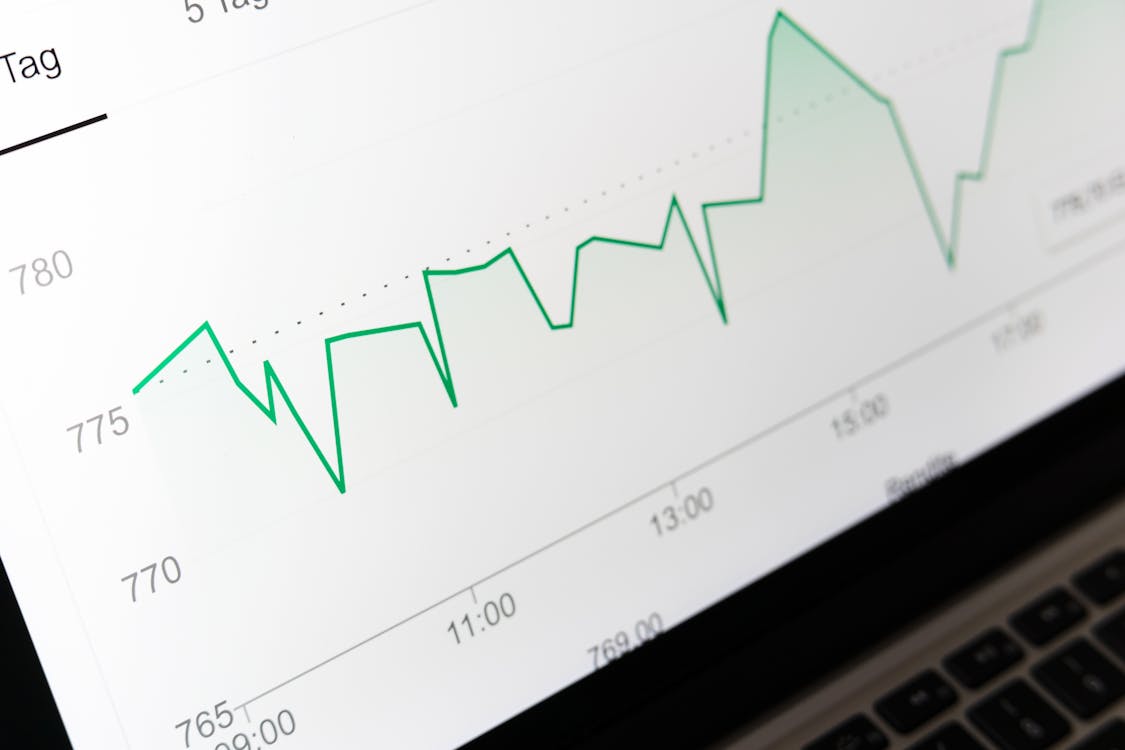
Stocks were trending higher on the day before Christmas, with the S&P 500 up at the open to an all-time high of 6,920. The Nasdaq Composite and Dow Jones Industrial Average were also ticking higher on Christmas Eve – near all-time highs.
Is this the start of a year-end Santa Claus rally?
What is a Santa Claus rally? It is a concept coined by Yale Hirsch in 1972 in his Stock Trader’s Almanac. Basically, it was about a seven-day stretch around the holidays – the last five trading days of the year plus the first two trading day’s of the new year. This year, that would encompass December 24, 26, 29-31, then January 2 and 5.
Back in 1972, Hirsch noted that stocks tended to rise in the final trading days of the year. There are likely several reasons why, including a general sense of optimism, particularly among retail investors. Often, they use bonus money to invest or cash from losing investments that they had cashed out earlier in the year. Also, some institutional fund managers buy high-performing stocks at the end of the year to make their portfolios look better to clients.
Whatever the reason, the Santa Claus rally that Hirsch identified 53 year ago still comes around most years.
According to an analysis by Adam Turnquist, chief technical strategist at LPL Financial, the S&P 500 has rallied 78% of the years during this period since 1950. Further, it has averaged a return of about 1.3% over the years during the Santa Claus rally period. By comparison, said Turnquist, the market’s typical seven-day average return is just 0.3% and the average positivity rate is 58%.
“That said, seasonal trends reflect historical tendencies, not guarantees. They don’t account for fundamentals like earnings, monetary and fiscal policy changes, or economic conditions. The last two years of negative Santa Claus Rally returns are a reminder that past performance is never a promise of future results,” Turnquist said.
What does it mean for 2026?
Hirsch also made the observation that the Santa Claus rally, or lack thereof, foretells how the markets will perform the next year.
“If Santa Claus should fail to call, bears may come to Broad and Wall,” Hirsch wrote, with Broad and Wall referring to Wall Street.
This also holds largely true, according to Turnquist, based on historical data.
“When the rally is positive — putting investors on the “nice” list — the S&P 500 has delivered an average January gain of 1.4% and an impressive 10.4% return for the full year that follows,” Turnquist wrote. “In contrast, when the index was down during this period — the “naughty” list — the averages dropped to only -0.1% for January and 6.1% for the subsequent year.”
However, recent history tells a different story. As Turnquist pointed out. there was no Santa Claus rally the past two years. The S&P 500 was negative over those 7 trading days in both 2023 and 2024, yet the S&P 500 charged to gains of 24% and 23%, respectively, in those years.
So what might Santa Claus bring this Christmas?
“Momentum heading into year-end suggests a favorable setup for a positive Santa Claus Rally — a historically bullish signal for January and the year ahead. While overall market breadth remains somewhat narrow for an index near record highs, the trend is moving in the right direction, supported by a rotation toward cyclical sectors. A close above the S&P 500’s December high could pave the way for the next leg higher above the 7,000-point milestone,” Turnquist said.
More By This Author:
Gold Reaches All-Time High, Surges Past $4,500
2025 Rewind: Crypto ETFs Expand Beyond Bitcoin, Hitting $85B In Assets
Is Coinbase Stock A Buy After Move Into Prediction Markets?

Comments
Log in or sign up to join the conversation.