


Please consider The Daily Economy article Trump’s ‘Broken Windows’ Economy
Like the mayor in Bastiat’s tale, President Trump is a slick politician and a masterful spin artist. He’s exceptional at portraying his policy’s “success” by focusing our attention squarely on its visible beneficiaries. That’s why he often unveils his latest tariffs in made-for-TV spectacles where he’s encircled by jubilant workers at revived factories that directly benefit from his protectionist policies.
Thankfully, Bastiat’s parable exposes this clever marketing ploy for what it is: cheap sophistry. For every reshored job and “Made in America” product comes at the hidden cost of whatever else we could’ve made with those resources (where that “whatever else” is something more valuable to the economy). These costs are, by definition, difficult to measure. And unlike a ribbon-cutting ceremony at a newly opened factory, they’re impossible to showcase. But they’re very real, and very damaging to the economy. The late Henry Hazlitt aptly distilled Bastiat’s insight in his classic work, Economics in One Lesson: the art of economics consists in looking beyond the immediate, visible benefits of a policy on one group to consider its long-run, “unseen” consequences on the entire economy.
In May, Trump’s Commerce Secretary Howard Lutnick vowed to stick it to China by bringing iPhone assembly jobs “back” to America. “The army of millions of human beings screwing in little screws to make iPhones, that kind of thing is going to come to America!” he gushed.
Would this bolster our economy, as Trump and Lutnick argue? Quite the opposite. Hiring an “army of millions” of Americans to assemble iPhones means drawing them away from jobs we actually excel at, like designing iPhones, developing new software, and countless others.
Dave Chappelle is right: Americans want to buy iPhones, not make them.
In August, the president touted July’s tariff haul as a $30 billion windfall to our economy. To the untrained eye, this appears to be welcome news. But a messier image comes into focus when viewed through Bastiat’s lens. As any economist worth their salt can attest, tariffs are a tax borne by consumers in the form of higher prices. Higher prices mean consumers have less money to spend on other things, thus crowding out growth and destroying jobs in those sectors. That $30 billion in tariff revenue isn’t manna from heaven, as Trump often portrays it. It’s a hidden tax on US consumers.
What about the raft of “trade agreements” and investment deals the president loves to flaunt? In July, Trump touted his agreement with the EU as “the biggest deal ever made.” The EU, Saudi Arabia, Japan, South Korea, and the UAE pledged to invest $750 billion, $600 billion, $550 billion, $350 billion, and $200 billion, respectively. Corporations have also joined in. In May, Nvidia pledged to invest $500 billion in domestic chip manufacturing. In August, Apple affirmed its $600 billion investment in America. Meta’s Mark Zuckerberg also vowed to invest $600 billion.
These headlines certainly seem propitious, even if these “commitments” are incredibly vague, and the numbers seemingly conjured out of thin air. (Lest we forget: what matters to the dealmaker-in-chief is eye-catching headlines, not empirical accuracy or sound economics.) But even if Trump’s tariffs succeed in reshoring some jobs, Bastiat’s question remains: at what cost? If other nations can manufacture iPhones and widgets more efficiently than we can, economics teaches us we’re better off importing those products. This frees our workers to specialize in higher-paying jobs they excel at – skilled craftsmen, artisans, high-skilled manufacturing, etc. – of which there’s no shortage.
Whether he’s defending his policies on crime or trade, he’s remarkably adept at drawing our attention where he wants. On crime, he tells harrowing tales of urban violence to justify federal incursions into local law enforcement. On trade, he hosts grand ribbon-cuttings at reopened factories in made-for-TV spectacles to justify taking autocratic control over trade policy.
It’s brilliant retail politics, to be sure. That said, there’s a stark difference between broken windows policing and his broken windows trade policy.
To be clear, economists don’t claim free trade is a panacea. No profession is more fond of reminding people that every decision involves tradeoffs (hence Harry Truman’s Melvillian quest to find a “one-armed economist”). Are there tough tradeoffs that policymakers must weigh when conducting trade policy, like protecting crucial national security interests and fortifying strategically vital industries? Absolutely – though, to be fair, these concerns are often wildly overstated by lobbyists trying to hurt foreign competitors. Are there steps policymakers can take to make our economy more competitive? Sure – though, to be clear, we should start by slashing red tape, not clumsily cutting off trade. The Hippocratic Oath in medicine also applies to economic policy: “first, do no harm.” It’s one thing to attract investment with the carrot of simplifying taxes and surgically removing our most malignant policies. It’s quite another to compel it with the stick – nay, sledgehammer – of tariffs and trade barriers, with all their far-reaching negative consequences. One need not be a free trade absolutist to believe that we shouldn’t throw the baby out with the bathwater when it comes to trade.
All this smoke and mirrors is a clever way for the president to distract Americans from the destructive effects of his trade war, as evidenced by the recent spate of weak jobs reports and anemic growth figures. Instead, heed Bastiat’s timeless wisdom: Behind every lofty tariff pronouncement lies a hidden cost. Like the politician in Bastiat’s tale, when Trump brags about “bringing back” jobs, all he’s really celebrating is a hefty bill for replacing windows he smashed with his tariffs.
Despite all the sound and fury emanating from the White House, Bastiat’s lesson rings as true as ever. Destroying trade doesn’t create prosperity any more than smashing windows creates wealth.
Mass Deportations
Sadly, Trump gave into to radicals on deportation after having at times proposed more sensible policies. There’s a spotlight on every criminal. No mention of US citizens illegally held or people deported in violation of the law.
Trump ignores the destruction caused by loss of construction jobs, hotel cleaning jobs, farm jobs, and meat packing jobs.
Assuming you can find US citizens to do these jobs, at what price? Aren’t homes, food, and hotel bills high enough?
In the steel and aluminum businesses, there are tens of thousands of users of steel and aluminum all paying higher prices for every steel or aluminum job saved.
Price Gouging Investigations
In addition to trade, Trump also sounds like Elizabeth Warren on price gouging.
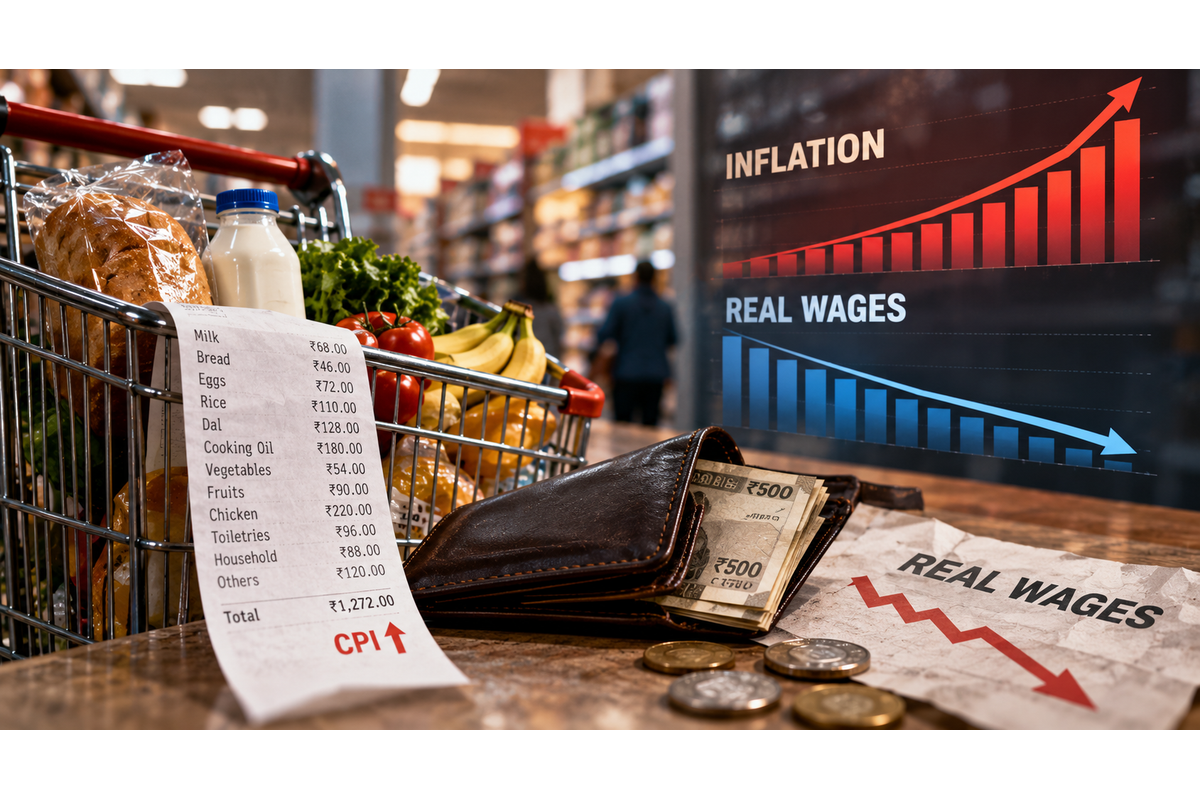
Curiously, Trump denies inflation and calls it a hoax while on a witch hunt investigating grocery store price gouging.
DOGE Mixed Bag
Trump did reduce government jobs but it’s hard to know if DOGE was a success. From a claim of $2 trillion, then $1 trillion, actual verified savings are more like $50 billion.
If that’s an annual saving, call it a mild success. But some of that is one time savings. Regarding employment, let’s see how many get rehired over when the BLS and BEA, etc., find they are understaffed to do their jobs.
AI Boom
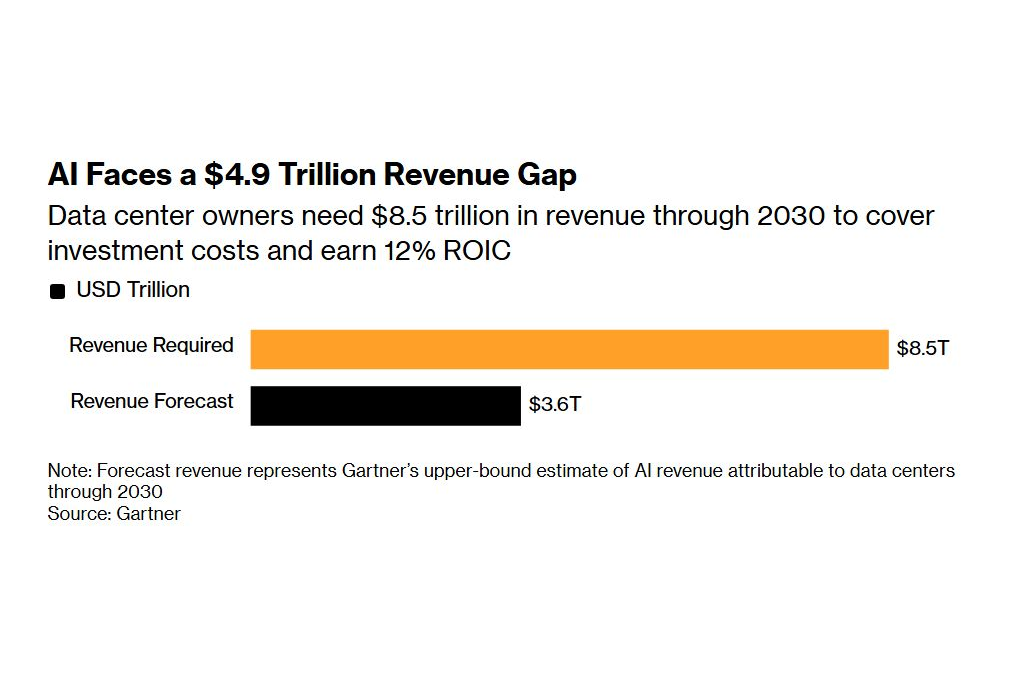
Trump has nothing to do with the AI boom that added greatly to GDP in 2025. But it happened on his watch so give Trump credit.
The downside is Trump will own the inevitable but, if and when that comes.
Government Shutdown Over Health Care
Republicans own the health care mess now.
Instead of opting for a one year extension to Obamacare subsidies, the issue is going to surface again in January.
Expect sticker shock for over 20 million people on Obamacare.
Foreign Policy
Trump is illegally blowing up boats in Venezuela. We launched a military strike in Nigeria.
Trump bombed Iran’s centrifuges.
Trump meddled in Greenland driving the country closer to Denmark in the process.
Relations with Canada soured.
Instead of cooperating with countries to counteract China, Trump managed to drive India closer to Russia and China, Canada closer to China, and South America closer to China.
The war between Ukraine and Russia lingers. Recall that Trump said the war woulkd end on his first day in office.
Epstein
Trump went from promising to release all the documents to denying there ever were documents.
He fought disclosure while calling Epstein a hoax. If Epstein was a hoax, releasing everything would prove it.
After fighting a bill on Epstein, Trump suddenly reversed course and signed a bill mandating full release.
However, Trump is now violating the actual letter of the law he signed.
Best Measure of 2025
The best measure of 2025 is how people feel. The answer is miserable.
Republicans were hammered in every special election in 2025.
And it shows up in the polls.
Despite Trump’s claims to have “created the greatest economy in history,” people are very unhappy. They are concerned about inflation, jobs, shelter, food, and insurance.
Trump sounds just like Joe Biden telling people they are wrong. He consistently overpromises and underdelivers.
If the economy was as good as Trump claimed, and inflation was nonexistent, people would not be miserable.
Related Posts
December 20, 2025: Impeach Bondi? Trump Administration Fails to Release Epstein Documents
House members discuss impeaching Pam Bondi, Trump’s Attorney General.
December 24, 2025: DOJ Finds a Million More Epstein Files It Needs to Review
The Epstein hoax is now one million files greater.
December 22, 2025: US Oil Blockade of Venezuela Pushes Cuba Into Economic Collapse
Cuba was already in dire straits. Oil is the finishing touch.
December 13, 2025: Republican Congresswoman Calls Trump’s Immigration Policies Un-American
Miami Congresswoman María Elvira Salazar rips Trump.
December 23, 2025: Captured! The 60 Minutes Venezuela Video CBS Tried to Cancel
This is an amazing story of incompetence and graft at 60 Minutes.
April 3, 2025: What’s the White House Formula for Calculating the Huge Tariffs?
The lead image explains the methodology.
August 24, 2025: Elon Musk Backs Universal High Income Fearing AI Will Take Every Job
Musk predicts employment will become obsolete.
October 14, 2025: Is AI a Magic Bullet or a a Doomsday Machine?
A Nobel Prize economist argues against extreme hype in both directions.
December 25, 2025: DOGE Failed the Mission, But It Sure Was Disruptive
The target was $2 Trillion, the final claim $214 Billion (hugely exaggerated). Government spending rose.
December 15, 2025: How Much Did AI Spending Contribute to First-Half GDP? What About Q3?
I created some new charts on AI spending. Please take a look.
December 24, 2025: The Trump Rule: “Anybody that disagrees with me will never be the Fed Chairman!”
Trump has a new rule for Fed Chair, and he wants to terminate media licenses too.
December 29, 2025: Will Tariffs Be Refunded If the Supreme Court Strikes Them Down?
Polymarket provides no guidance because that bet expired December 31.
December 30, 2025: 550,000 Who Are Legally Working Lose that Status by Year End
Let the cheering begin. Regrets next year.
December 28, 2025: Trump Praises Zelensky, Cites Peace Progress, After Meeting at Mar-a-Lago
I am rooting for Trump on this one, but it’s really all up to Putin.
December 8, 2025: Health Care Inflation Bomb Makes the Fed’s 2 Percent Target Almost Impossible
Let’s discuss 2026 health care premiums and what they mean to the Fed’s preferred measure of inflation.
December 3, 2025 : Small Businesses Drop 120,000 Jobs in November, ADP Total Down 32,000
It’s another grim month according to ADP.
December 27, 2025: Only a Third of CEOs Plan to Hire Workers in 2026
66% will fire workers or play wait and see with AI.
December 28, 2025: What Are the Odds Democrats Flip the House in the 2026 Midterms?
Polymarket says 78 percent likely. Is there a good case for that estimate?
Meanwhile, please note Only 56 Percent of Republicans Say the Economy Is Good
If you don’t understand why, please click on some of the preceding links.
There is no solution for the Fed or the Administration.
Later I will post some predictions for 2026.

More By This Author:
Fed Minutes Show Concern Over Upside Risk To Inflation, Downside To Jobs
550,000 Who Are Legally Working Lose That Status By Year End
Case-Shiller Home Prices Rise Again, 10-City Index Ties Record High

Comments
Log in or sign up to join the conversation.